Manipur's Political Transition: A Return to Elected Governance After a Year of President's Rule
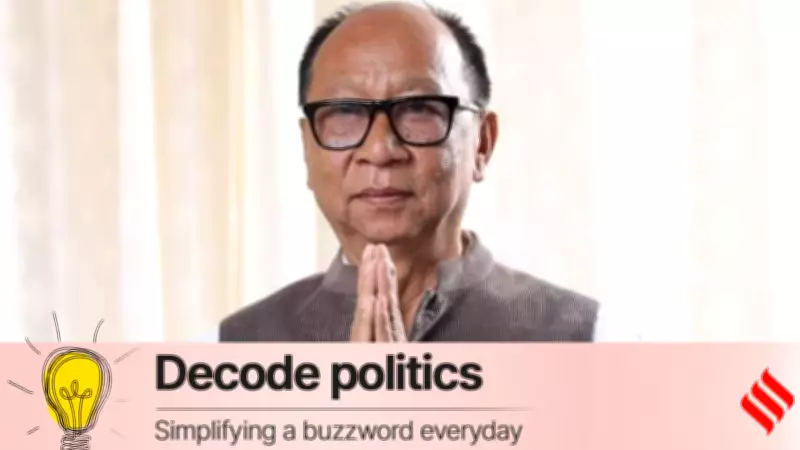
In a significant political development, Manipur is set to witness the restoration of an elected government after nearly a year under President's Rule. The BJP leadership has paved the way for a popular government to be formed under the leadership of former Manipur Cabinet Minister Yumnam Khemchand Singh. This decision, announced by former Chief Minister N Biren Singh following a meeting of BJP leaders in Delhi, signals that New Delhi now views the reinstatement of an elected administration as both a constitutional necessity and a political imperative. The move comes after months of internal pressure and public unrest, marking a pivotal moment in the state's turbulent political landscape.
The Roots of Political Collapse: Ethnic Violence and Internal Dissent
The current political churn in Manipur traces its origins to the outbreak of ethnic violence between Meiteis and Kuki-Zo groups in May 2023. What began as sporadic clashes quickly escalated into a deep-seated conflict, leading to geographic and political separation. Meiteis concentrated in the Valley, while Kukis retreated to the Hills, resulting in large-scale displacement, the establishment of relief camps, and pervasive mistrust. Early in the conflict, Kuki groups demanded the resignation of then Chief Minister N Biren Singh, accusing him of partisanship. Over time, this demand gained traction within the BJP itself, as a growing number of MLAs from diverse communities concluded that Biren Singh had become a political liability and an obstacle to reconciliation.
By late 2024, internal dissent had solidified. On October 18, 2024, as many as 19 BJP MLAs wrote to Prime Minister Narendra Modi, seeking Singh's removal. In their letter, they expressed concerns about the government's ability to restore peace and warned of potential political fallout for the BJP in the state. They emphasized that mere deployment of security forces was insufficient, advocating instead for dialogue and reconciliation. In November 2024, Yumnam Khemchand Singh openly criticized Biren Singh for refusing to resign amid the ongoing law-and-order crisis, stating, "I asked him to resign a couple of times, but he is not putting down his papers. He could not bring peace till now, so why isn't he resigning?"

Mounting Pressure and the Imposition of President's Rule
The pressure on Biren Singh intensified in November 2024 when Conrad Sangma's National People's Party (NPP), a key NDA ally, withdrew support, citing the government's failure to restore normalcy and expressing deep concern over the loss of innocent lives. Although the BJP retained numerical strength on paper, this move signaled eroding ground support. Concurrently, public anger manifested in mobs burning houses of ministers and MLAs, reflecting widespread feelings of insecurity.
Inside the BJP, groups of MLAs camped in Delhi for days, meeting with central leadership to convey that Singh had lost the trust of a majority of party legislators. They warned that without a change, they might support a no-confidence motion. The turning point came in February 2025. With a Congress no-confidence motion looming and dissident BJP MLAs indicating they might cross-vote, Biren Singh resigned on February 9, 2025. Prior to this, on February 3, Khemchand Singh, then Rural Development and Panchayati Raj Minister, had warned the BJP leadership in Delhi that the government was likely to collapse without a change in leadership.
Governor A K Bhalla met Union Home Minister Amit Shah on February 4 to apprise him of the situation, and other critics like former Speaker Thokchom Satyabrata Singh expressed similar concerns to then BJP president J P Nadda. President's Rule was imposed on February 13, 2025, with the Assembly kept in suspended animation. While this helped manage law and order, it also created a political vacuum that would later fuel demands for a return to elected governance.

The Push for a Popular Government and Central Hesitation
From April 2025 onward, MLAs shifted their focus from merely changing the Chief Minister to advocating for the restoration of an elected government itself. On April 29, 2025, 21 NDA MLAs wrote to the Prime Minister and Union Home Minister, seeking the installation of a popular government. The signatories, excluding Biren Singh and his close allies, argued that despite hopes from President's Rule, no visible actions were being taken to bring peace and normalcy. They noted that civil society groups were blaming MLAs for not staking a claim to form a government.
In May 2025, a group of MLAs met the Governor, claiming the support of 44 legislators and emphasizing that President's Rule should be a last resort. The political logic was clear: MLAs feared they could not face voters in the next election if they remained passive under central rule. However, the Centre remained cautious for much of 2025, assessing that President's Rule had brought a semblance of normalcy and that an unsteady government might derail fragile peace efforts. Disarmament was incomplete, free movement across hills and valley was contested, and talks with armed groups were ongoing.
Parallel developments, such as agreements with Kuki groups to enable freer movement, renewed Suspension of Operations arrangements, and Prime Minister Modi's visit in September 2025—his first since the violence began—were projected as signs of returning normalcy. Politically, the BJP leadership began engaging more directly with MLAs across community lines, shifting the message from "not now" to "sooner or later." The Centre was also compelled by constitutional obligations, which require invoking a national emergency to extend President's Rule beyond one year.
The Road Ahead: Challenges and Expectations for the New Government
The new government under Yumnam Khemchand Singh will inherit extraordinary challenges in a state still grappling with social divisions, displaced populations, restricted mobility in parts, incomplete disarmament, and competing narratives of victimhood. With Assembly elections due in about a year, the primary task for the new leadership will be to rebuild public confidence, demonstrating that elected representatives, not distant administrators, are steering recovery. This will necessitate visible steps on rehabilitation, reopening of routes, political dialogue across communities, and transparency in security measures.
Ultimately, the success of this government will not be judged merely by its survival in the Assembly, but by whether ordinary people begin to feel that politics—not just policing—has genuinely returned to Manipur. The transition marks a critical juncture in the state's journey toward stability and democratic governance.