

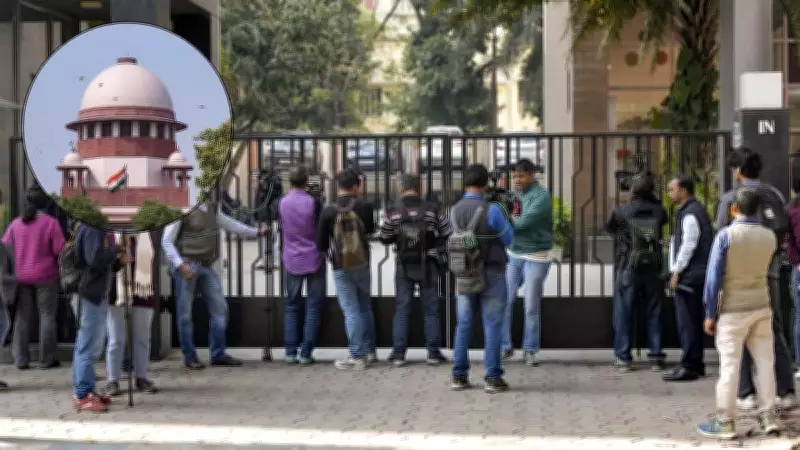
The Mamata Banerjee-led West Bengal government has filed a strong opposition to the Enforcement Directorate's (ED) petition before the Supreme Court concerning the investigation into the Indian Political Action Committee (I-PAC) raid case. In a significant legal move, the state administration has urged the apex court to dismiss the central agency's plea, contending that it would establish a dangerous precedent for future legal proceedings.
Core Legal Arguments Presented by the State
The state government's submission to the Supreme Court revolves around two primary legal contentions. Firstly, it argues that the Enforcement Directorate, as an investigative agency, does not possess the fundamental rights that would enable it to directly file a writ petition before the Supreme Court. This position challenges the very basis of the ED's approach to the judiciary in this matter.
Questioning Parallel Judicial Proceedings
Secondly, the Mamata government has raised serious concerns about what it terms as parallel proceedings occurring simultaneously before the Calcutta High Court and the Supreme Court. The state's legal team has questioned the procedural validity and potential for judicial overlap, suggesting that such a scenario could lead to conflicting rulings and undermine the coherence of the legal process.

Background of the I-PAC Investigation
The Enforcement Directorate's investigation into I-PAC, a political consultancy firm that has worked with several political parties including Trinamool Congress, has been a subject of intense political and legal scrutiny. The agency conducted raids on I-PAC offices as part of a money laundering probe, which the West Bengal government has consistently characterized as politically motivated.
The current Supreme Court petition represents the latest chapter in this ongoing legal battle between the state government and central investigative agencies. The Mamata administration's response emphasizes constitutional principles while framing the ED's actions as potentially setting problematic legal precedents that could affect future state-center relations in investigative matters.
Potential Implications of the Court's Decision
Legal experts suggest that the Supreme Court's ruling on this matter could have far-reaching consequences for:
- The jurisdictional boundaries between state governments and central agencies
- The procedural protocols for investigative agencies approaching higher courts
- The interpretation of fundamental rights as they apply to government agencies
- The management of parallel proceedings in different judicial forums
The West Bengal government's comprehensive opposition to the ED's petition reflects the heightened tensions between the state administration and central agencies in what has become a politically charged legal confrontation. The Supreme Court's eventual decision will likely establish important precedents regarding the interplay between state sovereignty and central investigative powers in India's federal structure.






