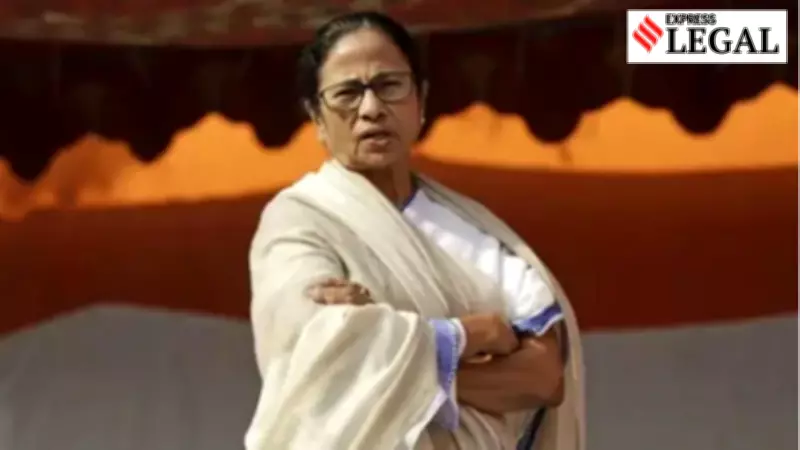
Mamata Banerjee Set for Historic Supreme Court Appearance Against Election Commission
West Bengal Chief Minister Mamata Banerjee is poised to make legal history today as she prepares to personally argue her petition before the Supreme Court of India. The Chief Minister is challenging the Special Intensive Revision (SIR) of electoral rolls being conducted by the Election Commission of India (ECI) in her state.
Unprecedented Move by a Sitting Chief Minister
If permitted by the court, Mamata Banerjee will become the first sitting Chief Minister in India's history to personally present arguments before the nation's highest judicial body. This extraordinary development follows her filing of an interlocutory application seeking leave to address the court directly, rather than relying solely on her legal counsel.
The matter has been listed before a bench comprising Chief Justice of India Surya Kant and Justices Joymalya Bagchi and Vipul Pancholi in Court Number 1. Official confirmation of Banerjee's planned appearance comes from a gate pass issued in her name, indicating she will be present alongside her legal team for today's crucial hearing.

Constitutional Challenge Against Electoral Roll Revision
Banerjee had initially approached the apex court under Article 32 of the Constitution, which guarantees the right to constitutional remedies. In her petition, she has assailed the SIR exercise being undertaken by the Election Commission, raising significant questions about:
- The constitutional validity of the Special Intensive Revision process
- Potential implications for electoral fairness in West Bengal
- The scope of the Election Commission's authority in conducting such revisions
Legal and Political Implications
This case represents a significant convergence of legal procedure and political strategy. The Special Intensive Revision of electoral rolls has become a contentious issue in West Bengal, with the ruling Trinamool Congress alleging that the exercise could potentially disenfranchise legitimate voters.
The Supreme Court's decision on whether to allow Banerjee to argue her own case, and subsequently its ruling on the merits of her petition, could have far-reaching consequences for:
- The relationship between state governments and constitutional bodies like the Election Commission
- Precedents regarding elected officials personally litigating constitutional matters
- The upcoming electoral processes in West Bengal and potentially other states
Legal experts are closely monitoring this development, noting that while advocates and legal representatives typically present cases before the Supreme Court, the court does have discretion to permit parties to argue their own matters under exceptional circumstances.
The hearing today marks a critical juncture in what has become a high-stakes legal battle between the West Bengal government and the Election Commission of India, with the Chief Minister taking the unprecedented step of seeking to personally present her case before the nation's highest court.