Maharashtra Government Considers Requesting Deferment of Electoral Roll Revision
The Maharashtra government is preparing to approach the Election Commission of India (ECI) seeking postponement of the proposed Special Intensive Revision (SIR) of electoral rolls scheduled to begin from April 2026. Senior state government sources have revealed this potential move, citing a significant overlap with the first phase of Census 2027 as the primary concern.
Timeline Conflict Creates Administrative Challenge
Last week, the ECI directed chief electoral officers of 22 states and Union Territories, including Maharashtra, to expedite preparatory work for SIR likely to commence from April 2026. This comprehensive exercise involves mapping existing voters with electoral rolls from 2002–2004—when the last SIR was conducted—and training booth-level officers (BLOs) to execute the verification process.
However, the first phase of Census 2027—focusing on house listing and housing census—is scheduled from May 16 to June 14, 2026. A self-enumeration facility will be available to citizens from May 1 to May 15. Officials confirm that census preparations are in final stages, with district-level training already underway for government personnel.
Manpower Constraints Drive Deferment Consideration
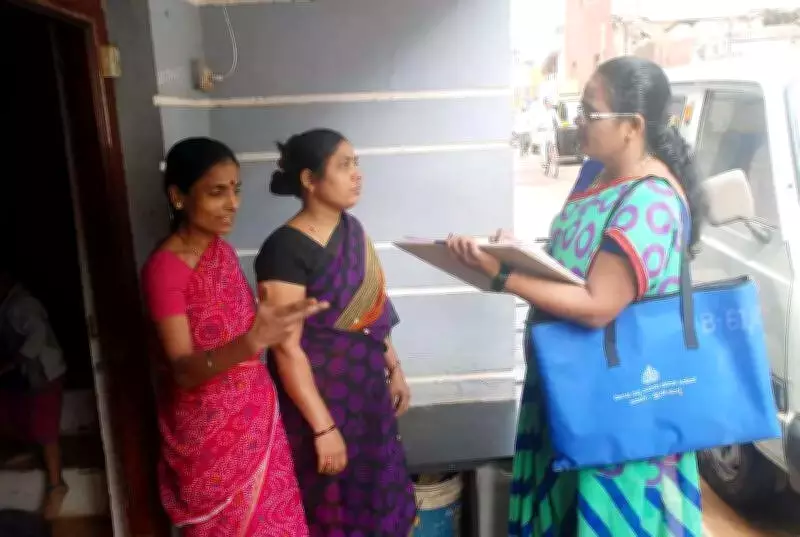
The same field machinery, including teachers and revenue staffers, would need to be deployed for both exercises simultaneously, creating practical difficulties. Approximately 2.64 lakh enumerators and supervisors are expected to be engaged in census duties across Maharashtra alone. These officials will record data directly into the census management and monitoring system using mobile devices to streamline data collection.
"The staffers engaged for census work will have to be used again for SIR. We are considering requesting a deferment to avoid this overlap and will discuss the matter formally next week," explained a senior state government official familiar with the planning.
Multiple Responsibilities Strain Educational Staff
With school examinations currently underway and census work scheduled to begin shortly, undertaking SIR simultaneously presents additional challenges. "It would be very strenuous for teachers, starting with school exams followed by SIR and then again census," another senior official emphasized. Teachers involved in examination duties would face particular strain if required to participate in back-to-back government exercises.
Ahead of the EC's communication, a state-level conference on Census 2027 preparedness reiterated that the exercise would be conducted in two phases. Officials maintain that manpower deployment for the census has already been meticulously planned, and reallocating staffers at short notice for SIR could disrupt established timelines for both crucial national exercises.
Formal Request Pending as Process Details Emerge
The state Chief Electoral Office has not yet formally reached out to the ECI regarding this scheduling conflict. A senior official clarified that any deferment request would need to originate from the state government in light of the census rollout. The SIR exercise itself involves door-to-door verification of voters, removal of duplicate or ineligible entries, and inclusion of eligible citizens potentially omitted from current rolls.
As per SIR instructions, all existing registered electors must submit enumeration forms, with certain categories required to provide additional documentation to establish eligibility, including citizenship verification. While SIR is already underway in 12 states, the commission has asked the remaining 22 states and Union Territories—including Maharashtra, Andhra Pradesh, Punjab, Telangana, and Delhi—to prepare for April implementation.
The Election Commission has not conducted an intensive revision of this magnitude since the early 2000s, when electoral rolls were last prepared entirely from scratch, making this a particularly significant administrative undertaking that requires careful coordination with other national initiatives.