Maharashtra Government Acts Swiftly to Avert Wildlife Crisis in Nagpur
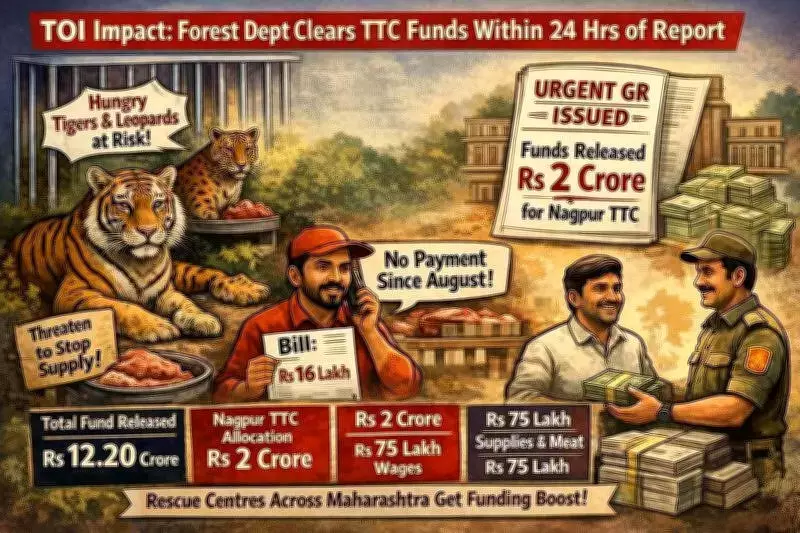
In a rapid response to a looming emergency, the Maharashtra state government issued a resolution on Friday, releasing crucial funds for wildlife rescue centers across the state. This decisive action came within 24 hours of a Times of India report highlighting a severe threat to animals at Nagpur's Transit Treatment Centre (TTC).
Immediate Threat to Pregnant Tigress and Leopards
The crisis unfolded when a meat vendor, supplying essential food to the TTC, threatened to halt deliveries due to unpaid bills exceeding Rs16 lakh. The vendor had not received a single payment since August of the previous year, leaving the center's staff in a state of alarm. The situation was particularly dire for a pregnant tigress at the facility, who consumes approximately 11kg of meat daily. With leopard cubs also requiring nourishment, the total daily demand surpasses 20kg.
With the tigress expected to give birth in less than two weeks, the potential starvation risk posed a grave threat not only to her but also to her unborn litter. The TTC team was deeply concerned about the survival of these vulnerable animals without a consistent food supply.

Government Intervention and Fund Allocation
Upon learning of the situation on Thursday, Additional Chief Secretary Milind Mhaiskar directed officials to take immediate action. He assured TOI that budgetary provisions were being arranged, and a Government Resolution (GR) would be issued promptly. True to his word, the GR was released on Friday, allocating Rs12.20 crore to nine forest divisions statewide.
Nagpur division received a significant allocation of Rs2 crore, which includes Rs75 lakh specifically under the "supplies and materials" category. This component is critical as it covers meat procurement and vendor payments, directly addressing the pending bills that triggered the supply threat. The remaining funds for Nagpur are designated for wages (Rs50 lakh) and minor construction (Rs75 lakh).
Statewide Funding Distribution
The GR encompasses nine key divisions: Nagpur, Pune, Thane, East Nashik, Nanded, Junnar, Ahilyanagar, Melghat (Akot Wildlife Division), and Sanjay Gandhi National Park in Borivali. Pune division secured the largest share at Rs3.49 crore, followed by Nagpur and Ahilyanagar, each receiving Rs2 crore. Thane, Melghat, and East Nashik were allocated Rs1 crore each, with smaller amounts going to Nanded, Junnar, and Sanjay Gandhi National Park.
These allocations respond to proposals totaling Rs47.72 crore submitted by the Additional Principal Chief Conservator of Forests (Budget, Planning and Development) in Nagpur between August 2025 and February 2026. The total annual budget sanctioned under this scheme for 2025-26 is Rs90 crore, indicating a strategic prioritization of urgent needs.
Broader Implications and Future Security
This timely intervention not only resolves the immediate crisis at the Nagpur TTC but also strengthens the financial backbone of wildlife rescue operations across Maharashtra. By ensuring prompt vendor payments, the government aims to restore uninterrupted meat supply, safeguarding the health of the pregnant tigress, her future cubs, and the leopard population under care.
The episode underscores the importance of efficient administrative processes in wildlife conservation, highlighting how swift governmental action can prevent potential tragedies in animal welfare. As funds flow to these centers, the focus now shifts to sustained support and monitoring to ensure long-term stability for Maharashtra's rescued wildlife.