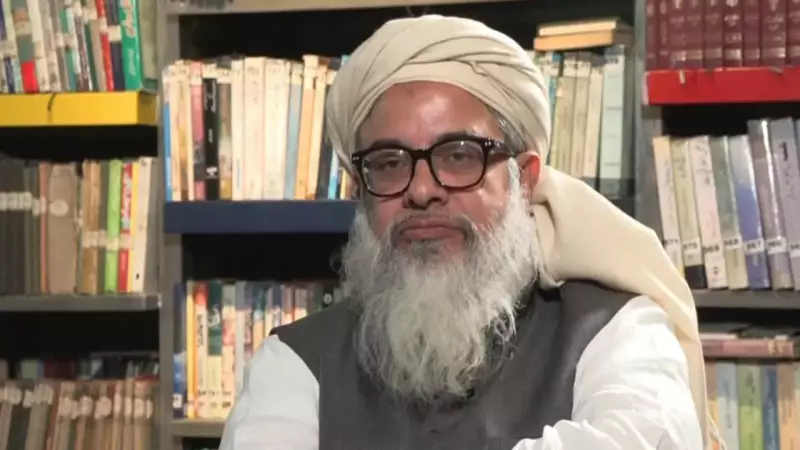
Jamiat Ulama-i-Hind president Maulana Mehmood Madani on Wednesday made significant statements, asserting that it is incorrect to expect mainstream political parties to champion exclusively Muslim causes. In a pointed remark, he questioned the Congress party's capacity, suggesting it is currently struggling to effectively articulate its own core issues.
Clarification on 'Jihad' Remarks
Madani's comments come in the wake of a political storm triggered by his earlier statements concerning the term 'jihad.' His views had drawn criticism not only from the Bharatiya Janata Party (BJP) but also from various community leaders. Addressing the controversy, the Jamiat president offered a detailed clarification.
He emphasized that 'jihad' is a pious word in Islam, but lamented its systematic misuse. "The entire ministry, be it centre, or be it state, have decided that if anything negative related to Muslims comes to light, it will be called Jihad," Madani stated. He argued that the term is being weaponized in a planned manner to tarnish the image of Islam, and that his organization is engaged in a struggle to reclaim its authentic meaning.

Context and Responsibility
While accepting a degree of responsibility for the confusion his initial remarks may have caused, Madani insisted they were not problematic when heard in full context. "It is correct that some confusion has been created, but if you see it in context then you won't misunderstand it," he explained. He added that ensuring no misunderstanding occurred was his duty, and he accepted blame for not fulfilling that responsibility adequately.
Elaborating on his original point, Madani outlined three key ideas from his statement:
- In India, the concept of jihad carries multiple interpretations.
- The greatest jihad is to achieve self-clarity regarding one's purpose and to work on self-improvement.
- Speaking out against injustice is also a form of jihad.
Critique of Political Expectations
Shifting focus to the political landscape, Madani addressed the expectations placed on national parties. "It is wrong to expect any mainstream political party to fight only for Muslims or raise only their issues. I do not want to keep such expectations from any party," he asserted.
He then directed a critique at the Indian National Congress, the principal opposition party. "Right now, the Congress is not even able to raise its own issues — how will it raise anyone else’s?" he questioned. This remark underscores a perception of the grand old party's current organizational and communicative challenges.
Madani's twin statements—one clarifying a religious term amidst controversy and the other commenting on the political dynamics of minority representation—highlight the complex intersection of faith, identity, and politics in contemporary India.