Wedding Remarks by TDP Leader Ignite Political Discourse on Women's Representation
In a seemingly casual moment at a wedding celebration, comments made by Telugu Desam Party (TDP) national general secretary and IT minister Nara Lokesh have unexpectedly triggered a significant debate regarding the proposed reservation for women in legislative bodies. The incident occurred during the wedding festivities of TDP senior functionary and Ponnur MLA Dhulipalla Narendra's daughter, Nagasai Vydeepthi.
Light-Hearted Banter with Serious Implications
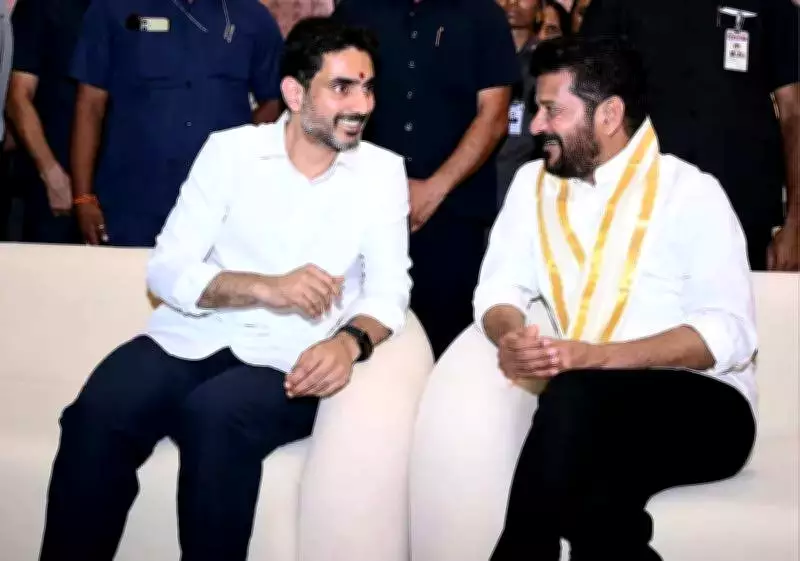
While extending his wishes to the newly married couple, Lokesh humorously advised Vydeepthi to prepare for the upcoming elections, citing the impending implementation of women's reservation. This remark, delivered in a jovial tone, elicited laughter from the assembled guests, including Telangana Chief Minister A. Revanth Reddy. However, the bride's father, Narendra, responded in kind, questioning why he was being singled out in this manner.
The timing of these comments is particularly noteworthy, as they coincide with the Union government's plans to enact women's reservation starting from 2029. The wedding, attended by numerous political figures, quickly transformed into an impromptu forum for discussing this critical issue.

Political Parties Scrambling for Suitable Women Candidates
Many political observers interpret Lokesh's remarks as an indication that political parties are already beginning their search for appropriate women candidates in anticipation of the reservation's implementation. This preparation becomes even more crucial considering the expected 50% increase in assembly seats, which would elevate women's representation to approximately 87 seats.
With both the expansion of assembly seats and the implementation of women's reservation appearing almost certain, political parties face the daunting task of increasing their women candidates more than fourfold by the next election cycle. In the 2024 assembly elections, the NDA alliance partners fielded 23 women candidates—22 from TDP and one from Jana Sena—of whom 21 were successfully elected.
Concerns Over Political Nepotism and Reservation's Purpose
Beyond the immediate political calculations, Lokesh's comments have sparked another contentious debate regarding political nepotism and whether it might undermine the intended purpose of women's reservation. Social media platforms have been abuzz with apprehensions that reservation policies could be exploited to usher in 'nepo-kids'—relatives of established politicians—into politics, while actual power remains concentrated with male politicians behind the scenes.
This concern adds a layer of complexity to the ongoing discussion about how to ensure genuine empowerment and representation for women in political spheres, rather than merely creating symbolic positions.
TDP's Transformation and Leadership Development
Interestingly, Lokesh's wedding remarks came just one day after he addressed TDP's cluster in-charges, describing the party as a 'leaders producing factory.' He emphasized that TDP is currently undergoing a transformation into its third generation, with TDP 3.0 poised to feature greater representation from young party workers who have demonstrated commitment at the grassroots level.
This vision of party renewal and youth inclusion provides context for understanding how TDP might approach the challenge of identifying and nurturing women candidates who can genuinely represent their constituencies and contribute meaningfully to political discourse.
The wedding celebration, intended as a private family occasion, has thus become an unexpected catalyst for broader conversations about gender representation, political strategy, and the future of democracy in India. As the 2029 implementation date approaches, these discussions are likely to intensify, with political parties across the spectrum grappling with how to balance electoral calculations with genuine social transformation.