

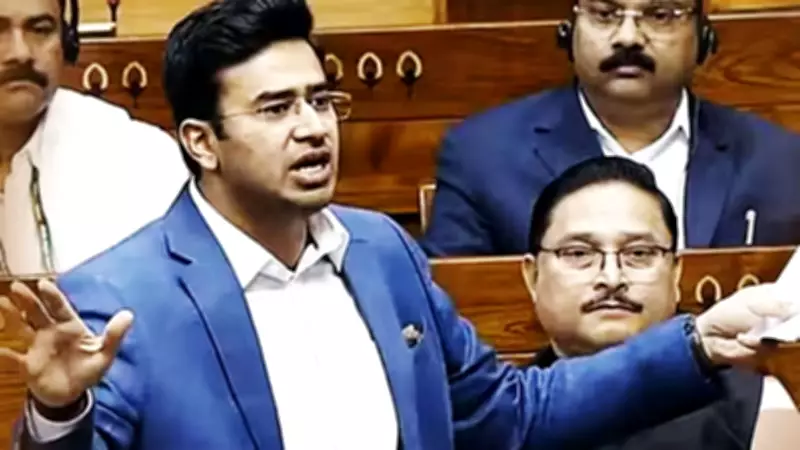
Lok Sabha Witnesses Fiery Debate Over UPA's Governance Legacy
The Lok Sabha session on February 2, 2026, turned into a heated battleground as Bharatiya Janata Party (BJP) leader Tejasvi Surya launched a scathing critique of the United Progressive Alliance (UPA) government's decade in power. The young parliamentarian, while seconding the Motion of Thanks to the President's Address, described the UPA era as a "lost decade of opportunity" marked by excuses and policy paralysis.
Surya's Sharp Attack on UPA's Performance Record
In his parliamentary address, Surya drew a stark contrast between the leadership styles of the Congress-led UPA and the current BJP government under Prime Minister Narendra Modi. He specifically targeted what he called the UPA's "failure to act decisively" on critical national issues including:
- Terrorism and internal security challenges
- Economic growth and development initiatives
- Policy implementation and governance efficiency
The BJP leader argued that while the UPA government offered justifications for its shortcomings, the Modi administration had delivered tangible results despite global economic headwinds. He highlighted India's position as one of the world's fastest-growing economies and praised what he termed the "youth-driven growth momentum" under the current government.

Congress MPs Stage Strong Protest in Parliament
Surya's remarks immediately triggered angry reactions from Congress parliamentarians, with former party president Rahul Gandhi leading the protest. The opposition members expressed strong objection to what they perceived as an unfair characterization of the UPA government's achievements and legacy.
As tempers flared and parliamentary decorum came under strain, Union Home Minister Amit Shah intervened in the debate. Shah defended Surya's right to critique previous governments while emphasizing the importance of parliamentary discussion on governance performance and leadership credibility.
Broader Implications for Parliamentary Discourse
This parliamentary episode underscores the rising political tensions as India's two major political formations spar over their respective governance records. The debate touched upon several critical themes that have become central to India's political discourse:
- The comparative assessment of different political eras and their impact on national development
- The role of decisive leadership in addressing security and economic challenges
- The parameters for evaluating government performance and policy outcomes
The exchange reflects the ongoing battle between the ruling BJP and opposition Congress over narrative control regarding India's recent political history and future direction. As both sides prepare for upcoming electoral battles, such parliamentary confrontations are likely to intensify, with each party seeking to establish its version of India's governance story as the dominant narrative.






