

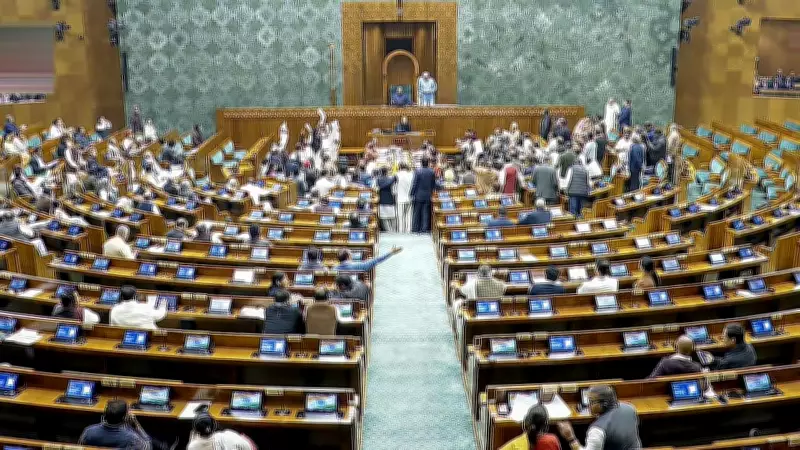
Lok Sabha Descends Into Chaos Over Rahul Gandhi's Controversial Reference
The Lok Sabha session on Tuesday morning was abruptly adjourned following massive uproar and unprecedented scenes of disruption, triggered by Congress leader Rahul Gandhi's authentication of an article referencing a former army chief's memoir. The incident has sent shockwaves through India's political landscape, highlighting deep-seated tensions in parliamentary proceedings.
Unprecedented Scenes of Disruption
As Rahul Gandhi rose to speak and referenced what he claimed were explosive revelations from a former army chief's memoir, opposition MPs immediately protested vociferously. The situation quickly escalated beyond verbal exchanges when several parliamentarians climbed onto the podium directly in front of the Chair, creating a physical confrontation that parliamentary observers described as rare and concerning.
The chaos intensified when multiple MPs began throwing papers and documents across the chamber, creating a spectacle that brought legislative business to a complete standstill. The presiding officer, faced with an uncontrollable situation, had no option but to adjourn the House proceedings temporarily to restore order.

Krishna Prasad Tenneti's Adjournment Decision
Speaker Krishna Prasad Tenneti, who was presiding over the session, made the decision to adjourn the House after repeated attempts to calm the situation proved futile. The adjournment came as a necessary measure to prevent further escalation and maintain parliamentary decorum, though it represents another instance of legislative work being disrupted by political confrontations.
This incident marks one of the most dramatic disruptions in recent parliamentary history, with the physical encroachment on the Speaker's podium being particularly noteworthy. Parliamentary experts suggest such direct challenges to the Chair's authority are exceptionally rare and indicate the depth of political polarization currently affecting India's legislative institutions.
Political Implications and Reactions
The controversy centers on Rahul Gandhi's decision to authenticate and reference material from what he described as a former army chief's memoir during parliamentary proceedings. While the specific contents referenced remain unclear, the mere mention of sensitive military matters in the political arena has sparked intense debate about appropriate boundaries in parliamentary discourse.
Opposition parties have condemned the reference as inappropriate politicization of military matters, while Congress supporters argue it represents legitimate parliamentary scrutiny of governance issues. The incident has already triggered a wave of political reactions across party lines, with leaders from various political formations weighing in on the propriety of bringing military-related content into parliamentary debates.
This disruption comes at a sensitive time in Indian politics, with multiple important legislative matters pending before Parliament. The inability to conduct normal business due to such confrontations raises questions about the functioning of democratic institutions and the growing trend of parliamentary proceedings being derailed by political theatrics rather than substantive debate.
Historical Context and Precedents
While parliamentary disruptions are not uncommon in India's vibrant democracy, today's events represent an escalation in both intensity and method. The physical approach to the Speaker's podium and the throwing of papers create a concerning precedent for how political disagreements might manifest in future sessions.
Observers note that references to military matters in political discourse have always been sensitive in India, with an unwritten convention that military leadership should generally remain outside partisan political debates. Today's incident tests those conventions and may set new precedents for how such matters are handled in parliamentary settings moving forward.
The adjournment represents not just a temporary pause in proceedings but potentially signals deeper institutional challenges that need addressing to ensure Parliament can fulfill its constitutional mandate of deliberation and legislation without constant disruption.






