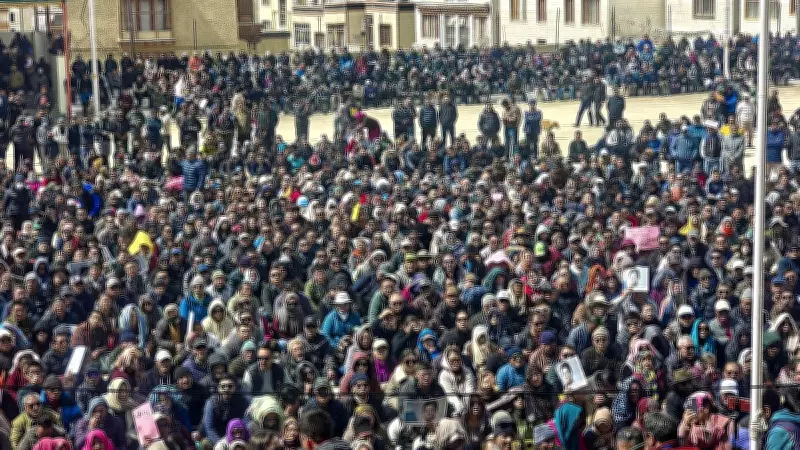
Ladakh's Constitutional Aspirations Face Continued Deadlock
Representatives from the Ladakh region have once again articulated their fundamental constitutional demands during recent discussions with central government officials. The core issues at the forefront include the pursuit of full statehood for Ladakh and its inclusion under the protective provisions of the Sixth Schedule of the Indian Constitution. These longstanding aspirations, which have been a central point of political discourse since Ladakh's reorganization as a Union Territory, remain unresolved following the latest round of dialogue.
Dialogue Yields No Concrete Outcome
Despite engaging in talks aimed at addressing regional concerns, the meeting concluded without any definitive agreement or forward movement. Official sources confirmed that while the dialogue took place, it ultimately reached a point of deadlock, with no conclusion reached on the critical matters presented by the Ladakhi delegation. This outcome underscores the persistent challenges in reconciling local demands with the current administrative framework.
The discussions involved key stakeholders from Leh and Kargil, who have been vocal in advocating for greater autonomy and constitutional safeguards. Their demands are rooted in the desire to preserve the region's unique cultural identity, protect land and resource rights, and ensure meaningful political representation. The Sixth Schedule, which provides for the administration of tribal areas through autonomous district councils, is seen as a vital mechanism for achieving these goals.

Historical Context and Ongoing Struggles
Ladakh's journey toward its current constitutional status has been marked by significant transitions. Following the abrogation of Article 370 and the reorganization of Jammu and Kashmir in 2019, Ladakh was designated as a separate Union Territory without a legislative assembly. This move, while intended to streamline governance, has sparked ongoing calls for enhanced self-governance and legal protections.
The demand for statehood and Sixth Schedule inclusion is not merely administrative but deeply intertwined with socio-economic and environmental concerns. Proponents argue that such measures are essential for sustainable development, ecological conservation, and the empowerment of local communities. The absence of progress in recent talks has left many in the region feeling that their constitutional aspirations are in a state of limbo, with uncertainty clouding the path forward.
Key Points from the Dialogue:- Ladakhi representatives emphasized the non-negotiable nature of their demands for full statehood and Sixth Schedule inclusion.
- The central government, represented by officials including Nityanand Rai, engaged in discussions but did not commit to any specific timeline or action plan.
- Stakeholders from both Leh and Kargil expressed disappointment over the lack of conclusive outcomes, highlighting the need for continued advocacy.
As the situation stands, the deadlock reflects broader tensions between regional autonomy and centralized governance in India. The Ladakhi community remains steadfast in its pursuit of constitutional recognition, with future dialogues anticipated but no immediate breakthroughs in sight. The impasse serves as a reminder of the complex interplay between local aspirations and national policy frameworks in shaping India's political landscape.