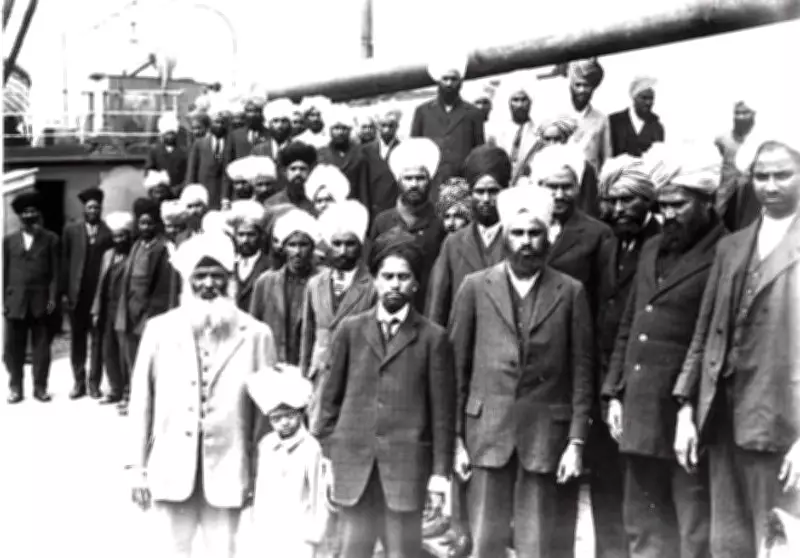
The Komagata Maru incident of 1914 remains a stark reminder of the racial discrimination faced by Indians under British colonialism. A ship carrying 376 passengers, mostly Punjabi Sikhs, arrived in Vancouver in May 1914, only to be denied entry by Canadian authorities. The passengers were kept aboard the vessel for two months in difficult conditions, facing food and water shortages. The incident exposed the hollow promise of British subjecthood, as Indians were considered British subjects but were treated as unwelcome in Canada.
Background of the Incident
The Komagata Maru was chartered by Gurdit Singh, a wealthy Indian businessman, to challenge Canada's restrictive immigration policies. At the time, Canada had implemented a series of laws aimed at limiting Indian immigration, including the continuous journey requirement, which effectively barred ships from India. Gurdit Singh sought to test these laws by sailing directly from Hong Kong to Vancouver.
The Standoff
Upon arrival, the ship was not allowed to dock. Canadian authorities, backed by the British government, refused to let the passengers disembark. The standoff lasted two months, during which the passengers endured harsh conditions. Legal challenges were mounted, but the courts ruled against them. Eventually, the ship was forced to return to India.

Return and Aftermath
When the Komagata Maru reached Calcutta in September 1914, British authorities treated the passengers as political agitators. A confrontation at Budge Budge resulted in the deaths of 19 passengers and several police officers. The incident fueled anti-colonial sentiment and became a rallying point for the Indian independence movement.
Legacy and Modern Relevance
The Komagata Maru incident is now recognized as a pivotal event in the history of racial discrimination and the Indian freedom struggle. In 2026, Punjabi singer Diljit Dosanjh highlighted the incident during his appearance on The Tonight Show Starring Jimmy Fallon, noting that his concert venue in Vancouver was near the site of the 1914 rejection. This brought renewed attention to the event, reminding audiences of the long struggle for equality and justice.
For UPSC aspirants, the Komagata Maru incident is an important topic that covers modern Indian history, colonial politics, and the global context of racial discrimination. It underscores the complexities of British colonial rule and the emergence of radical anti-colonial movements in India.