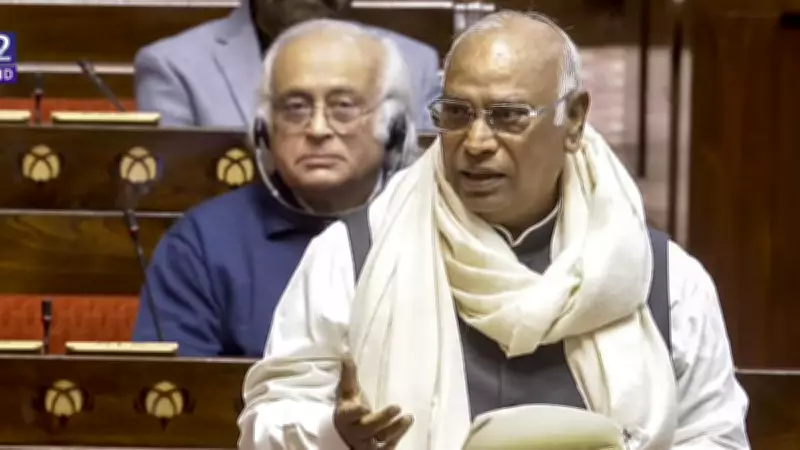
Congress President Mallikarjun Kharge Lambasts Union Budget 2026 as Devoid of Policy Vision
In a scathing critique of the recently presented Union Budget for the fiscal year 2026, Congress President Mallikarjun Kharge has voiced his strong disapproval, asserting that the financial blueprint lacks a coherent policy vision and offers no substantive solutions to the pressing economic issues confronting the nation. His remarks come in the wake of the budget announcement, which has sparked widespread debate across political and economic circles.
Kharge's Key Criticisms of the Budget
Kharge highlighted several areas where he believes the budget falls short. He pointed out that the document fails to address critical challenges such as inflation, unemployment, and rural distress, which have been persistent concerns in the Indian economy. According to him, the budget is merely a collection of numbers without a strategic roadmap to drive growth and equity.
- Absence of Long-Term Planning: Kharge emphasized that the budget does not outline a clear long-term vision for India's development, focusing instead on short-term measures that may not yield sustainable benefits.
- Lack of Innovative Solutions: He criticized the government for not introducing new policies or reforms to tackle issues like job creation and industrial growth, suggesting that the budget relies on outdated approaches.
- Inadequate Support for Vulnerable Sections: Kharge argued that the budget neglects the needs of farmers, laborers, and small businesses, who are crucial to the economy but often face hardships.
Political and Economic Implications
The criticism from the Congress president underscores the deepening political divide over economic policies in India. As the principal opposition party, Congress has positioned itself as a vocal critic of the government's fiscal strategies, and Kharge's statements are likely to fuel further debates in Parliament and beyond. Economists and analysts are now closely examining the budget's provisions to assess whether it indeed lacks the visionary elements that Kharge claims.

Moreover, Kharge's remarks raise questions about the government's ability to navigate complex economic landscapes. With global uncertainties and domestic challenges, a budget without a strong policy vision could hinder India's progress towards becoming a $5 trillion economy, a goal that has been reiterated by policymakers.
Broader Context of Budget Critiques
This is not the first time that opposition parties have criticized Union Budgets for perceived shortcomings. Historically, budgets often face scrutiny from various stakeholders, including political opponents, industry leaders, and civil society. Kharge's critique aligns with a pattern where opposition figures highlight gaps in government proposals to hold the ruling party accountable.
In response to such criticisms, the government typically defends its budget by pointing to specific initiatives and allocations aimed at boosting sectors like infrastructure, healthcare, and education. However, Kharge's focus on the lack of a overarching policy vision suggests a deeper concern about the strategic direction of the economy.
As discussions around the Union Budget 2026 continue, it remains to be seen how the government will address these criticisms and whether future policy announcements will incorporate more visionary elements. For now, Kharge's strong words have set the tone for a contentious political season centered on economic governance.