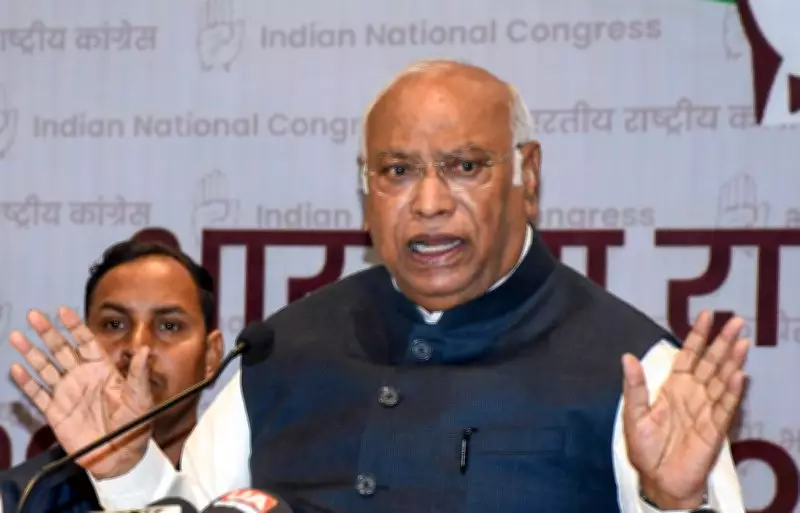
Congress Chief Mallikarjun Kharge Alleges Political Motives Behind Women's Quota Law Push
Congress President Mallikarjun Kharge has penned a critical letter to Prime Minister Narendra Modi, accusing the government of hastily implementing the Women's Reservation Bill to secure political mileage in the lead-up to elections. This move, according to Kharge, raises serious questions about the administration's commitment to genuine gender equality in Indian politics.
Allegations of Expedited Implementation for Electoral Advantage
In his communication, Kharge contends that the government is rushing the enforcement of the landmark legislation, which mandates 33% reservation for women in the Lok Sabha and state legislative assemblies. He suggests this urgency is strategically timed to influence voter sentiment and bolster the ruling party's image, rather than stemming from a sincere dedication to women's empowerment. The Congress leader emphasizes that such a significant constitutional amendment should be implemented with thorough deliberation and transparency, not as a political tool.
Concerns Over Delays and Lack of Clarity
Kharge's letter also highlights persistent delays and ambiguities surrounding the bill's execution. He points out that despite the legislation's passage, concrete steps for its rollout have been sluggish, creating uncertainty about when women will actually benefit from the quota. The Congress president calls for a clear timeline and detailed plan from the government, arguing that vague promises undermine the law's intent. He stresses that without prompt and effective implementation, the bill risks becoming merely symbolic, failing to address the deep-rooted underrepresentation of women in Indian governance.

- The government's alleged haste in implementing the Women's Reservation Bill for political gains ahead of elections.
- Delays in the practical application of the law, despite its legislative approval.
- A lack of transparency and clear roadmap from the administration regarding the quota's enforcement.
- Concerns that the move may be more about electoral strategy than genuine empowerment of women.
Political Implications and Broader Context
This accusation comes amid heightened political tensions, with opposition parties scrutinizing the government's actions on various fronts. The Women's Reservation Bill, long debated in Indian politics, is seen as a pivotal step toward gender parity, but its implementation has been a contentious issue. Kharge's letter underscores the ongoing debate over whether the current push is driven by electoral calculus or a true commitment to social justice. It also reflects broader opposition criticisms of the Modi administration's policies, suggesting a pattern of using legislative measures for political advantage.
As the political landscape heats up, this development adds fuel to the discourse on women's rights and governance in India. The government's response to these allegations will be closely watched, as it could shape public perception and influence upcoming electoral battles. Ultimately, Kharge's intervention highlights the need for accountability and sincerity in enacting laws that aim to transform societal structures, ensuring they serve the people rather than political agendas.