

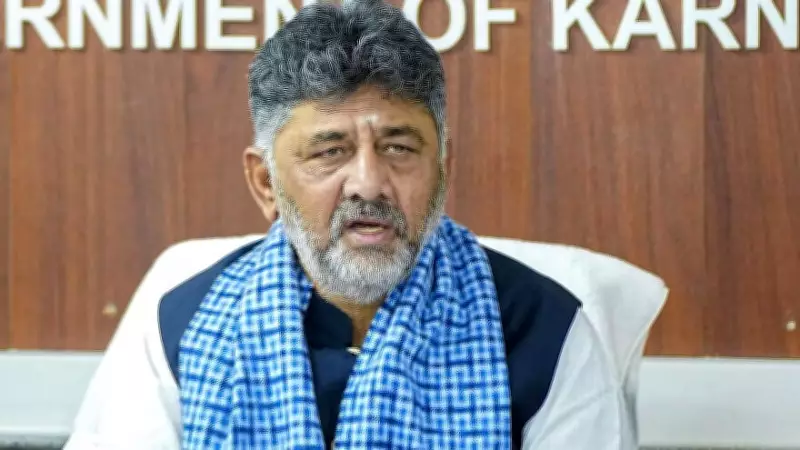
Karnataka Deputy CM Shivakumar Voices Disappointment Over Union Budget 2026
Deputy Chief Minister of Karnataka, D K Shivakumar, has openly criticized the recently announced Union Budget for the fiscal year 2026, asserting that it offers no tangible benefits for the southern state. His remarks came shortly after Finance Minister Nirmala Sitharaman presented the budget in Parliament, highlighting what he perceives as a significant oversight in addressing Karnataka's developmental needs.
Shivakumar's Sharp Critique of Central Government Policies
In a pointed statement, Shivakumar expressed his observations during the budget presentation, emphasizing his disappointment. 'There is no benefit for our state from the central budget. I was observing it,' he stated, underscoring a perceived lack of allocation or initiatives aimed at boosting Karnataka's economy or infrastructure. This criticism adds to the ongoing political discourse surrounding federal-state financial relations in India.
Controversy Over Program Naming and MGNREGA Reference
Further intensifying his critique, Shivakumar highlighted a specific aspect of the budget that he finds contentious. He remarked, 'They have named a programme after Mahatma Gandhi now (after repealing the MGNREGA act that was named after Gandhi).' This comment references the Mahatma Gandhi National Rural Employment Guarantee Act (MGNREGA), a key social welfare scheme, and suggests a symbolic gesture by the central government that he views as insufficient or ironic, given past actions.

The Deputy CM's statement implies a broader concern about the effectiveness and continuity of central schemes, particularly those named after national icons. By drawing attention to the naming of a new program after Gandhi, he questions whether such moves translate into real benefits for states like Karnataka, which has been seeking greater financial support and policy focus from the Union government.
Broader Implications for Karnataka's Development Agenda
Shivakumar's criticism reflects deeper anxieties within Karnataka's administration regarding fiscal federalism and resource allocation. As a major economic contributor to India, with hubs in Bengaluru and other cities, the state often advocates for more substantial central investments in areas such as:
- Infrastructure development
- Technology and innovation projects
- Agricultural support systems
- Healthcare and education initiatives
The absence of perceived benefits in the Union Budget 2026 could potentially impact the state's planning and implementation of its own development programs, leading to calls for revised strategies or increased state-level funding.
Political and Economic Context of the Budget Response
This reaction from a senior Karnataka leader comes amid a charged political environment, where state governments frequently scrutinize central budgets for regional impacts. Shivakumar's remarks may resonate with other opposition-ruled states that have expressed similar concerns over budget allocations in the past. The Union Budget 2026, presented by Nirmala Sitharaman, aims to address national priorities, but Shivakumar's feedback underscores the challenges in balancing national objectives with regional aspirations.
As discussions unfold, stakeholders in Karnataka will likely monitor how the central government addresses these criticisms and whether any clarifications or adjustments are made to assuage state-level concerns. The Deputy CM's stance highlights the ongoing dialogue between the center and states, crucial for cooperative federalism in India's diverse political landscape.






