J&K Deputy Chief Minister Adopts Conciliatory Tone in Republic Day Address
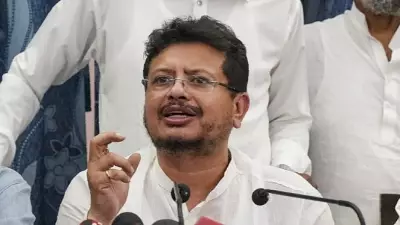
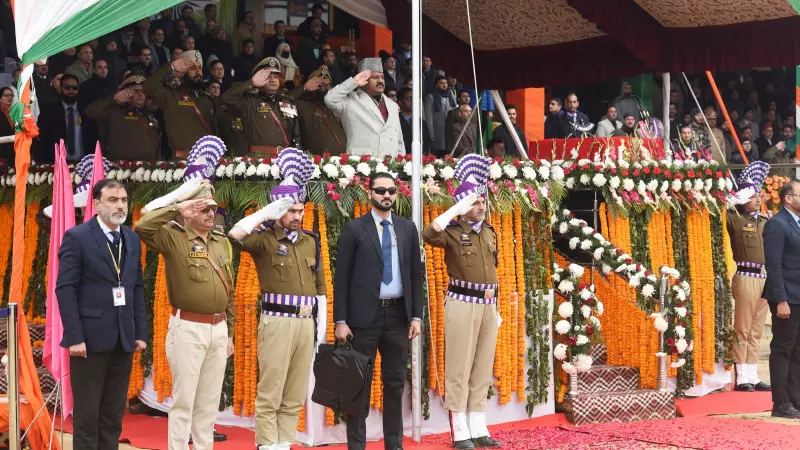
In a marked departure from the confrontational rhetoric that has characterized recent political discourse in Jammu and Kashmir, Deputy Chief Minister Surinder Choudhary delivered a measured and conciliatory Republic Day speech on Monday. The address, which lasted approximately 32 minutes, focused primarily on themes of development, security, and regional unity, rather than directly challenging the central government on contentious issues.
Contrast with Chief Minister's Independence Day Remarks
Choudhary's approach stood in stark contrast to the fiery Independence Day speech delivered by Chief Minister Omar Abdullah just months earlier. While Abdullah had prominently highlighted the delay in restoring statehood to Jammu and Kashmir, Choudhary's Republic Day remarks carefully avoided antagonizing the Centre or the Lok Bhawan. This strategic shift in tone suggests a more nuanced political strategy within the regional administration.
Emphasis on Development and Security Achievements
The Deputy Chief Minister dedicated substantial portions of his address to outlining the development progress Jammu and Kashmir has witnessed under the current administration. He specifically highlighted achievements in critical sectors including healthcare, education, and skill development initiatives.

"Jammu and Kashmir has moved way ahead on the path of development," Choudhary declared before the gathered crowd at Srinagar's Bakshi Stadium. "We have a vision that Jammu and Kashmir will become the skill capital of North India."
Choudhary also addressed security concerns directly, acknowledging the setback suffered by the region's tourism industry following the Pahalgam attack. He expressed appreciation for security forces' efforts in counter-terrorism operations and referenced the "wounds caused by Pakistan" to local communities.
Statehood Issue Addressed Separately
While the statehood question was notably absent from the formal Republic Day speech, Choudhary addressed the matter during a separate function later in the day. When questioned about the issue, he referenced previous commitments made by central leadership.
"As far as statehood is concerned, Prime Minister sahib and Home Minister sahib have promised it on the floor of the House not only to the people of Jammu and Kashmir but to the people of India," Choudhary stated. "They have promised it before the country's highest court. We hope that the Prime Minister and the Home Minister will fulfil their promises... and statehood will be returned to Jammu and Kashmir."
Appeals for Unity and Understanding
A significant portion of Choudhary's address focused on fostering unity among Jammu and Kashmir's diverse regions and religious communities. Against the backdrop of demands for a separate state for Jammu, the Deputy Chief Minister made a fervent appeal for brotherhood.
"I appeal to you to keep this brotherhood intact," he urged. "Only then can we continue to move on the path of development. No doubt, there are forces that want to break this brotherhood, who want to separate the Hindu from the Muslim and the Sikh from the Christian. But we are proud that the people of Jammu and Kashmir have not let them break the brotherhood."
Choudhary also acknowledged public frustrations while asking for understanding of governmental limitations. "I know you face a lot of difficulties, and you want our government to solve your issues. You, too, will have to understand our limitations. But I still assure you that our government will soon resolve your issues."
Tourism Promotion and Safety Assurance
In a direct effort to revive the region's vital tourism sector, Choudhary made an emotional appeal to potential visitors, emphasizing the Valley's safety and natural beauty.
"O' the people of the world, come to my home, give radiance to its valleys," he proclaimed, extending a personal invitation to global travelers.
Contrasting Political Perspectives
Meanwhile, former Chief Minister and Peoples Democratic Party president Mehbooba Mufti offered a contrasting Republic Day message that struck a more critical tone regarding national institutions.

"Republic Day must be more than parades and speeches," Mufti asserted. "August 15, 1947, gave us freedom from colonial rule, but January 26, 1950, gave us the constitutional right to live that freedom with dignity, guaranteeing freedom of speech and religion, and above all, the power to vote."
She continued with a pointed critique: "Our Constitution created strong institutions to protect these values. Today, many of these institutions have been weaponised to undermine the very idea of India."
The divergent approaches highlighted in these Republic Day messages reflect the complex political landscape of Jammu and Kashmir, where development narratives intersect with ongoing constitutional debates and security challenges.