

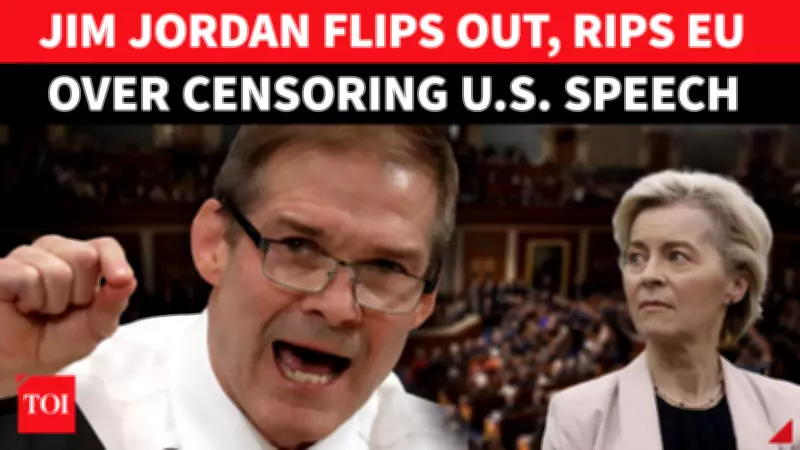
Jim Jordan's Fiery Outburst Against EU Censorship Rocks House Hearing
In a dramatic and heated session of the U.S. House of Representatives, Congressman Jim Jordan unleashed a blistering critique of the European Union, accusing it of actively censoring American speech. The confrontation, which erupted during a formal hearing, highlighted escalating tensions between U.S. lawmakers and European institutions over fundamental issues of free expression and regulatory overreach.
A Confrontation Over Transatlantic Speech Rights
Jordan, known for his passionate advocacy of First Amendment principles, directed his anger specifically at European officials, whom he claimed are interfering with the free expression rights of American citizens and entities. His remarks, delivered with notable intensity, pointed to a growing pattern of European policies that, in his view, unjustly restrict speech originating from the United States. This incident is not an isolated one but reflects a broader, simmering dispute about how speech is governed across international borders.
The congressman's outburst sent shockwaves through the hearing room, leaving colleagues and observers stunned by the directness and force of his accusations. The session, which was intended to address various regulatory matters, was quickly dominated by Jordan's impassioned defense of American speech freedoms. His comments underscored a deep-seated frustration among some U.S. policymakers regarding what they perceive as European attempts to impose censorship standards that conflict with American constitutional values.

Broader Implications for Global Free Expression
This confrontation goes beyond a mere parliamentary skirmish; it signals a significant clash of powers on the global stage. The debate touches on core questions of accountability, sovereignty, and the limits of international influence over domestic speech issues. As digital platforms make borders increasingly porous, conflicts like these are becoming more frequent and more contentious.
The political drama unfolding between U.S. lawmakers and European institutions is likely to have lasting repercussions. It puts a spotlight on the ongoing struggle to balance free expression with other societal concerns, such as hate speech regulation and misinformation control, in an interconnected world. Jordan's remarks have amplified calls for greater scrutiny of how foreign regulations impact American rights, potentially setting the stage for further legislative or diplomatic actions.
Ultimately, this episode serves as a vivid reminder of the enduring importance of speech freedoms in democratic societies and the complex challenges that arise when different legal and cultural frameworks collide. The fallout from Jordan's accusations may influence future transatlantic dialogues and policy decisions related to censorship, free expression, and international cooperation.






