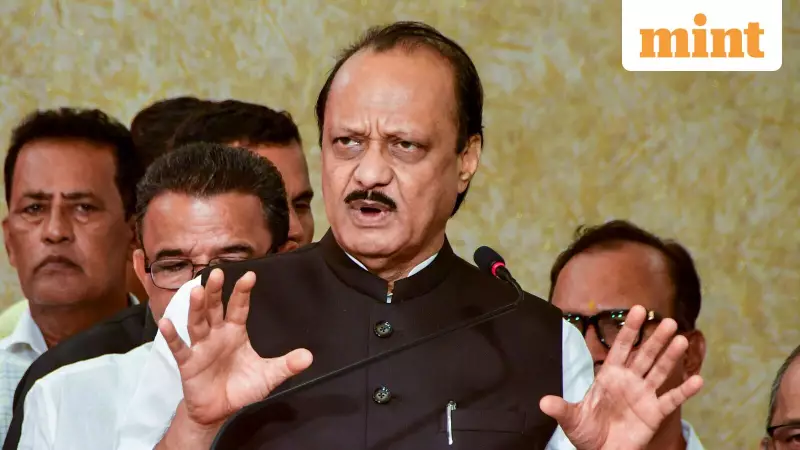
The tragic death of Maharashtra Deputy Chief Minister Ajit Pawar in a plane crash near Baramati has once again cast a somber spotlight on a recurring theme in India's political narrative: the loss of senior public figures in aviation accidents. Over multiple decades, the nation has witnessed several such heartbreaking incidents involving both aircraft and helicopters, each triggering thorough investigations, policy reevaluations, and periods of profound national mourning.
A Chronology of Political Losses in Aviation Tragedies
Below is a detailed chronology of prominent Indian politicians and public leaders who have lost their lives in air crashes, illustrating not only the immense personal toll on families and constituencies but also the broader institutional and political impacts that ripple through the nation following these devastating events.
Ajit Pawar (2026)
Ajit Anantrao Pawar, a veteran leader of the Nationalist Congress Party (NCP) and Maharashtra's longest-serving Deputy Chief Minister across non-consecutive terms, met his untimely demise on January 28, 2026. A chartered Learjet 45 crashed near Baramati in Pune district during a landing attempt.

The aircraft, returning from Mumbai, was carrying Pawar along with security personnel and crew members. Preliminary statements from aviation regulatory authorities indicated that all individuals on board perished in the accident. At 66 years old, Pawar was widely regarded as an influential architect of Maharashtra's fiscal and administrative policies, and his sudden death has created a significant void in the state's political landscape.
Vijay Rupani (2025)
Former Gujarat Chief Minister Vijay Rupani died on June 12, 2025, in the catastrophic crash of Air India Flight AI-171 shortly after take-off from Ahmedabad while en route to London.
The Airbus aircraft was carrying more than 240 passengers. Rupani's remains were eventually identified through meticulous DNA matching procedures, leading Gujarat to observe an official day of state mourning. Investigators have been examining multiple factors including aircraft systems, prevailing weather conditions, and air traffic communications as part of an ongoing comprehensive probe.
Dorjee Khandu (2011)
Dorjee Khandu, who was serving as Chief Minister of Arunachal Pradesh at the time, died in a helicopter crash on April 30, 2011, while flying through the remote and challenging mountainous terrain near Tawang.
The helicopter lost contact shortly after take-off, initiating days of intensive search operations involving the armed forces. The wreckage was eventually located in dense forest at high altitude. Subsequent investigations cited poor weather conditions and the region's extremely challenging topography as primary contributing factors to the tragedy.
Y. S. Rajasekhara Reddy (2009)
Popularly known as YSR, Y. S. Rajasekhara Reddy was serving as Chief Minister of undivided Andhra Pradesh when he died in a Bell 430 helicopter crash on September 2, 2009.
The helicopter went missing during its journey from Hyderabad to Chittoor and was later discovered in the Nallamala forest. Investigators concluded that severe weather conditions combined with low visibility led to controlled flight into terrain. His sudden death triggered widespread public grief and initiated major political realignments across the state that would have lasting consequences.
Om Prakash Jindal and Surender Singh (2005)
Haryana Power Minister Om Prakash Jindal and Agriculture Minister Surender Singh both died when a King Cobra helicopter crashed near Saharanpur, Uttar Pradesh, on March 3, 2005.
The helicopter was flying from Delhi to Chandigarh when the accident occurred. Investigators pointed to technical failure combined with poor visibility as significant contributing factors to this tragic incident that claimed two prominent political figures simultaneously.
G. M. C. Balayogi (2002)
G. M. C. Balayogi, who was serving as Speaker of the Lok Sabha at the time, died in a Bell 206 helicopter crash in Krishna district, Andhra Pradesh, on March 3, 2002.

Adverse weather conditions were cited as a major cause of the accident. Balayogi's death marked a rare constitutional moment in Indian history, as a sitting Speaker had never before died in office due to an aviation accident, highlighting the unique institutional impact of such tragedies.
Madhavrao Scindia (2001)
Senior Congress leader and Union Minister Madhavrao Scindia was killed in a Beechcraft C90 aircraft crash on September 30, 2001, while flying from Delhi to Kanpur.
Engine failure, compounded by adverse weather conditions, was cited as the likely cause of the crash. His death had long-term ramifications for Congress politics both in Madhya Pradesh and at the national level, demonstrating how such incidents can reshape political landscapes for years to come.
Sanjay Gandhi (1980)
One of the earliest and most widely remembered incidents involved Sanjay Gandhi, who died on June 23, 1980, when a light aircraft he was piloting crashed near Safdarjung Airport in New Delhi.
The accident was attributed to pilot error and spatial disorientation. Gandhi's death significantly reshaped political equations across the country during a critical period of India's development, showing how aviation tragedies can alter national political trajectories.
General Bipin Rawat (2021)
India's first Chief of Defence Staff, General Bipin Rawat, and his wife Madhulika Rawat were killed in a Mi-17V5 helicopter crash near Coonoor, Tamil Nadu, on December 8, 2021.
The helicopter was flying from Sulur Air Force Base to Wellington when it went down in hilly terrain. A comprehensive tri-services inquiry later attributed the crash to pilot spatial disorientation caused by sudden weather changes. Thirteen of the fourteen people on board lost their lives in this tragedy, prompting nationwide mourning and full state honors for the distinguished military leader.
The Broader Implications
These tragic incidents collectively underscore several critical aspects of India's political and aviation history. Each accident has prompted thorough investigations that often lead to policy changes and safety enhancements within India's aviation sector. Beyond the immediate personal losses, these events have frequently triggered significant political realignments, constitutional moments, and national mourning periods that reflect the deep connection between public figures and the citizens they serve.
The pattern reveals how aviation safety, weather monitoring, and emergency response protocols have evolved over time in response to these tragedies. Furthermore, these incidents highlight the risks that public figures often undertake while traveling to fulfill their duties, particularly in regions with challenging terrain or weather conditions.
As India continues to develop its aviation infrastructure and safety protocols, the memory of these lost leaders serves as both a solemn reminder of past tragedies and a motivation for ongoing improvements in aviation safety standards across the nation.