

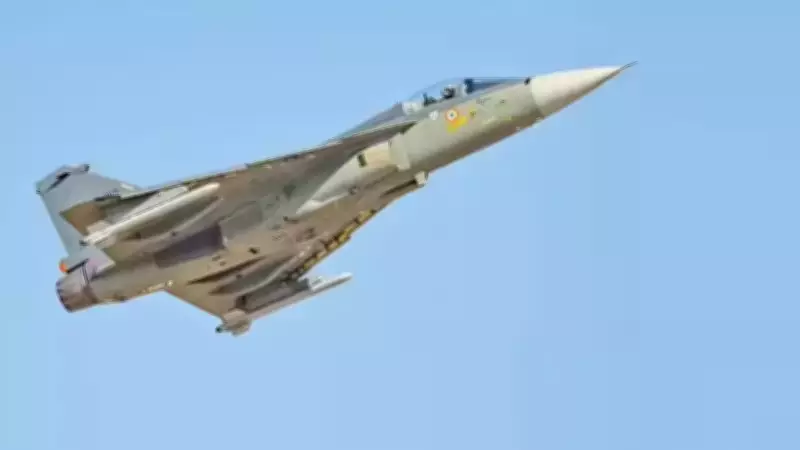
HAL Dismisses LCA Mk1A Delivery Delay Rumors, Confirms Five Aircraft Ready for IAF
Hindustan Aeronautics Limited (HAL) has firmly rejected speculation regarding delays in delivering the Light Combat Aircraft (LCA) Mk1A to the Indian Air Force. In an official statement released on Thursday, the company clarified that five aircraft are fully prepared for handover, with all major contracted capabilities integrated as per agreed specifications.
Production Status and Engine Supply Updates
HAL announced that, in addition to the five ready jets, nine more LCA Mk1A aircraft have already been constructed and flown. These will be made delivery-ready once engines are received from US-based General Electric (GE). The company noted it has received five engines from GE to date and expressed optimism about the supply chain, stating that future deliveries align with HAL's plans.
All design and development issues identified so far are being addressed on a fast-track basis, with HAL in active discussions with the IAF to commence deliveries at the earliest. The company remains confident in meeting its delivery guidance for the current financial year, despite earlier delays attributed to the IAF's insistence on a fully operational configuration and engine supply disruptions.

Orders and Production Capacity Overview
The IAF placed its first order for 83 LCA Mk1A aircraft in February 2021, comprising 73 fighters and 10 trainers. This was followed by a second order in September 2025 for 97 more jets at a cost exceeding Rs 62,370 crore, bringing the total to 180 aircraft in two tranches.
Currently, HAL's fighter aircraft production capacity stands at 24 aircraft per year. At this rate, completing the 180-aircraft order would take over seven years, with the full fleet expected to be delivered around 2033.
Significance of the LCA Mk1A for the Indian Air Force
The LCA Mk1A is a critical component of the IAF's strategy to replace retired MiG-21 fleets and bolster declining squadron strength. As a 4.5-generation, single-engine, multi-role fighter, it is capable of air defence, ground attack, and maritime strike missions.
Key upgrades over the earlier Tejas Mk1 include:
- An Active Electronically Scanned Array (AESA) radar for enhanced target detection and tracking
- An indigenous electronic warfare suite for improved threat detection and survivability
- Air-to-air refuelling capability to extend operational range
- Improved maintainability with Line Replaceable Units and better diagnostics
Indigenous content in the Mk1A exceeds 64%, with 67 additional Indian-origin items incorporated. The aircraft can carry a wide range of weapons, including beyond-visual-range missiles and precision-guided bombs, and is equipped with a 23 mm internal cannon.
Future Strategic Projects
Beyond the Mk1A programme, HAL is advancing several strategic initiatives, such as the Tejas Mk2, the Indian Multi Role Helicopter (IMRH), and the Combat Air Teaming System (CATS). These projects are expected to enter production after 2032, further strengthening India's defence capabilities.
The IAF currently operates 40 earlier LCA Mk1 aircraft, and with 180 Mk1A jets on order, the Tejas programme is poised to be a cornerstone of India's fighter fleet until more advanced platforms like the Tejas Mk2 and the Advanced Medium Combat Aircraft (AMCA) become operational.






