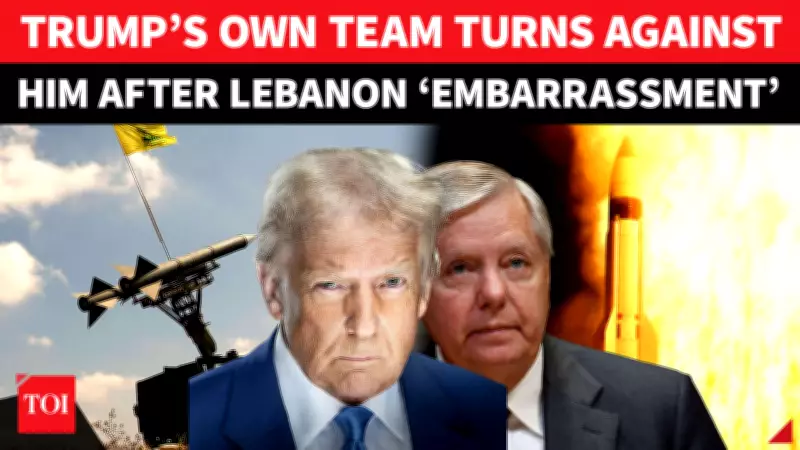
Republican Senator Graham Condemns Trump's Lebanon Ceasefire as 'Strategic Blunder'
A significant political rift has emerged in Washington following the announcement of a temporary 10-day ceasefire between Israel and Lebanon, with Republican Senator Lindsey Graham publicly criticizing President Donald Trump's decision. This rare instance of intra-party dissent highlights deepening divisions over U.S. foreign policy in the volatile Middle East region.
Intra-Party Criticism Over Middle East Diplomacy
President Trump, who typically enjoys strong support from Republican lawmakers, is facing unusual pushback from within his own party regarding the Israel-Lebanon truce. Senator Graham, a prominent Republican voice on foreign affairs, has characterized the ceasefire agreement as a potential strategic mistake that could ultimately strengthen Hezbollah's position in Lebanon.
The ceasefire comes amid ongoing tensions between Israel and the Iran-backed Hezbollah militant group operating in southern Lebanon. While the Trump administration has framed the temporary truce as a diplomatic achievement that could prevent broader regional escalation, critics argue it provides Hezbollah with valuable time to regroup and rearm.

Graham's Warning About Hezbollah Advantage
Senator Graham has expressed particular concern that the 10-day pause in hostilities might inadvertently benefit Hezbollah more than Israel. "Hezbollah will use this ceasefire to strengthen their military capabilities and political position," Graham warned during a recent Senate hearing. "This temporary truce could backfire spectacularly by allowing Iran's proxy forces to become more entrenched in Lebanon."
The South Carolina senator, who has consistently advocated for a more aggressive U.S. stance against Iranian influence in the Middle East, suggested that the ceasefire represents a departure from previous administration policies that prioritized maximum pressure on Tehran and its regional allies.
Broader Implications for U.S. Foreign Policy
The public disagreement between a senior Republican senator and the Republican president signals potential challenges ahead for U.S. Middle East strategy. This development occurs against a backdrop of:
- Ongoing tensions between Israel and Iranian-backed groups throughout the region
- Iran's recent claims of diplomatic victory following the ceasefire announcement
- Complex negotiations involving multiple regional actors including Lebanon, Israel, and their international partners
- Debates within Washington about the appropriate balance between diplomatic engagement and military pressure
While the Trump administration has defended the ceasefire as a necessary step to prevent further civilian casualties and create space for diplomatic solutions, critics like Senator Graham argue that temporary pauses often benefit non-state actors like Hezbollah more than they advance long-term stability.
Political Ramifications in Washington
The public criticism from a prominent Republican senator represents a notable departure from the party unity that has typically characterized Republican responses to Trump's foreign policy decisions. This development suggests that:
- There are significant differences within the Republican Party regarding Middle East strategy
- Some Republican lawmakers are becoming more willing to publicly challenge administration policies
- The Israel-Lebanon conflict has become a flashpoint for broader debates about U.S. foreign policy priorities
As the 10-day ceasefire period progresses, Washington observers will be watching closely to see whether this intra-party disagreement represents an isolated incident or signals a more substantial shift in Republican foreign policy consensus. The outcome of the temporary truce and its aftermath will likely influence future debates about U.S. engagement in the Middle East and the appropriate response to Iranian influence in the region.