Centre Informs Supreme Court of Expert Committee for Revised NCERT Chapter Review
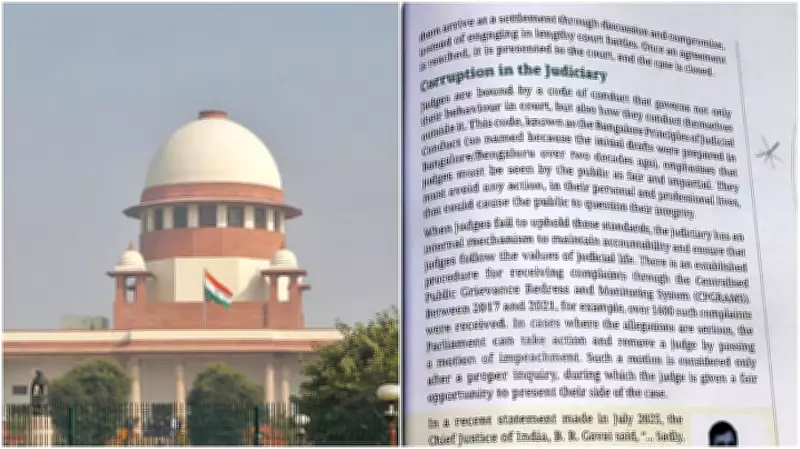
The Central government has officially notified the Supreme Court of India about the establishment of an expert committee tasked with reviewing the revised chapter on the judiciary in the National Council of Educational Research and Training (NCERT) curriculum. This development comes amid ongoing discussions and scrutiny over the content of educational materials related to the judicial system.
Supreme Court Declines to Entertain Petition
In a related proceeding, the Supreme Court refused to entertain a petition that had been filed concerning the NCERT chapter. The top court made observations emphasizing that the judiciary should not exhibit oversensitivity when faced with healthy criticism. This stance underscores the court's commitment to maintaining a balanced perspective on public discourse and educational content.
The formation of the expert committee is seen as a proactive step by the Centre to address any concerns or discrepancies in the revised chapter. The committee is expected to comprise specialists in law, education, and related fields, who will thoroughly assess the material to ensure accuracy, fairness, and alignment with educational standards.

Background and Implications
The revised NCERT chapter on the judiciary has been a topic of debate among educators, legal experts, and the public. Critics have raised questions about its portrayal of judicial functions and historical context, prompting calls for a review. The Centre's decision to form an expert committee aims to provide a comprehensive evaluation and potentially recommend modifications to enhance the chapter's educational value.
This move highlights the government's focus on maintaining high standards in educational resources, particularly in subjects that involve critical institutions like the judiciary. It also reflects a broader effort to foster informed citizenship through well-curated academic content.
Next Steps and Public Response
As the expert committee begins its work, stakeholders are awaiting its findings and recommendations. The review process is anticipated to involve consultations with various experts and possibly public feedback to ensure a holistic approach. The Supreme Court's refusal to intervene in the petition suggests a judicial preference for allowing such academic and administrative processes to unfold without legal interference, unless necessary.
This incident serves as a reminder of the importance of robust educational frameworks and the role of constructive criticism in shaping them. It also underscores the judiciary's resilience and its ability to engage with public discourse in a measured manner.