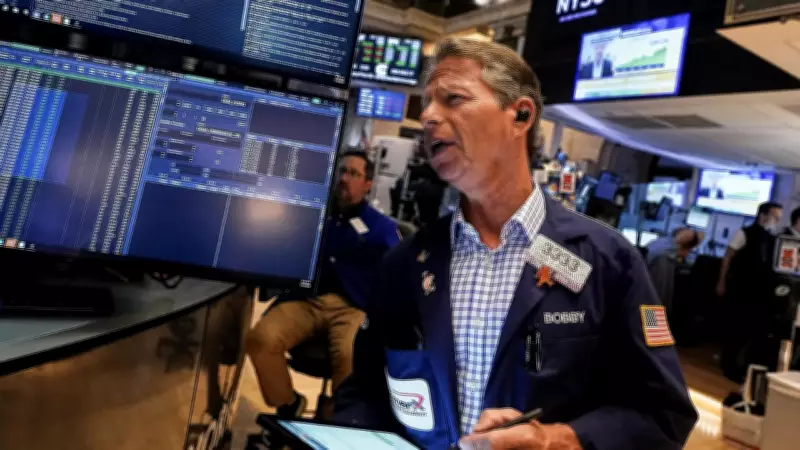
Wall Street Braces for Fourth Consecutive Weekly Decline Amid Global Tensions
US stocks edged lower in early trading on Friday, positioning Wall Street for a fourth straight weekly loss, according to an AP report. Despite a modest easing in oil prices that helped stabilise broader global markets, investor sentiment remained subdued due to escalating geopolitical risks and economic uncertainties.
Market Performance and Key Indices
The S&P 500 declined by 0.5% in morning deals, heading toward its longest losing streak in a year. The Dow Jones Industrial Average dropped 126 points, or 0.3%, while the Nasdaq Composite slipped 0.8% as of 9:35 am Eastern Time. This downward trend reflects growing apprehension among traders as they navigate a complex financial landscape.
Impact of Rising Treasury Yields and Inflation Fears
Market sentiment was heavily weighed down by a further rise in Treasury yields, which increases borrowing costs for companies and households and tends to pressure valuations across asset classes. The yield on the 10-year US Treasury climbed to 4.32% from 4.25% late Thursday and from about 3.97% before the onset of the Iran conflict. Yields have been climbing since the conflict began, driven by concerns that prolonged disruptions to energy supply could drive inflation higher.

Growing uncertainty over inflation has also reshaped expectations around US monetary policy. Traders have largely abandoned bets on multiple interest-rate cuts this year and are even pricing in a small probability of a rate hike in 2026, as shown by data from CME Group. Lower borrowing costs would typically support growth and investment prices—a stance US President Donald Trump has strongly advocated—but such easing could aggravate inflationary pressures, adding to the market's volatility.
Global Market Resilience and Oil Price Movements
Outside the United States, equity markets showed greater resilience after heavy losses in the previous session. Major European indices moved marginally higher, and South Korea’s market gained 0.3%, although Chinese benchmarks weakened. A slight pullback in oil prices provided some relief: Brent crude, the global benchmark, dipped 0.3% to $108.29 a barrel, while US benchmark crude remained broadly flat at $95.53.
Oil has been highly volatile in recent weeks as investors gauge the duration and economic impact of the conflict in West Asia, particularly disruptions to shipments through the Strait of Hormuz, which handles roughly one-fifth of global crude flows. This volatility underscores the interconnectedness of global markets and the sensitivity to geopolitical events.
Notable Stock Movements and Corporate News
On Wall Street, shares of Super Micro Computer plunged 28.2% after US authorities accused a senior executive and two affiliates of conspiring to smuggle advanced Nvidia-based servers to China. The company stated it is cooperating with investigators and has placed the employees concerned on administrative leave while ending ties with an accused contractor.
In contrast, FedEx rose 2.8% after reporting quarterly earnings that exceeded analysts’ expectations, highlighting the mixed performance within the market as companies navigate these challenging conditions.
Broader Implications and Future Outlook
The ongoing market downturn reflects broader concerns about economic stability in the face of geopolitical tensions. As investors monitor developments in the Iran conflict and its impact on energy supplies, the focus remains on inflation trends and monetary policy adjustments. The resilience seen in some international markets suggests a cautious optimism, but the persistent losses on Wall Street indicate that risks are far from over.
With the S&P 500 poised for its longest losing streak in a year, market participants are advised to stay vigilant and consider diversified strategies to mitigate potential losses. The interplay between rising yields, inflation fears, and geopolitical events will likely continue to shape market dynamics in the coming weeks.