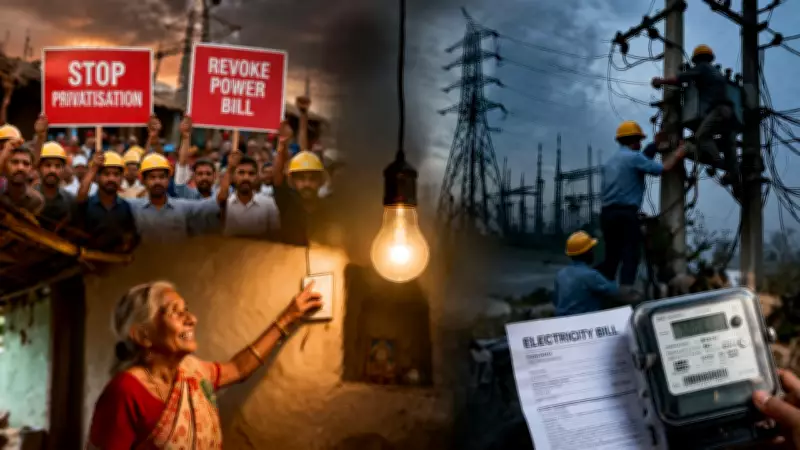
Electricity Bill 2025 Sparks Nationwide Strike by 27 Lakh Power Workers
Nearly 27 lakh workers across India are preparing for a nationwide strike, a massive mobilization triggered by a single legislative move: the introduction of the Electricity (Amendment) Bill, 2025 in Parliament. These are not ordinary workers but the backbone of the nation's power infrastructure—engineers, linemen, and staff who ensure electricity flows seamlessly through the system. The Centre has yet to formally table the Bill, but unrest is already palpable, with earlier protests this month seeing employees from state electricity boards walking off the job.
Opposition Spreads Beyond Workforce
Resistance to the Bill is not confined to the power sector alone. Farmer unions have also voiced strong concerns, indicating that the backlash cuts across diverse sectors. The government, however, portrays the Draft Electricity (Amendment) Bill, 2025 as a long-overdue reform aimed at making the power sector more competitive, efficient, and capable of meeting future demands. At its core lies a pivotal shift: allowing multiple electricity distribution companies to operate within the same geographic area, utilizing shared infrastructure while maintaining an obligation to supply power to all consumers.
This change disrupts the traditional model where a single supplier, like a quiet miracle, lit up entire villages. Today, the flick of a switch could involve multiple companies sharing the same wires and competing to supply electricity to individual homes. This fundamental shift has become the rallying cry for power sector employees, farmers, and trade unions, who collectively decry it as "privatization".

Decade-Long Struggle and Drafting Controversies
The Centre's efforts to overhaul electricity laws span over a decade, with each attempt meeting stiff resistance. Criticism extends beyond the Bill's content to its drafting process. A working group established by the power ministry in January 2026 to finalize the Bill has drawn flak from the All India Power Engineers Federation. They have flagged the inclusion of the All India Discom Association, arguing it signals a bias toward privatization and marginalizes worker concerns.
Beyond privatization fears, the Bill could directly impact consumers by altering who supplies electricity and at what cost. India's power sector stands at a critical juncture, with electricity consumption rising steadily due to more appliances, electric vehicles, and data centers. In 2025, the country met a record peak demand exceeding 240 GW, with total installed capacity surpassing 5 lakh MW, over half from non-fossil sources. Despite this growth, the distribution segment remains under severe stress.
Financial Strains and Turnaround Challenges
State-run distribution companies, or discoms, have historically grappled with mounting losses. Only recently did they post a modest collective profit of about Rs 2,700 crore in 2024–25, a fragile turnaround from losses exceeding Rs 25,000 crore the previous year and nearly Rs 68,000 crore a decade ago. This gap between a rapidly expanding power system and financially strained distributors is what the government aims to address through the Bill, promoting competition to enhance efficiency and consumer choice.
Farmer and State Concerns
Farmer unions oppose the Bill due to fears that privatization could undermine state-run discoms, potentially forcing farmers to pay for private suppliers and eroding subsidies. Currently, several states provide free or subsidized electricity to farmers, using it as a policy and political tool. The Bill also raises central vs. state control issues, with worries that greater authority might shift to central regulators or private players, reducing state autonomy over tariffs and subsidies.
Job Security and Consumer Implications
Anxieties over job losses are rampant, with concerns about outsourcing, restructuring, and contractualization in the sector. Tapan Sen, vice president of the Centre of Indian Trade Unions (CITU), warned that privatization could lead to large-scale job losses and jeopardize national security. For consumers, the Bill promises more choice and better service through competition, but critics argue it commodifies electricity, risking price volatility and unreliable supply.

Lessons from Past Privatization Efforts
India's limited experiments with privatization offer mixed lessons. Odisha's late-1990s attempt was rolled back, while Delhi's 2002 move is often cited as a success, reducing Aggregate Technical and Commercial losses from 45–60% to under 6.5%. However, financial challenges persisted, with regulatory disputes and deferred costs accumulating into tens of thousands of crores. This highlights that privatization can improve operational efficiency but does not guarantee financial stability without robust regulation.
As the strike looms, the debate over the Electricity (Amendment) Bill, 2025 underscores deep-seated tensions between modernization efforts and safeguarding public interests, with the outcome poised to reshape India's power landscape.