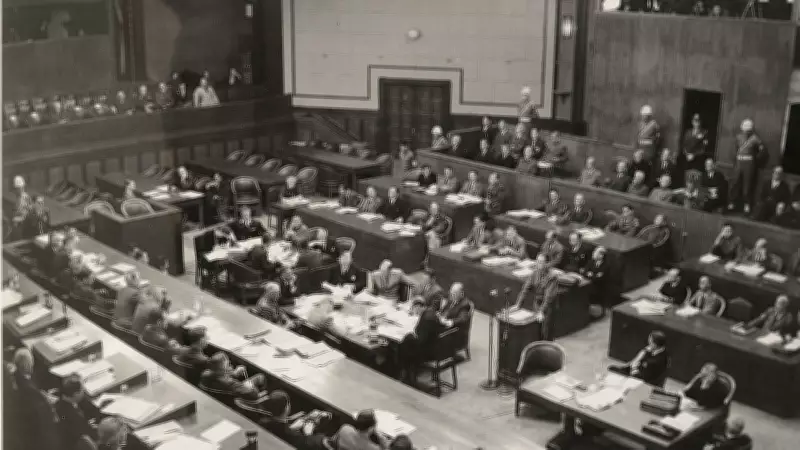
Exactly eighty years ago, an international criminal trial raised issues about the legitimacy of international law that still resonate today. The Tokyo Trial, officially known as the International Military Tribunal for the Far East, was convened in 1946 to prosecute Japanese leaders for war crimes committed during World War II. This case holds particular significance for India, as it featured a famous dissent by an Indian judge, Radhabinod Pal.
The Tokyo Trial and Its Significance
The Tokyo Trial was a landmark event in the history of international law, following the Nuremberg Trials in Europe. It sought to hold individuals accountable for crimes against peace, war crimes, and crimes against humanity. However, the trial also faced criticism for being victor's justice, as only Axis powers were prosecuted. Judge Pal's dissent highlighted these concerns, arguing that the trial was legally flawed and that the Allied powers were themselves guilty of similar atrocities.
Radhabinod Pal's Dissent
Judge Pal's 1,235-page dissenting opinion remains one of the most comprehensive critiques of the Tokyo Trial. He argued that the tribunal lacked jurisdiction, that the charges were ex post facto, and that the trial was inherently biased. Pal's dissent has been cited by scholars and nationalists in Asia as a defense of sovereignty and a critique of Western legal imperialism.

Relevance Today
The issues raised by the Tokyo Trial are still pertinent in contemporary discussions about international law, especially regarding the prosecution of war crimes and the role of international tribunals. The trial's legacy continues to influence debates on justice, accountability, and the balance between universal norms and national sovereignty. For India, Judge Pal's dissent remains a powerful symbol of independent legal thought and a reminder of the complexities of international justice.
As we reflect on the eight decades since the Tokyo Trial, it is essential to consider both its achievements and its shortcomings. The trial established important precedents for international criminal law, but its legitimacy continues to be questioned. Judge Pal's dissent serves as a crucial reminder that international law must be applied fairly and without bias to maintain its moral authority.