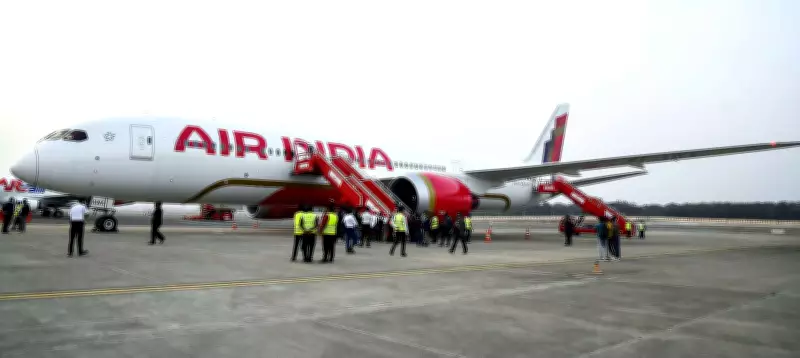
NEW DELHI: The Directorate General of Civil Aviation (DGCA), India's aviation regulator, announced on Tuesday that both fuel control switches on an Air India Boeing 787-8 aircraft were found to be "satisfactory" following a detailed inspection. This assessment came after pilots reported a potential defect in the fuel control switch upon landing in Bengaluru from London earlier this week.
Incident Details and Immediate Response
The incident occurred when the Air India flight AI132, operating from London to Bengaluru, experienced an issue with the fuel control switch. During engine start in London, the flight crew observed on two occasions that the switch did not remain positively latched in the "RUN" position when light vertical pressure was applied. However, it engaged correctly on the third attempt and remained stable throughout the flight.
In response to the report, Air India promptly grounded the aircraft and initiated a fleet-wide inspection of fuel control switches on its Boeing 787-8 Dreamliner fleet. This proactive measure underscores the airline's commitment to safety protocols and regulatory compliance.
DGCA's Technical Findings
According to a statement from the DGCA, both the left and right switches were thoroughly checked and found to be satisfactory. The locking tooth or pawl was fully seated and did not slip from "RUN" to "CUTOFF". When full force was applied parallel to the base plate, the switch remained secure. However, the DGCA noted that applying external force in an indirect direction caused the switch to move easily from "RUN" to "CUTOFF", due to the angular base plate allowing slip when pressed improperly with a finger or thumb.
The aviation regulator further stated that, based on communication with the manufacturer Boeing, the US-based aircraft maker had checked the pull-to-unlock force using the recommended procedure. In all cases, it was found to be within acceptable limits. These checks were conducted in the presence of DGCA officers, ensuring transparency and adherence to safety standards.
Component Replacement and Further Checks
Meanwhile, sources revealed that an issue was identified with a "specific component" of the jet, which is set to be replaced. Air India will send the impacted Fuel Control Switch module to the Original Equipment Manufacturer (OEM) for further detailed checks. Interestingly, the total life of the component in question is 20,000 hours, but it has only been used for 3,440 hours so far, meaning it has been utilized for less than 20% of its total lifespan.
Upon landing in Bengaluru, the matter was referred to Boeing, which recommended checking the serviceability of the fuel control switch. The DGCA confirmed that no abnormality was observed during engine start or anytime thereafter during the flight. The operating crew member was briefed on the observation, unnecessary contact with the switch was avoided, and engine indications and alerting systems were closely monitored by the crew for the remainder of the flight, which was completed without any incident.
Historical Context and Safety Implications
This incident comes in the wake of a tragic event involving an Air India Boeing 787-8 in June last year. The aircraft was involved in a fatal crash in Ahmedabad, Gujarat, marking India's worst aviation accident in three decades. Flight AI171 crashed shortly after taking off from Ahmedabad for London, hitting a nearby hostel. Of the 12 crew members and 230 passengers on board, only one passenger survived. On the ground, 19 people were killed and 67 others were seriously injured.
The current investigation and swift actions by both Air India and the DGCA highlight the ongoing efforts to enhance aviation safety and prevent similar tragedies. The thorough inspection and collaboration with Boeing demonstrate a multi-layered approach to addressing potential technical issues in aircraft systems.
As the aviation industry continues to evolve, such incidents serve as critical reminders of the importance of rigorous maintenance checks, pilot training, and regulatory oversight. The DGCA's findings provide reassurance about the specific switches in question, while the planned component replacement and further OEM checks aim to ensure long-term reliability and safety for Air India's fleet operations.