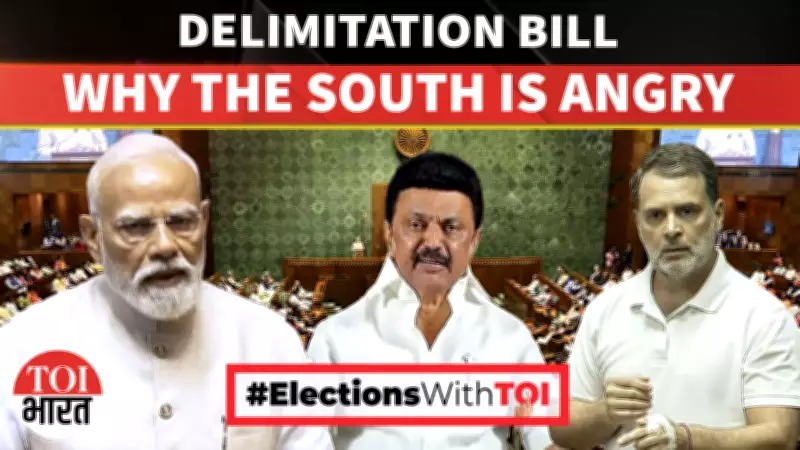
Delimitation Bill Ignites Fierce Debate Over North-South Representation Divide
The introduction of the Women's Reservation Bill in Parliament has unexpectedly triggered a major political controversy surrounding the contentious issue of delimitation. While the legislation promises to allocate 33 percent of parliamentary seats to women, its connection to future seat redistribution has raised significant concerns about a potential North-South divide in Indian politics.
Opposition Leaders Voice Strong Concerns and Demands
Prominent opposition figures have launched sharp criticism against the government's approach to delimitation. Congress leaders Priyanka Gandhi and Rahul Gandhi have questioned the Centre's intentions, demanding the inclusion of an OBC sub-quota within the reservation framework. Samajwadi Party leader Akhilesh Yadav has joined the chorus of criticism, expressing apprehension about the bill's implications for regional representation.
From southern India, Tamil Nadu Chief Minister MK Stalin has emerged as a vocal opponent, leading strong protests against what he has termed a "black law." Stalin has warned that the proposed delimitation could significantly reduce southern states' representation in Parliament, potentially diminishing their political influence on national matters.

Government Assurance and Projected Seat Changes
In response to these concerns, Home Minister Amit Shah has offered reassurances that no injustice will be done to southern states during the delimitation process. The government has projected that southern states would see their parliamentary seats increase from 129 to 195 under the proposed redistribution.
However, critics note that this increase represents only a marginal change in overall share when compared to projected gains for northern states. This discrepancy has fueled fears that the delimitation could alter the balance of political power between India's northern and southern regions.
Historical Context and Multiple Factors
Historical analysis of past seat reallocations reveals that delimitation has traditionally been shaped by multiple factors beyond simple regional divides. Population changes, demographic shifts, administrative considerations, and political negotiations have all played significant roles in previous boundary adjustments.
Experts note that while population remains a primary criterion for seat allocation, the current debate highlights how demographic differences between northern and southern states could create significant representation disparities if not carefully managed.
Broader Implications for Democratic Representation
The delimitation debate raises fundamental questions about fair representation in India's parliamentary democracy. Supporters argue that regular boundary adjustments are necessary to reflect population changes and maintain democratic principles of equal representation.
Opponents counter that such adjustments could disproportionately benefit regions with higher population growth rates, potentially marginalizing states that have achieved greater success in population control measures. This tension between demographic reality and regional equity lies at the heart of the current controversy.
Political Stakes and Future Implications
The delimitation issue has become a significant political flashpoint with potential implications for future elections and governance. Regional parties from southern states have expressed particular concern about maintaining their influence in national politics, while northern states anticipate increased representation based on population growth.
The debate continues to evolve as political leaders, constitutional experts, and civil society organizations weigh in on whether delimitation represents a fair democratic step or a potential source of regional conflict. With the Women's Reservation Bill serving as the immediate catalyst, the discussion has expanded to encompass broader questions about representation, federalism, and regional balance in Indian democracy.

As Parliament continues to debate these issues, the outcome will likely have lasting consequences for India's political landscape, potentially reshaping power dynamics between regions for decades to come. The delicate balance between demographic representation and regional equity remains the central challenge in this complex political equation.