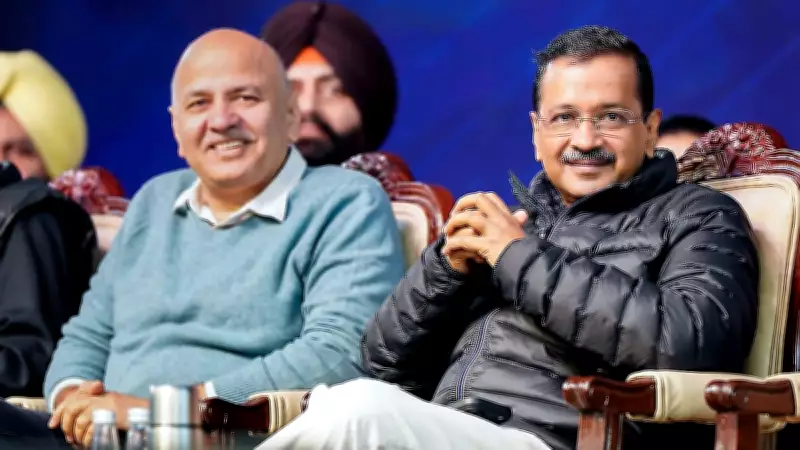
Delhi High Court Issues Notice to Arvind Kejriwal and Manish Sisodia in Liquor Policy Case
The Delhi High Court has taken a significant step in the ongoing liquor policy case by issuing notices to Delhi Chief Minister Arvind Kejriwal and former Deputy Chief Minister Manish Sisodia. This action comes in response to a revision petition filed by the Central Bureau of Investigation (CBI) challenging their discharge from the case.
Court Directs Trial Court to Halt ED Proceedings
In a crucial development, the High Court has also directed the trial court to not proceed with the Enforcement Directorate's (ED) money laundering case linked to the excise policy matter. This stay will remain in effect until the High Court decides on the CBI's revision petition, ensuring that the legal process is coordinated and avoids overlapping proceedings.
The case revolves around allegations of irregularities in the formulation and implementation of Delhi's excise policy, which has been a subject of intense scrutiny and investigation by both the CBI and the ED. The CBI's plea argues that the discharge of Kejriwal and Sisodia was premature and warrants a re-examination by the higher court.

Background and Implications
The liquor policy case has been a high-profile legal and political issue, with accusations of corruption and financial misconduct. Key points include:
- Investigation Agencies: Both the CBI and ED have been investigating the case, focusing on alleged violations and money laundering aspects.
- Legal Proceedings: The trial court had previously discharged Kejriwal and Sisodia, leading to the CBI's current revision petition in the High Court.
- Political Impact: This development could have significant ramifications for the involved political figures and the broader political landscape in Delhi.
By issuing the notice, the Delhi High Court has opened the door for further legal arguments and a potential re-evaluation of the discharge orders. The court's directive to pause the ED case underscores the importance of a systematic approach to handling such complex matters, preventing any procedural conflicts.
As the case progresses, all eyes will be on the High Court's decision, which could set a precedent for how similar cases are handled in the future. The outcome may influence not only the legal standing of Kejriwal and Sisodia but also the enforcement of anti-corruption measures in India.