Delhi Chief Minister Charts Path for Viksit Delhi on 77th Republic Day
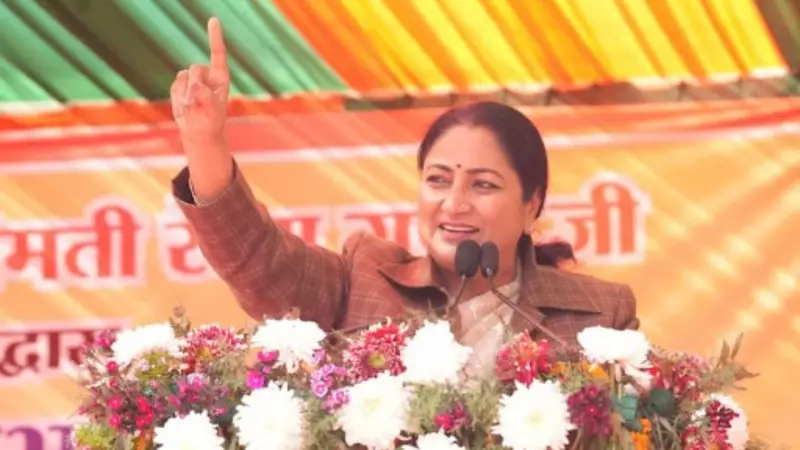
On the momentous occasion of the 77th Republic Day, Chief Minister Rekha Gupta delivered a comprehensive address to Delhi residents from Chhatrasal Stadium, presenting a detailed account of her administration's accomplishments over the past eleven months. The Chief Minister simultaneously unveiled an ambitious roadmap aimed at transforming Delhi into a fully developed 'Viksit Delhi' as an integral component of the national 'Viksit Bharat 2047' vision.
Constitutional Values and Historical Significance
In her Republic Day speech, Chief Minister Gupta emphasized that January 26 represents far more than a mere date on the calendar. She described it as a powerful symbol of India's self-respect, democratic consciousness, and complete sovereignty. Recalling the nation's constitutional journey, she noted that after achieving independence on August 15, 1947, India formally adopted its Constitution on January 26, 1950, establishing itself as a nation governed by the people, for the people.
The Chief Minister paid heartfelt tribute to the freedom fighters and martyrs whose countless sacrifices secured the Tricolour. She specifically honored Bharat Ratna Dr. B. R. Ambedkar and the visionary architects of the Constitution, referencing Lata Mangeshkar's iconic patriotic song Ae Mere Watan Ke Logon during her homage.

Vision for Development and Overcoming Challenges
Chief Minister Gupta asserted that her government has successfully cleared decades of administrative inertia during its eleven-month tenure, placing Delhi on a transformative path toward modernization, enhanced healthcare ecosystems, and economic empowerment. Aligning with Prime Minister Narendra Modi's Vision 2047, she declared that Delhi is advancing with renewed energy toward becoming a developed city.
The Chief Minister acknowledged that when her administration assumed office, it confronted entrenched disorder and long-pending bottlenecks that posed significant challenges. She explained that these obstacles are being systematically addressed through people-centric decisions guided by constitutional values and the foundational principle of Sabka Saath, Sabka Vikas.
Comprehensive Welfare and Healthcare Initiatives
Highlighting her government's welfare measures, Chief Minister Gupta announced the establishment of 50 Atal Canteens across Delhi, providing nutritious meals at the affordable price of Rs 5. These canteens currently benefit over 50,000 people daily, with an ambitious target of reaching one lakh beneficiaries per day.
Healthcare remains a top priority for the administration, with modern IT systems being implemented in government hospitals under the Digital India initiative. The government has created over one crore ABHA IDs and launched online OPD services to enhance accessibility. Through Ayushman Bharat and the Vay Vandana scheme, six lakh registrations have been completed, benefiting 20,000 patients.
The healthcare infrastructure expansion includes:
- More than 300 operational Ayushman Arogya Mandirs across Delhi
- New hospital blocks, public health laboratories, and critical care units
- Additional ambulances, dialysis machines, and medical staff deployment
Educational Reforms and Infrastructure Development
Education has received substantial attention, with 21 percent of the 2025-26 Budget allocated to this crucial sector. The government has implemented the Delhi School Education Act, 2025 to prevent arbitrary fee hikes by private schools. Significant infrastructure improvements are underway in government schools, including:
- Development of smart classrooms and digital libraries
- Enhanced laboratory and sports facilities
- Construction of an ultra-modern education hub in Narela at a cost of Rs 1,300 crore
Merit-based scholarships are being provided to outstanding students, while 1,200 top performers from Classes 10 and 11 are receiving free laptops to support their educational journey.

Sports Promotion and Infrastructure Expansion
Recognizing sports as a vital instrument of nation-building, Chief Minister Gupta announced that Delhi offers the highest athlete incentives in the country. Olympic and Paralympic gold medallists receive Rs 7 crore, silver medallists Rs 5 crore, and bronze medallists Rs 3 crore. The construction of the Delhi Sports University at Mundka has commenced, further strengthening the city's sports infrastructure.
Transportation and Urban Infrastructure Upgrades
Infrastructure development has received substantial focus, with capital expenditure for 2025-26 being doubled. The government has signed a Memorandum of Understanding with the Reserve Bank of India to strengthen financial management systems.
Transportation initiatives include:
- Converting Delhi's entire public bus fleet to 100 percent electric over the next three years by adding 11,000 electric buses
- Expanding charging infrastructure throughout the city
- Redeveloping Inter-State Bus Terminals (ISBTs)
- Expanding the Metro network to 500 kilometers
- Enhancing last-mile connectivity through e-buses, e-autos, e-taxis, and rapid rail projects
Additional urban improvements include Pink Cards for women and the transgender community, new expressways, flyovers, underpasses, and elevated roads designed to decongest the city. Under the Safe City Project, 10,000 new CCTV cameras and one lakh smart LED street lights will be installed for enhanced security.
Social Security and Economic Growth Measures
The government has implemented comprehensive social security measures, including financial assistance for construction workers, constitution of a Gig Worker Welfare Board, establishment of 500 'Palna' creche centers, sanctioning of new pensions, and development of senior citizen homes. The Delhi Village Development Board is overseeing Rs 1,700 crore worth of projects, while Rs 700 crore has been allocated for development works in slum clusters.
Economic growth initiatives focus on:
- Increasing Delhi's Budget from Rs 75,000 crore to Rs 1 lakh crore
- Implementing Ease of Doing Business reforms
- Establishing a Single Window System for business approvals
- Expanding e-District services
- Developing policies supporting MSMEs and manufacturing sectors
Environmental Protection and Yamuna Rejuvenation
Addressing environmental concerns, Chief Minister Gupta identified tackling garbage dumps, reducing pollution, and cleaning the Yamuna River as top priorities. The government is implementing measures including drain desilting, developing a new master drainage plan, upgrading Sewage Treatment Plants (STPs), establishing biogas and e-waste plants, and formulating a comprehensive solar policy to promote renewable energy adoption.
The Chief Minister concluded by announcing that 2025-26 would be observed as a year of national remembrance and inspiration, commemorating significant milestones including the 350th martyrdom anniversary of Sri Guru Tegh Bahadur, the 165th birth anniversary of Pandit Madan Mohan Malaviya, the 125th birth anniversary of Dr. Syama Prasad Mookerjee, the 101st birth anniversary of Bharat Ratna Atal Bihari Vajpayee, 150 years of Vande Mataram, and the centenary of the Rashtriya Swayamsevak Sangh.