Congress MP Challenges PM Modi and Amit Shah Over Women's Reservation Implementation
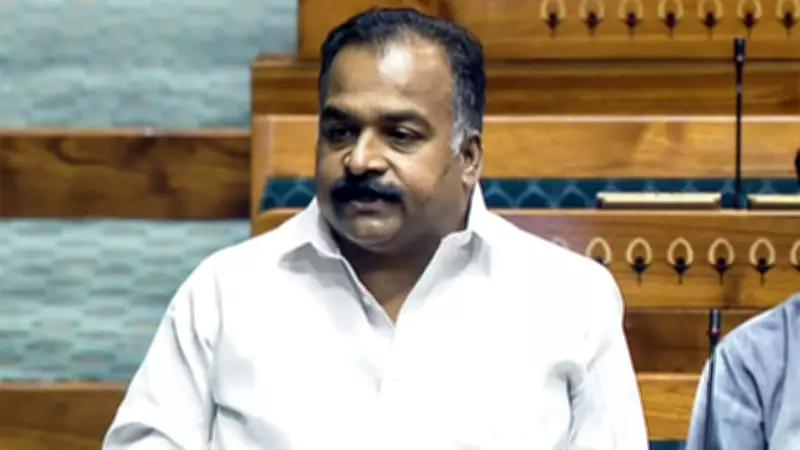
Following the defeat of the Constitution (One Hundred and Thirty-First Amendment) Bill in the Lok Sabha, a heated political exchange has erupted over women's reservation. Congress MP Manickam Tagore has made a bold offer, stating he is prepared to give up his Virudhunagar parliamentary seat for a woman candidate if the promised 33 percent reservation is implemented across all existing constituencies.
Tagore's Direct Challenge to Government Leadership
In a pointed social media post, Tagore directly questioned Prime Minister Narendra Modi and Union Home Minister Amit Shah about their commitment to women's representation. "I am ready to give up the Virudhunagar seat for a Sister if 33% reservation is implemented across all 543 constituencies, as promised in the 2023 Women's Reservation Act," Tagore declared. "But why aren't Modi and Shah ready to give up Varanasi and Gandhinagar? Why this hesitation?"
The Congress MP accused the government of avoiding genuine social change through diversionary tactics. "Instead, they talk about creating new seats—clearly avoiding real social change. Women's reservation cannot be symbolic or selective. It must be fair, immediate, and across existing constituencies not delayed through delimitation or diversion tactics," Tagore emphasized. "The fight is simple: genuine representation versus political convenience."

Bill Defeat and Political Fallout
The controversial Bill, which sought to implement women's reservation alongside delimitation-linked provisions, failed to secure the required two-thirds majority in the Lok Sabha. The legislation received 298 votes in favor and 230 against, falling short of the constitutional threshold needed for passage.
The defeated Bill proposed significant structural changes to India's parliamentary system:
- Increasing Lok Sabha strength from 543 to 816 seats
- Implementing 33 percent reservation for women
- Linking reservation implementation to delimitation based on the 2011 Census
Following the Bill's defeat, the government decided not to proceed with two other related legislative measures, effectively stalling the women's reservation agenda for the current parliamentary session.
PM Modi's Strong Response to Opposition
Prime Minister Narendra Modi delivered a forceful address to the nation following the Bill's defeat, sharply criticizing opposition parties for blocking the legislation. The Prime Minister stated that opposition parties had "crushed" the dreams of countless women across India despite the government's determined efforts to pass the landmark legislation.
Modi described the parliamentary defeat as a "blow to women's self-respect" and warned that the electorate would remember what he characterized as an "insult to their pride." The Prime Minister emphasized that the proposed amendment under the Nari Shakti Vandan Adhiniyam aimed to significantly expand opportunities for women and strengthen their representation in governance structures.
In his address, Modi also launched a broader critique of the Congress party's historical approach to reform. He accused the principal opposition party of consistently obstructing progressive measures through what he described as a strategy of "delay, diversion, obstruction" that had slowed national progress across multiple administrations.
Broader Implications for Women's Representation
The political confrontation highlights deep divisions over how to implement women's reservation in India's parliamentary system. The government's approach linking reservation to delimitation and seat expansion has faced criticism from opposition parties who argue for immediate implementation across existing constituencies.
Tagore's challenge represents a significant escalation in the political rhetoric surrounding women's representation, putting direct pressure on senior government leaders to demonstrate their commitment through personal political sacrifice. The exchange underscores the complex political calculations surrounding women's reservation, with both sides attempting to position themselves as genuine champions of gender equality in representation.

The failed Bill and subsequent political exchanges have reignited debates about the most effective mechanisms for ensuring women's political participation in India's democratic institutions, with implications for future electoral reforms and gender representation policies.