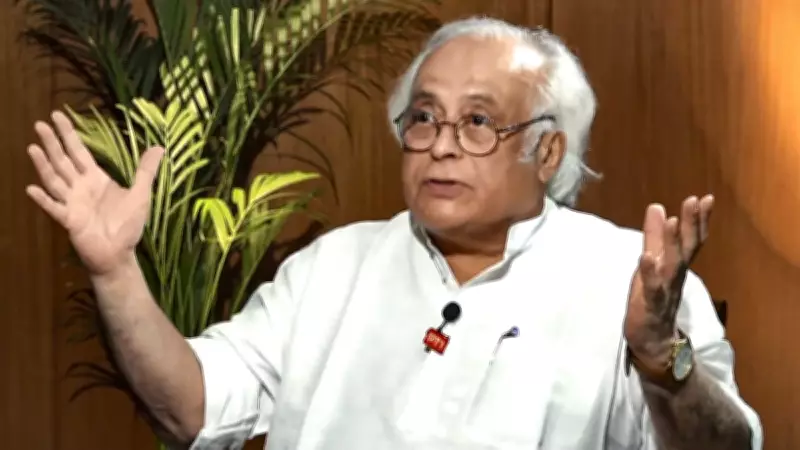
The Congress party has accused the Bharatiya Janata Party (BJP) of aiming for a two-thirds majority in the Lok Sabha with the ultimate goal of abolishing reservation policies in India. This allegation comes amid the ongoing election campaign, with Congress leaders pointing to Prime Minister Narendra Modi's past statements on caste and reservation as evidence of the BJP's hidden agenda.
Congress's Allegation
Speaking at a press conference, Congress spokesperson Pawan Khera claimed that the BJP's real target is not just winning the elections but securing a 23rd majority—a reference to the two-thirds majority required to amend the Constitution. He argued that such a majority would allow the BJP to alter or scrap reservation policies for Scheduled Castes (SCs), Scheduled Tribes (STs), and Other Backward Classes (OBCs).
Khera cited a 2016 remark by Prime Minister Modi where he allegedly questioned the need for reservation, stating that the government should focus on 'development' rather than 'appeasement.' The Congress also referenced a 2020 statement by Home Minister Amit Shah, who reportedly said that if the BJP comes to power with a full majority, it would review the reservation system.

BJP's Response
The BJP has dismissed these allegations as baseless and a desperate attempt by the Congress to divert attention from its own failures. BJP spokesperson Sambit Patra called the charges 'ridiculous' and reiterated the party's commitment to reservation policies. He said, 'The BJP has always stood for the upliftment of SCs, STs, and OBCs. Prime Minister Modi himself belongs to an OBC community. The Congress is spreading lies because it has nothing to offer.'
Patra also pointed out that the BJP-led government at the centre has increased the budget for welfare schemes targeting backward communities and has not touched any reservation quotas.
Historical Context
Reservation in India has been a contentious political issue since its inception. The Constitution provides for reservation in education and government jobs for SCs and STs, and later for OBCs. Any amendment to these provisions requires a two-thirds majority in both houses of Parliament. The Congress's allegation taps into fears among backward communities that the BJP might use its majority to dilute these protections.
In the 2019 Lok Sabha elections, the BJP won 303 seats, falling short of the 334 needed for a two-thirds majority. However, with allies, the National Democratic Alliance (NDA) had a comfortable majority. The Congress claims that the BJP's ultimate goal is to replicate this performance and then move to amend the Constitution.
Political Implications
Analysts say that the reservation issue is a potent electoral weapon, especially in states with large SC and OBC populations. By raising this allegation, the Congress hopes to consolidate the vote of backward communities, which have traditionally been a key support base for the BJP in some states. However, the BJP has countered by highlighting its welfare schemes and the OBC identity of PM Modi.
According to a recent survey by the Centre for the Study of Developing Societies (CSDS), about 60% of OBC voters said they were satisfied with the Modi government's performance, indicating that the Congress's strategy may not yield immediate results.
Conclusion
The debate over reservation underscores the deep divisions in Indian politics ahead of the general elections. While the Congress tries to paint the BJP as anti-reservation, the BJP insists it is committed to social justice. The outcome of this battle of narratives will likely influence the voting behaviour of millions of Indians.