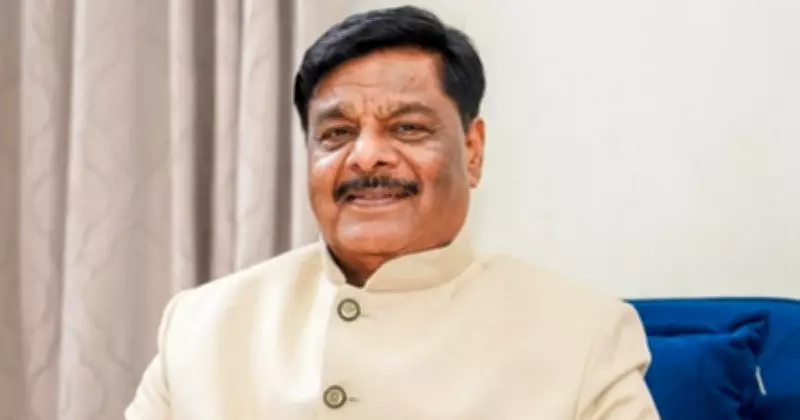
Congress leader H C Mahadevappa has launched a scathing critique against the Bharatiya Janata Party (BJP)-led central government, accusing it of violating the fundamental rights of impoverished citizens to work and livelihood through the implementation of the VB-G-RAM-G Act. The allegations emerged during a significant political protest in Mysuru, highlighting escalating tensions between the ruling party and opposition forces.
Allegations of Rights Violations and Federal Overreach
Mahadevappa, a prominent Congress figure, asserted that the VB-G-RAM-G Act represents a direct assault on the economic security of India's most vulnerable populations. He emphasized that the legislation undermines long-standing protections for workers, particularly those dependent on government employment schemes for survival. This criticism comes amid broader concerns about social welfare policies under the current administration.
Accusations of Dictatorial Federalism
Beyond the specific act, Mahadevappa condemned what he described as a dictatorial attitude exhibited by the Centre against state governments. He argued that this approach blatantly violates the spirit of federalism enshrined in the Indian Constitution, where states are meant to have autonomy in certain governance areas. The Congress leader's remarks reflect growing political friction over central-state relations, with opposition parties alleging excessive centralization of power.

Mysuru Protest Highlights Political Resistance
The accusations were voiced during an overnight protest organized by Congress members in front of the Sir C V Rangacharlu Town Hall in Mysuru. This demonstration, held on Sunday, symbolizes the party's active resistance to the VB-G-RAM-G Act and its perceived implications. Protesters demanded immediate reconsideration of the legislation, citing potential adverse effects on rural employment and livelihood programs like MGNREGA.
Political analysts note that such protests are becoming increasingly common as opposition groups mobilize against controversial policies. The Mysuru event underscores the regional dimensions of national political debates, with Karnataka emerging as a key battleground for ideological clashes between the BJP and Congress.
Broader Implications for Indian Politics
The controversy surrounding the VB-G-RAM-G Act touches on several critical issues in contemporary Indian politics:
- Economic Rights: Debates over the right to work and livelihood for marginalized communities.
- Federal Structure: Tensions between central authority and state autonomy in policy implementation.
- Political Strategy: Opposition tactics to challenge ruling party initiatives through public mobilization.
- Social Welfare: The future of employment guarantee schemes and poverty alleviation programs.
As the political discourse intensifies, stakeholders from various sectors are closely monitoring developments. The BJP has yet to issue a formal response to Mahadevappa's allegations, but the party has previously defended its policies as necessary for national development and economic reform.
The ongoing confrontation suggests that the VB-G-RAM-G Act will remain a focal point in political negotiations and public debates in the coming months. With general elections on the horizon, such issues are likely to influence voter sentiment and party strategies across the country.