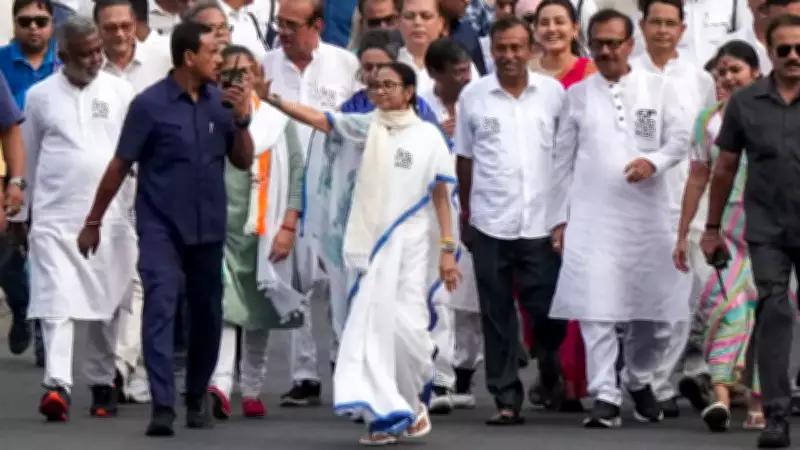
Cold mathematics or old loyalties: what will determine the final equation in Bhabanipur? That question is currently top of mind for election watchers across Bengal and the country as the constituency, located in the heart of South Kolkata, braces for a high-stakes battle between Chief Minister Mamata Banerjee and Leader of Opposition Suvendu Adhikari on April 29.
If booth-by-booth electoral mathematics finally dominates, Mamata may face a contest too close for comfort. However, politics is rarely determined in that manner alone. Even when the TMC's fortunes were at their nadir, Mamata held on to the South Kolkata Lok Sabha constituency in 2004, when the party won just one of the 42 seats in the state. Bhabanipur is part of that seat and has been the vehicle of the CM's journey to the Assembly since 2011.
The association of Didi with this seat goes back a long way, nurtured by decades of trust and by the glory of being the epicentre that once shook the pillars of the formidable Left machinery. When TOI visited Bhabanipur, even in wards where the BJP was ahead in the 2024 Lok Sabha election, the overwhelming sentiment was that this remained a home run for the Chief Minister.

However, what makes the election interesting is the evolving nature of the contest. Rather than throwing in the towel, the BJP is fighting hard, with Suvendu announcing from Mamata's home ward that he will open an office there after winning the election. Mamata leaving a public meeting in Chakraberia, visibly irritated by miking from a nearby BJP rally, only points to the thorny contours of the contest.
This is something new for citizens here. Over the years, this has been a seat where the opposition often fought for the sake of it. It did not have much skin in the game or the gumption for a scrappy joust. But this time, it is different. From unrest during Suvendu Adhikari's nomination, which led to the suspension of four senior police officers, to an I-T raid on Mamata's poll nomination proposer Miraj Shah, a prominent Gujarati businessman from the area, the poll bugle has reached unprecedented decibels in these normally quiet neighbourhoods.
In TMC strongholds, BJP flags and posters are flying high. TMC workers, however, claim the saffron party has used agencies to put up the banners and that these do not reflect any ground-level support. The BJP, though, is unfazed. The Mini-India nature of Bhabanipur gives it a chance to connect with voter groups that form its stronger support base in other parts of the country and persuade them to repose faith in the lotus here. Thus, leaders such as Maharashtra CM Devendra Fadnavis and Union Minister Ravneet Bittu came here for highly targeted campaign outreach.
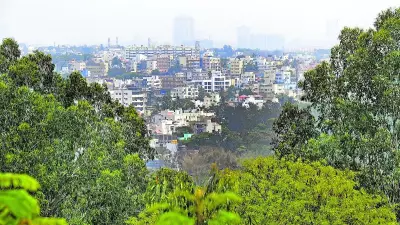
The seat is made up of KMC wards 63, 70, 71, 72, 73, 74, 77 and 82. Bhabanipur is not one kind of neighbourhood. It includes middle-class Bengali localities of old Bhabanipur and Kalighat, Gujarati and Marwari families in parts of Alipore, minority clusters in Khidirpur and Chetla, Sikh voters, Bihari and UP-origin residents, and areas like Park Street-Shakespeare Sarani, which are quintessentially postcard Kolkata.
In the Bhabanipur Assembly segment of Kolkata Dakshin, Trinamool's lead came down to just 8,297 votes in 2024, with the BJP leading in five of the eight municipal wards. While the BJP has parachuted prominent leaders, including Amit Shah, to canvass for Suvendu Adhikari, the TMC has reposed faith in veteran leaders to ensure that booth-level management remains impeccable. Hence, leaders such as Subrata Bakshi, Firhad Hakim and even Javed Khan have been deployed to plug any possible gaps.
What will keep the TMC slightly relaxed is that in the Kolkata Municipal Corporation polls, it won all eight wards. Thus, even in tricky wards such as 63, with its cosmopolitan population, and the middle- and upper-class heartland of wards 70, 71 and 72, it may finally be advantage Mamata. In ward 70, councillor Ashim Bose has already apologised for Mahua Moitra's Gujarati faux pas. For ward 63, Javed Khan, who is contesting from Kasba, has been specially roped in. Ward 82 brings Firhad Hakim's organisational weight into sharp focus and is likely to provide a significant buffer to the TMC to neutralise any turbulence. Wards 74 and 77 are also directly under Hakim's guidance. Incidentally, Hakim is himself a candidate from the neighbouring Port constituency.

But SIR has added another layer of uncertainty to this complex battle. Around 25% of the electorate has been deleted. In total, around 51,000 names have been deleted, with the electorate coming down to around 1.60 lakh. A voter-profile estimate cited by IANS puts the seat at around 76% Hindu electorate, 42% Bengali-speaking and 34% non-Bengali-speaking with minority voters, mostly Muslims, at around 24%. Other estimates, including Sabar Institute's analysis, put the Muslim share closer to 20%. What Sabar's data does show clearly is disproportion in the adjudication stage: Muslims formed about 40.1% of voters deleted after logical-discrepancy scrutiny, despite being around one-fifth of the constituency's population.
A visit to Muslim neighbourhoods showed a strong resolve to send Mamata Banerjee back to the Assembly, with many framing the contest as a battle for identity as much as representation. The final stretch has already shown how charged Bhabanipur has become. Rallies, slogans, counter-slogans and confrontations have turned the seat into a miniature version of Bengal's larger political battle. Mamata is framing the contest as a fight against the BJP's institutional aggression. For Suvendu, it is a battle to firmly establish himself as the default BJP face challenging Didi on her home turf. Both sides know that the result will be read far beyond the constituency. On May 4, the seat will decide not just a winner, but the weight of memory in Bengal politics.