Former Union Minister P Chidambaram Accuses Government of Deceptive Delimitation Tactics
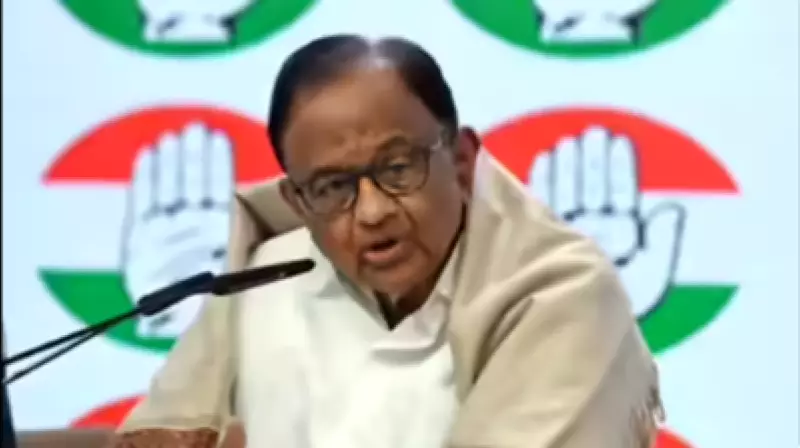
In a sharp critique delivered in Coimbatore on Wednesday, former Union minister and senior Congress leader P Chidambaram alleged that the central government's proposal to increase Lok Sabha seats by 50 percent under the guise of delimitation represents a calculated strategy to diminish the political clout of southern states. Addressing reporters, Chidambaram expressed grave concerns about the upcoming special parliamentary session and the controversial Delimitation Bill.
Delimitation Plan Called "Mere Illusion" to Hide Southern Representation Loss
Chidambaram detailed how the government's approach obscures the true impact on state representation. "If delimitation were conducted straightforwardly, it would be immediately apparent that Tamil Nadu's parliamentary seats would decrease from 39 to 32," he stated. "To conceal this reduction, they are first expanding the total seat count by half before implementing delimitation. This creates an illusion of growth while actually weakening southern influence."
He explained that while Tamil Nadu might appear to gain seats, rising to 46, its proportional strength relative to northern states would suffer dramatically. "The real danger lies in the shifting balance of power," Chidambaram emphasized.

Statistical Analysis Reveals Alarming Shift in Parliamentary Power Balance
The Congress leader presented concerning statistics highlighting the disproportionate impact:
- Uttar Pradesh's Lok Sabha strength would surge from 80 seats to approximately 140
- The collective voting power of the five southern states would plummet from 24.3 percent to 20.7 percent
- This represents a significant erosion of southern India's parliamentary voice
"This deliberate move will further suppress and stifle the voice of south India in parliament," Chidambaram warned, characterizing the proposal as dangerous for federal balance.
Special Session Timing Questioned as "Planned Conspiracy"
Chidambaram strongly criticized the decision to convene a special parliamentary session on April 16, coinciding with election duties for numerous MPs. "When 67 members of parliament from Tamil Nadu and West Bengal are engaged in election work, why schedule the session now?" he questioned. "This appears to be a planned conspiracy to prevent their attendance and votes against the bill."
He proposed a straightforward solution: "What legitimate harm would come from postponing the session to April 29, after elections conclude in these regions?"
Sharp Criticism of AIADMK Leader's Stance on Delimitation Impact
Responding to AIADMK general secretary Edappadi K Palaniswami's position on the issue, Chidambaram delivered a scathing assessment. "When questioned about the bill's effect on Tamil Nadu, EPS claimed Union Home Minister Amit Shah assured him of no impact," he recounted. "Is he functioning as a political leader or merely serving as Amit Shah's loudspeaker? His reliance on the home minister's assurances rather than analyzing the actual consequences for our state is deeply troubling."
Broader Concerns About Governance and Foreign Policy Direction
Beyond the delimitation controversy, Chidambaram raised additional governance issues. He referenced former diplomats' assessments that India's foreign policy has derailed, leaving the country without genuine allies on the global stage.
Regarding the Women's Reservation Bill passed in 2023 with INDIA bloc support, Chidambaram questioned the government's implementation delay. "Why is the administration using the census as an excuse to postpone this crucial legislation?" he asked, suggesting broader patterns of political maneuvering.
The former minister's comprehensive critique highlights growing tensions between regional representation and national political strategies, with southern states potentially facing diminished parliamentary influence through what he characterizes as deceptive procedural changes.