

Budget 2026: A Policy-Driven Approach Amid Political Crossroads
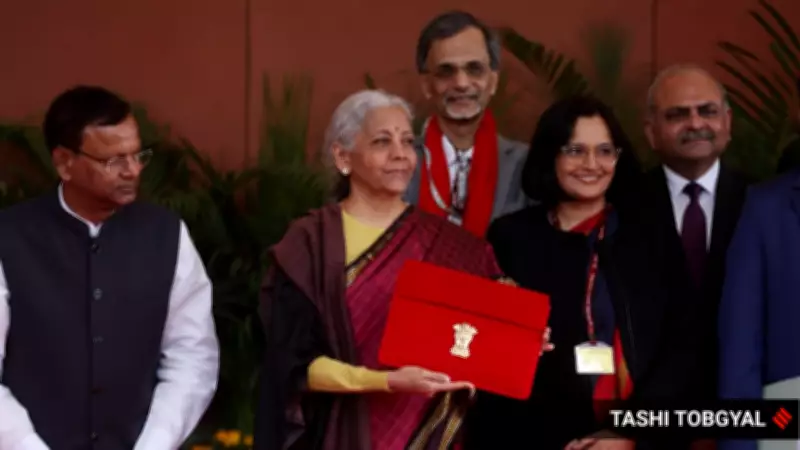
Union Finance Minister Nirmala Sitharaman presented her ninth consecutive Budget on Sunday, February 1, 2026, in a move that has drawn attention for its restrained political tone. Coming at a critical juncture when the Bharatiya Janata Party (BJP) is gearing up for Assembly elections in five states, the budget notably refrained from delivering any overt political messages or targeted relief for key voter segments.
Absence of Political Messaging in Poll-Bound States
The year 2026 is set to witness Assembly elections in Assam, West Bengal, Tamil Nadu, Kerala, and the Union Territory of Puducherry. Despite the high stakes, the Budget speech made only passing references to these regions. For instance, Assam was mentioned once in the context of a planned Buddhist circuit, while West Bengal was not directly named, though Siliguri and Durgapur were referenced. Tamil Nadu and Kerala were each mentioned twice, and Puducherry did not feature at all.
This stands in stark contrast to previous budgets, such as the 2025-26 Budget, which mentioned poll-bound Bihar six times. The 2026-27 Budget makes no mention of Bihar, where the NDA recently secured a decisive majority. Similarly, Andhra Pradesh, a key state for the NDA due to ally TDP's strong presence, was mentioned twice, a shift from last year when it was omitted entirely.

No Income Tax Relief Amid Upper Caste Disquiet
Amid growing discontent among upper castes over the now-stayed UGC equity regulations, the Budget announced no income tax relief. This marks a departure from last year's budget, which included tax concessions. Notably, Sitharaman's speech this time did not mention the "middle class" even once, compared to seven references in her previous address.
The only announcement for the salaried class was the simplification of Income Tax forms and rules, aimed at making compliance easier for ordinary citizens. This lack of direct financial relief has sparked discussions about the government's strategy to address voter concerns without compromising fiscal discipline.
Multi-State Schemes Over Direct Allocations
Instead of state-specific financial outlays, the Budget focused on multi-state schemes and regional corridors. Key announcements included:
- Coconut Promotion Scheme: Aimed at enhancing competitiveness in coconut production, this scheme targets major coconut-growing states like Kerala and Tamil Nadu.
- Cashew and Cocoa Programme: A dedicated initiative to make India self-reliant in raw cashew and cocoa production, with a focus on export competitiveness.
- Sandalwood Ecosystem Restoration: A partnership with state governments to promote cultivation and processing, benefiting producers in Tamil Nadu and Kerala.
- Rare Earth Corridors: Support for mineral-rich states, including Odisha, Kerala, Andhra Pradesh, and Tamil Nadu, to establish corridors for mining and processing.
These measures reflect an approach that integrates local priorities into larger strategic frameworks, such as industrial competitiveness and sustainable tourism.
Infrastructure and Development Initiatives
The Budget also outlined several infrastructure projects with indirect benefits for poll-bound states:
- High-Speed Rail Corridors: Seven corridors were announced, including Hyderabad-Chennai and Chennai-Bengaluru, which touch Tamil Nadu, and Varanasi-Siliguri, which connects to West Bengal.
- East Coast Industrial Corridor: An integrated corridor with a node at Durgapur in West Bengal, alongside tourism destinations in Purvodaya states.
- Buddhist Circuit Development: A scheme for northeastern states, including Assam, to preserve heritage sites and improve connectivity.
Additionally, Assam is set to receive a branch of the mental health institute NIMHANS at Tezpur, and Kerala could host one of three All-India Institutes for Ayurveda.

Cultural and Symbolic Gestures
In a largely policy-driven speech, Sitharaman made a subtle cultural nod by wearing a Kanjivaram sari, a symbol with resonance in southern states. The Budget also reintroduced Mahatma Gandhi's name through the "Mahatma Gandhi Gram Swaraj initiative," aimed at strengthening khadi, handloom, and handicrafts. This move comes after opposition criticism over the removal of Gandhi's name from previous initiatives.
Conclusion: A Strategic, Framework-Oriented Budget
Budget 2026-27 appears to prioritize long-term economic frameworks over short-term political gains. By avoiding direct allocations and focusing on multi-state schemes, the government aims to address regional needs without appearing overtly partisan. As the BJP heads into a crucial electoral battle, this budget underscores a calculated approach to governance, balancing fiscal prudence with strategic developmental priorities.





