The political discourse over India's first Prime Minister, Jawaharlal Nehru, intensified as the Bharatiya Janata Party launched a sharp counterattack against Congress leader Sonia Gandhi. The BJP pointed to what it termed as "historic blunders" concerning Jammu and Kashmir and China, framing them as a key part of Nehru's political legacy.
The Spark: Sonia Gandhi's Defense of Nehru
This exchange was triggered by a statement from Congress Parliamentary Party Chairperson Sonia Gandhi on Friday, December 5, 2025. She had alleged that a systematic attempt is being made to denigrate, distort, demean and defame the legacy of Jawaharlal Nehru. Gandhi asserted that such a campaign was unacceptable to the Indian National Congress and to those who value the nation's foundational principles.
BJP's Forceful Rebuttal
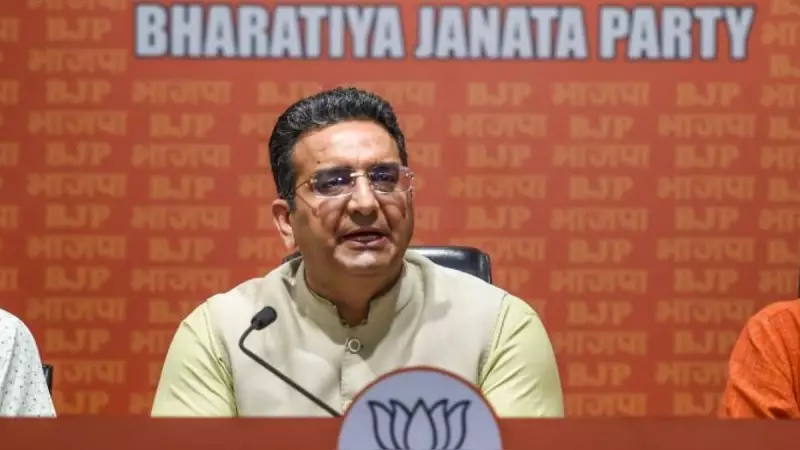
Responding to these allegations, BJP spokesperson Gaurav Bhatia mounted a vigorous defense of the party's position. Instead of shying away from criticising Nehru, the BJP directly addressed his tenure's contentious points. Bhatia highlighted two specific geopolitical issues that continue to shape India's contemporary challenges.

He squarely placed the responsibility for the long-standing Kashmir issue and the 1962 war with China on decisions made during Nehru's premiership. The BJP's argument frames these events not as mere policy differences but as fundamental strategic errors with enduring consequences for national security and territorial integrity.
Legacy and Political Narratives
This clash is more than a historical debate; it is a battle over political narratives. The Congress, under the Gandhi family's leadership, seeks to protect Nehru's image as a central architect of modern, secular India. Conversely, the BJP challenges this narrative by focusing on specific foreign policy and security decisions, aiming to recast his legacy through the lens of national interest and strategic foresight.
The timing of this exchange is significant, occurring amidst ongoing political contests. By invoking Jammu and Kashmir and relations with China, the BJP taps into issues of immediate and emotional resonance for the Indian electorate, connecting historical critique with present-day governance.
This episode underscores the deep ideological divide in Indian politics, where history is not just studied but actively weaponized. The defense and critique of founding figures like Nehru serve as proxies for broader debates about India's identity, its path, and the parties claiming to best represent its future.