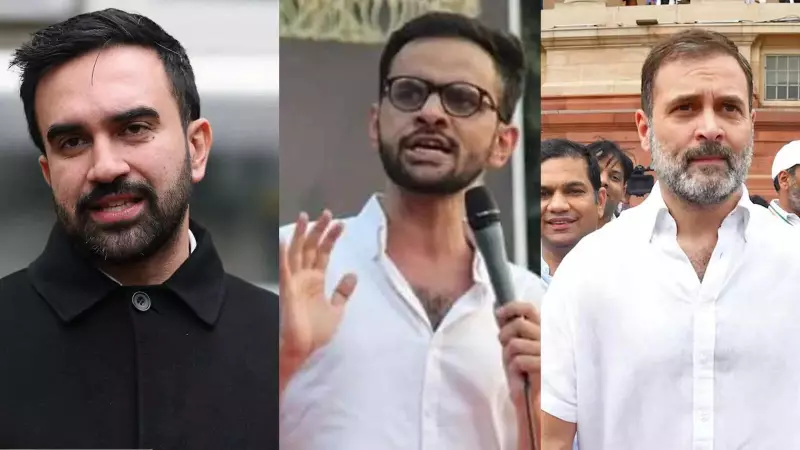
The Bharatiya Janata Party (BJP) has launched a sharp political attack on Congress leader Rahul Gandhi, alleging his connections are behind a recent letter from United States lawmakers concerning jailed activist Umar Khalid. This controversy erupted after eight US Congress members wrote to India's Ambassador in Washington.
US Lawmakers' Letter Sparks Political Row
On January 2, 2026, the BJP voiced strong objections to a communication sent by a group of eight American lawmakers to Indian Ambassador Vinay Mohan Kwatra. The letter reportedly urged a "fair and timely trial" for Umar Khalid, who has been in jail for five years in connection with the 2020 Delhi riots case.
BJP leader and prominent spokesperson Pradeep Bhandari swiftly connected this action to Rahul Gandhi and the Congress party. Bhandari pointed to a specific meeting held in 2024 as evidence of a concerning pattern.

The 2024 Meeting and Alleged Connections
Pradeep Bhandari highlighted a meeting that took place in 2024 between Congress MP Rahul Gandhi and two US Representatives, Jan Schakowsky and Ilhan Omar. The BJP leader claimed that following this interaction, Representative Schakowsky later introduced legislation known as the "Combating International Islamophobia Act," which named India among other countries.
By sharing photographs from this meeting, the BJP argued that it demonstrates a troubling link. The party's allegation is that individuals and groups seeking to weaken India's global standing, target its government, or challenge its anti-terror laws consistently find a common connection in Rahul Gandhi.
BJP's Core Allegation: Gandhi as a Focal Point
The BJP's central charge is serious. They portray Rahul Gandhi as a central figure around whom international criticism of India's domestic policies, particularly regarding law and order and minority issues, seems to converge. The party claims his associations repeatedly help fuel anti-India narratives on foreign soil.
This incident is not being viewed in isolation by the ruling party. They frame it as part of a recurring theme where Gandhi's engagements abroad are followed by diplomatic or legislative actions perceived as critical of the Indian government.
Political Repercussions and National Discourse
This accusation adds a new layer to the ongoing and fierce political rivalry between the BJP and the Congress ahead of future electoral battles. The BJP is leveraging this episode to question the nationalist credentials of its main opposition and its leader.
The party's statement suggests that such external interventions, allegedly linked to domestic political figures, challenge India's judicial sovereignty and its right to handle internal security matters as per its own laws. The case of Umar Khalid, pending for years, remains a sensitive topic in India's political and legal landscape, making this international intervention a potent tool for political messaging.
As of now, the Congress party or Rahul Gandhi have not issued a formal response to these specific allegations made by the BJP on January 2. The development ensures that the issues of international lobbying, domestic politics, and legal processes will remain intertwined in public debate.