

West Bengal Government Moves Supreme Court Against Centre's NIA Investigation Order
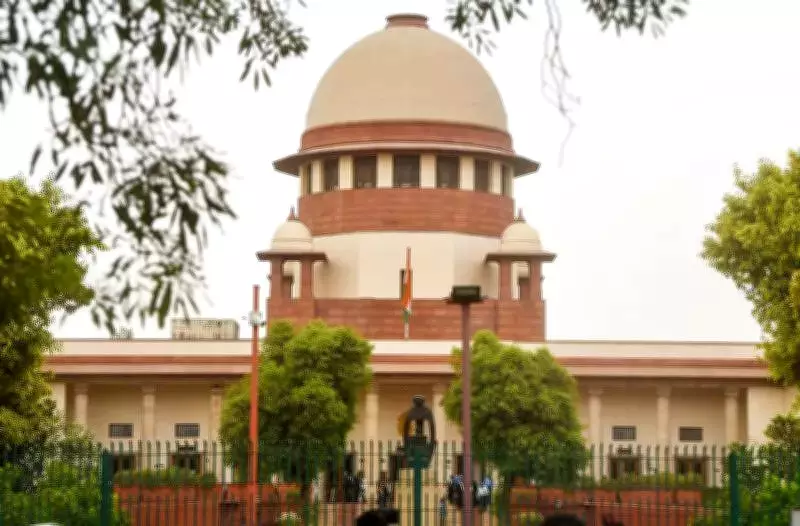
The West Bengal government has officially challenged the Central government's order directing the National Investigation Agency (NIA) to probe the violent incidents that occurred in Beldanga on January 16-17. The state administration has filed a petition in the Supreme Court of India, contesting the jurisdiction and necessity of the federal agency's involvement in this case.
NIA Team Already Deployed in Murshidabad District
An eight-member specialized team from the National Investigation Agency has been actively working in the Murshidabad town since Saturday, having formally taken over the investigation from the West Bengal Police. The team's presence marks a significant development in the ongoing legal and administrative tussle between the state and central authorities.
A senior West Bengal government officer confirmed the legal challenge, stating: "Yes, the NIA probe has been challenged in the Supreme Court." The officer declined to provide additional details regarding the specific legal arguments or the timeline for the court's consideration of the matter.

Legal Grounds of the Challenge
The Central government possesses broad authority under the National Investigation Agency Act to order probes in cases involving:
- National security threats
- Explosives and arms-related offenses
- Organized crime activities
Sources familiar with the Bengal government's petition indicate that the state's legal team has argued that the Beldanga violence does not qualify as a scheduled offense under the NIA Act, thereby questioning the constitutional validity of the Centre's intervention in what they consider a state law and order matter.
Historical Context of Similar Challenges
This is not the first instance where the West Bengal government has legally contested an NIA investigation order. The state administration has previously challenged similar directives on multiple occasions:
- In 2021, the Bengal government opposed an NIA probe order into violence at BJP leader Arjun Singh's residence in Bhatpara, arguing that the explosion of crude bombs could not be classified as a national terror act.
- In 2023, the state government challenged the Calcutta High Court's order for an NIA investigation into that year's Ram Navami violence. The Supreme Court ultimately declined to interfere with the High Court's directive in that instance.
NIA's Investigation Focus and Findings
On Tuesday, the National Investigation Agency revealed that it was examining potential "cyber-instigation" elements in the Beldanga case. According to agency sources, investigators are exploring how local residents might have been misled and provoked through digital platforms, particularly through the misrepresentation of a suicide case as a murder.
The NIA sleuths have reportedly collected substantial digital evidence, including electronic footprints from various social media accounts and online platforms, which are currently under forensic examination to determine their role in instigating the violence.
Background of the Beldanga Violence
The violent protests erupted in Beldanga on January 16 following the death of a migrant worker in neighboring Jharkhand. The situation escalated rapidly as:
- A large number of demonstrators blocked railway tracks
- Protesters obstructed National Highway 12 for several hours
- Police personnel and media representatives faced physical attacks
- The protests continued into the following day, severely disrupting traffic movement on NH-12
Judicial Proceedings Leading to NIA Involvement
The path to the NIA investigation began when a Public Interest Litigation (PIL) was filed in the Calcutta High Court seeking:
- Deployment of central security forces in Beldanga
- An NIA probe into the violent incidents
A division bench of the Calcutta High Court subsequently granted the Union government the freedom to order an NIA investigation if deemed necessary. Following this judicial authorization, the Union Home Ministry formally directed the National Investigation Agency to commence its probe, setting the stage for the current legal confrontation between the state and central governments.






