Amit Shah Declares Naxalism Will Be Fully Eradicated by March 31
Union Home Minister Amit Shah made a significant announcement on Sunday, stating that the Centre's comprehensive strategy against Left-Wing Extremism has begun delivering clear and tangible results. He confidently asserted that Naxalism will be completely eradicated before the deadline of March 31, 2025.
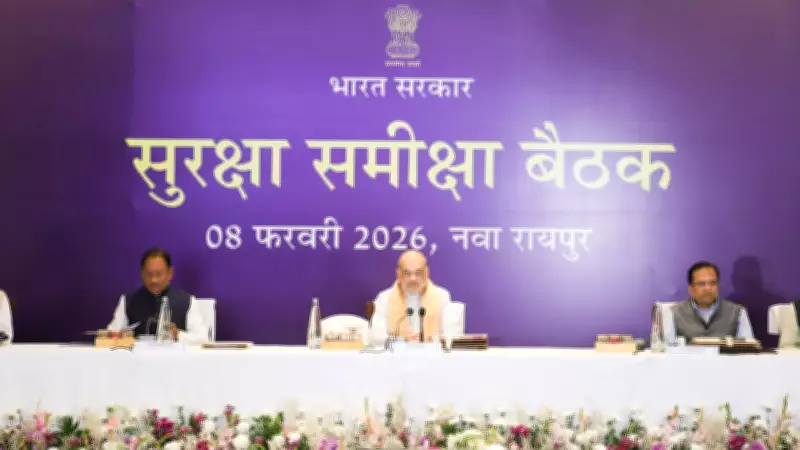
High-Level Security Review Meeting in Raipur
The remarks came after Shah chaired a crucial high-level security review meeting in Raipur, Chhattisgarh, just weeks ahead of the government's stated deadline for eliminating the Maoist insurgency. The meeting was held at a hotel in Nava Raipur Atal Nagar and brought together top officials from both central and state governments.
Shah detailed the government's multi-pronged approach on social media platform X, explaining that a combination of security-focused operations, extensive infrastructure expansion, systematic disruption of Maoist funding channels, and an effective surrender policy has significantly weakened the decades-old insurgency.
"Today in Raipur, I conducted a comprehensive review meeting with the Chhattisgarh government and senior officials regarding anti-Naxal operations," Shah wrote. "The security-centric strategy, coupled with infrastructure development, targeted actions against the Naxal financial network, and our surrender policy have yielded overwhelmingly positive results. I am confident that Naxalism will be completely eradicated before March 31."
Key Officials Present at the Strategic Meeting
The high-stakes meeting saw participation from numerous key figures in India's security apparatus. Chhattisgarh Chief Minister Vishnu Deo Sai and Deputy Chief Minister Vijay Sharma represented the state government. From the central government, the Union Home Secretary, the Director of the Intelligence Bureau, and the Special Secretary (Internal Security) from the Ministry of Home Affairs were in attendance.
The gathering also included senior security leadership from various paramilitary and investigative agencies. The Directors General of the Central Reserve Police Force (CRPF), Border Security Force (BSF), Indo-Tibetan Border Police (ITBP), and the National Investigation Agency (NIA) all participated in the discussions. Additionally, top police officials from the affected states of Chhattisgarh, Odisha, Maharashtra, Jharkhand, and Telangana contributed their insights and operational updates.
Focus on the Bastar Region and Operational Successes
Chhattisgarh's Bastar region, comprising seven districts and sharing borders with Maharashtra, Telangana, Andhra Pradesh, and Odisha, has historically been considered the strongest base of Maoist activity in India. However, officials present at the meeting reported that intensified anti-Naxal operations over the past several years have considerably weakened the movement's grip on this critical area.
The security review highlighted substantial gains made by security forces in Chhattisgarh since January 2024. According to police data cited by news agencies, more than 500 Naxalites have been killed in encounters during this period. This includes the significant elimination of senior CPI (Maoist) leader and General Secretary Nambala Keshava Rao, also known by his alias Basavaraju.
The operational successes extend beyond combat engagements. During the same timeframe, approximately 1,900 Naxalites have been arrested across the state, while over 2,500 have chosen to surrender. These numbers underscore what the Centre describes as the combined impact of sustained military pressure and effective rehabilitation measures through the government's surrender policy.
A Coordinated National Strategy
The meeting emphasized the coordinated nature of the anti-Naxal strategy, which involves multiple states and central agencies working in unison. The participation of police officials from five different states demonstrates the pan-Indian approach to tackling Left-Wing Extremism, particularly in the dense forest corridors that span state boundaries.
The government's strategy appears to be working on multiple fronts simultaneously. While security operations maintain pressure on active insurgent groups, infrastructure development aims to connect remote areas with the mainstream, and financial network disruptions cut off the movement's resources. The surrender policy provides a viable exit path for those wishing to leave the extremist fold and reintegrate into society.
As the March 31 deadline approaches, all eyes will be on the security forces' continued operations in the remaining strongholds of Naxal influence. The government's declaration represents both a commitment and a challenge to finally resolve one of India's longest-running internal security concerns through a comprehensive and determined approach.