Samajwadi Party Reiterates Demand for Quota Within Quota in Women's Reservation Bill
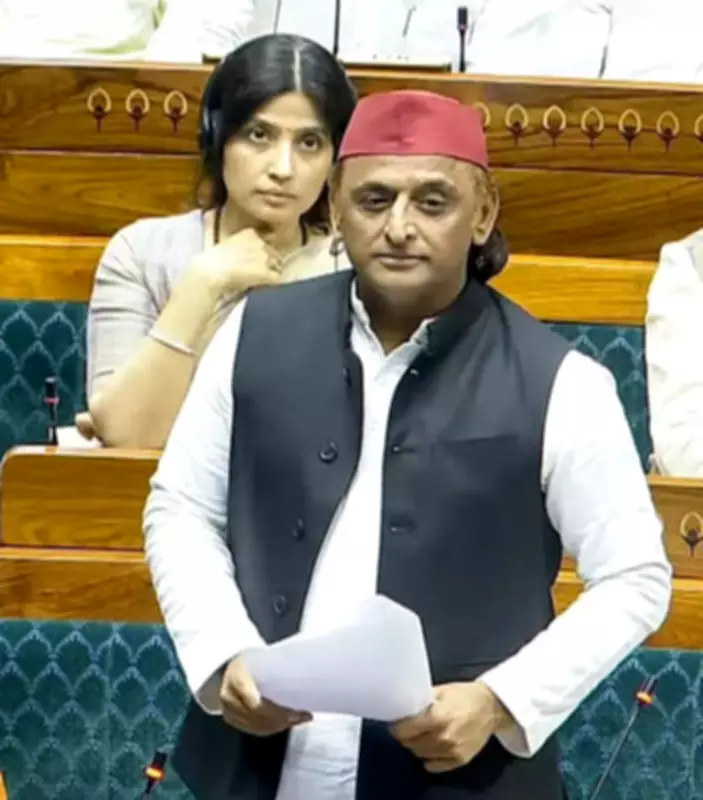
During the heated Lok Sabha debate on the Women's Reservation Bill on Thursday, Samajwadi Party chief and Kannauj MP Akhilesh Yadav aligned with the party's historical position established by founder Mulayam Singh Yadav. He demanded separate accommodation for women from Muslim and Backward class communities within the proposed legislation.
Historical Context: Mulayam Singh Yadav's Opposition in 1999
The SP's current stance represents a direct continuation of Mulayam Singh Yadav's position when the bill was first introduced in Parliament in 1999. At that time, Mulayam had vocally opposed the bill, characterizing it as discriminatory against Muslims, backward classes, and Dalits.
Mulayam had accused both the Congress and BJP of exploitation, stating that "this entire conspiracy is against Muslims, against Dalits and Backward (class)." He argued that without specific provisions, the bill would primarily benefit modern, upper-caste, and privileged women, while leaving rural, backward, and minority communities marginalized.

Akhilesh Yadav's Parliamentary Address
In his Thursday address, Akhilesh Yadav began by affirming the SP's support for women's reservation in principle. He invoked socialist ideologue Ram Manohar Lohia's advocacy for both gender justice and social justice, emphasizing that this approach strengthens the party's commitment to PDA - encompassing Pichhade (backward classes), Dalits, and Alpsankhyaks (minorities).
However, Akhilesh questioned the urgency behind pushing the bill and specifically addressed whether Muslim women were included in what the BJP terms "aadhi abadi" (women population). "Our demand is that women from backward and Muslim community are included in this aadhi abadi to make the reservation complete," he declared.
The Core Argument: Quota Within Quota
The fundamental premise of both Mulayam and Akhilesh Yadav's position is that without a "quota within quota" mechanism, the benefits of women's reservation will not reach the most disadvantaged sections of society. Mulayam had asserted that implementing the bill without this provision would deprive 90% to 95% of people from Dalit, Muslim, poor, and backward caste backgrounds from reaching Lok Sabha to represent common citizens.
Akhilesh echoed this concern, arguing that adequate representation of all societal sections requires specific quotas within the broader women's reservation framework. He maintained that without such safeguards, the bill would effectively exclude women from backward classes and Muslim communities from political mainstream participation.
SP's Unified Stance and Opposition Concerns
Participating in the same debate, SP MP from Azamgarh Dharmendra Yadav reinforced the party's position, stating that until women from backward classes and Muslim communities receive inclusion in the bill, the Samajwadi Party would withhold its support.
This unified stance comes amid broader opposition party concerns about the Women's Reservation Bill's implementation and inclusivity. The SP's position highlights ongoing debates about how to ensure that legislative measures for gender equality also address intersecting social and economic disadvantages.
The continuity between Mulayam Singh Yadav's 1999 arguments and Akhilesh Yadav's 2023 demands demonstrates the party's consistent focus on social justice dimensions within gender-based reservation policies. As parliamentary discussions continue, the question of whether and how to implement quota-within-quota provisions remains a significant point of contention in India's political landscape.