

The Hidden Danger Lurking in Your EV Charging Setup
The purchase of an electric vehicle represents a forward-thinking commitment to sustainable transportation, yet the daily ritual of plugging in brings practical realities to the forefront. As drivers focus on maximizing charging bars and achieving faster speeds, the unassuming cable lying on garage floors contends with fundamental laws of physics and material science that many owners overlook.
More Than Just a Rubber Hose: The Complex Anatomy of EV Cables
While it might be convenient to think of EV charging cords as simple rubber hoses, their construction reveals sophisticated engineering. These cables contain multiple copper conductors, specialized textile insulators, and advanced polymer sheaths working in concert to deliver high-voltage electricity safely to your vehicle. This necessary flexibility, however, becomes the very source of vulnerability during regular use.
The cables may resemble ordinary garden hoses in appearance, but they carry substantial electrical currents at voltages that demand respect. Recognizing the mechanical strain from repeated bending represents the first crucial step toward preventing unnecessary repair expenses and maintaining charging reliability.

The Silent Threat: Copper Wire Fatigue from Repeated Flexing
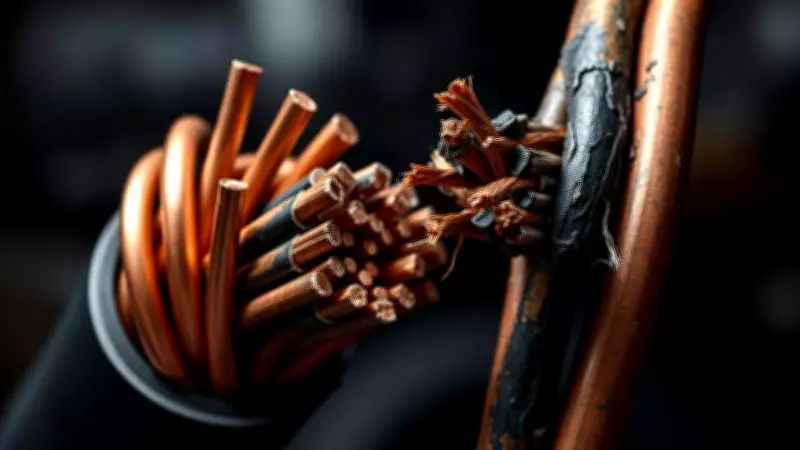
Internal damage often manifests long before any external signs become visible. The bending action creates tension across different layers of insulation and conductive materials. According to research published in the journal Polymers, charging cables experience both normal and torsion stresses during regular use. When cables become tightly bent or pulled, their inner polymer sheaths sustain damage even before the copper wires themselves show signs of wear.
This phenomenon reveals a troubling reality: with each bend, internal wire fibers gradually break apart, altering electrical resistance characteristics. Initially, resistance might decrease as wires compress, but as damage accumulates, resistance increases unpredictably as electrical current encounters internal obstructions.
Parallel Principles: Lessons from Steel Cable Research
Another significant study examining fatigue damage mechanisms in steel cables under bending loading offers relevant insights. While that research focused on steel rather than copper, the fundamental principles apply equally to EV charging cables. The primary failure mechanism isn't wire-to-wire contact but rather fatigue resulting from repetitive flexing motions.
In this failure pattern, the fracture of a single thin wire creates an abrupt stress increase that cascades to adjacent wires, potentially causing progressive failure throughout the cable structure. This understanding underscores why proper handling and storage practices prove essential for cable longevity.
Practical Solutions: Extending Your Charging Cable Lifespan
Maintaining your EV charging cable requires no specialized equipment, only mindful practices during storage and use. A common mistake involves looping cables too tightly to create neat coils, which subjects copper wires to plastic deformation that renders them brittle. Instead, using large, slack loops significantly reduces mechanical stress.
Connection points present another critical hazard area. Heavy power cords suspended from wall-mounted chargers often form acute "V" angles at connection points, concentrating pressure on inner cable insulation. Simple solutions like cable holders or hooks can distribute weight more evenly across cable loops, reducing rate-sensitive stress damage that accelerates wear from frequent bending.
Proactive Maintenance: Regular Inspection Protocols
Regular visual and tactile inspections provide early warning signs of developing problems. Periodically running hands along the cable length helps detect warm areas or abnormalities that might indicate internal damage. Sections that become unusually warm during charging likely contain broken wires forcing remaining conductors to carry excess current, generating heat as a result.

By understanding these mechanical strain factors and implementing careful coiling practices, EV owners can maintain charging cables that remain as modern and reliable as the vehicles they serve. This awareness transforms routine charging from a mundane task into an informed practice that protects both investment and safety.





