Maharashtra Deputy CM's Fateful Aircraft Had Previous Serious Incident at Mumbai Airport
The Learjet 45 aircraft that tragically crashed today, January 28, carrying Maharashtra Deputy Chief Minister Ajit Pawar, had been involved in another serious accident at Mumbai airport during heavy rainfall conditions. This previous incident occurred in September 2023 when the same aircraft, registered as Learjet 45XR (VT-DBL), was attempting to land at the busy international airport.
Details of the 2023 Mumbai Airport Incident
During that September 2023 incident, the aircraft carrying six people veered off Runway 27 and broke apart upon impact. Remarkably, all six occupants survived the crash, though they sustained serious injuries. The pilots aboard suffered particularly grievous injuries that required extensive medical treatment and rehabilitation.
The Ministry of Civil Aviation confirmed in an official statement that this incident remains under investigation by the Aircraft Accident Investigation Bureau (AAIB). The ministry stated clearly: "On 14.09.2023, one of the company aircraft, Learjet 45 aircraft with registration VT-DBL was involved in an accident during landing at Mumbai Airport. The accident is under investigation by AAIB."

Investigation Findings from Previous Crash
The AAIB probe into the 2023 incident identified multiple contributing factors including deteriorating weather conditions, significantly reduced visibility, and several technical warnings. Specifically, investigators noted runway drift, autopilot disengagement, stick shaker activation, and stall warnings as critical elements in the sequence of events that led to that accident.
Sequence of Events in Today's Fatal Crash
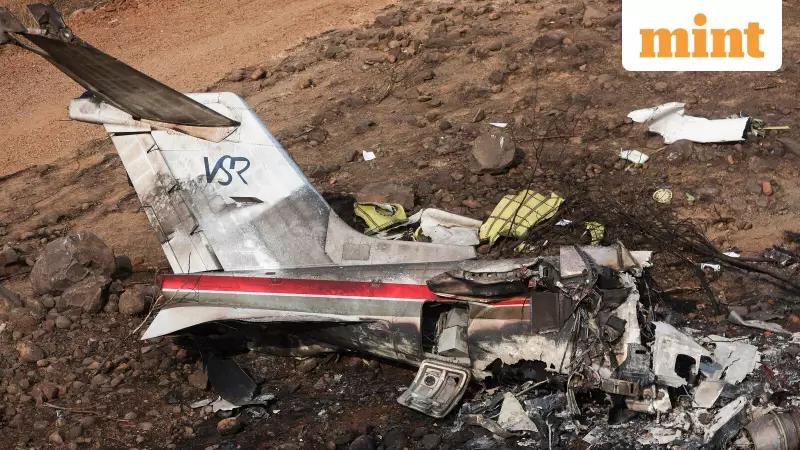
Meanwhile, the ministry has detailed the sequence of events leading to today's fatal crash in Baramati. The Learjet 45 was initially cleared for landing on Wednesday morning after executing a go-around maneuver forced by poor visibility conditions. However, after finally receiving landing clearance, the aircraft notably failed to provide any 'read-back' or confirmation to the Air Traffic Control (ATC).
Moments later, the aircraft burst into flames at the edge of the runway, resulting in the tragic loss of Maharashtra's Deputy Chief Minister and others aboard.
Baramati's Uncontrolled Airfield Conditions
Baramati operates as an 'uncontrolled airfield,' which generally means it lacks a proper instrument landing system to guide aircraft during low-visibility operations. At such facilities, traffic information is typically provided by instructors or pilots from the Flying Training Organizations based at Baramati, rather than through sophisticated automated systems.
Civil Ministry's Detailed Account of Today's Crash
The aircraft, registered as VI-SSK, first made contact with Baramati Air Traffic Control at 8:18 am. Its next communication occurred when it was 30 nautical miles inbound to Baramati, at which point the crew was advised to descend under visual meteorological conditions at their discretion.
The pilots specifically inquired about wind conditions and visibility, receiving information that winds were calm and visibility was approximately 3,000 metres.
The ministry's detailed account continues: "Next the aircraft reported on the final approach of Runway 11 and the runway was not in sight to them. They initiated a go-around in the first approach. After Go Around, the aircraft was asked about its position and crew reported on final approach of runway 11. They were asked to report runway in sight. They replied 'runway is currently not in sight, will call when runway is in sight.' After a few seconds they reported that the runway is in sight."
The ministry further explained: "The aircraft was cleared to land on runway 11 at 0843IST, however, they did not give a readback of the landing clearance. Next, the ATC saw the flames around the threshold of runway 11 at 0844 IST. The emergency services then rushed to the crash site."
This tragic sequence of events highlights the challenging conditions at uncontrolled airfields and raises important questions about aircraft maintenance history, pilot training for adverse conditions, and safety protocols at regional airports across India.