Girish Kuber Writes: Ajit Pawar - The Able Chief Minister Maharashtra Never Had
In a detailed political analysis, Girish Kuber examines the career of Ajit Anantrao Pawar, known affectionately as Ajit dada, who possessed remarkable administrative capabilities but whose lack of patience ultimately prevented him from achieving his dream of leading Maharashtra as chief minister.
The Political Prodigy with Inherited Privileges
Ajit Pawar entered politics with significant advantages as a member of the influential Pawar family. Born into privilege and pampered especially after his father's sudden demise, he was the angry young man of Maharashtra politics who always seemed on the verge of losing his temper. As the favored nephew of Sharad Pawar, he inherited many of his uncle's political characteristics but crucially lacked one essential quality: patience.
Early Political Ascent and Ministerial Journey
Dropping out of college to pursue politics, Ajit's rise was meteoric. Elected to a local sugar mill board in his early twenties, he became a Member of Parliament from Baramati in the 1991 elections following Rajiv Gandhi's assassination. When Sharad Pawar needed a parliamentary seat after losing the leadership battle to P.V. Narasimha Rao, Ajit vacated his Lok Sabha position, a move that proved fortuitous as it allowed him to focus on state politics where his true interests lay.

Entering the Maharashtra Legislative Assembly, he quickly earned a ministerial position in Sudhakarrao Naik's cabinet, during which time he acquired the "dada" suffix that would become synonymous with his political identity. Through Mumbai's devastating 1992-93 riots and terror attacks, Ajit maintained his ministerial status even as Sharad Pawar replaced Naik as chief minister.
The Unfulfilled Dream of Chief Ministership
Ajit dada's political significance expanded dramatically after 1999 when Sharad Pawar formed the Nationalist Congress Party. Despite Congress and NCP joining forces after the assembly elections, and the NCP actually winning more seats than Congress in 2004, Ajit's dream of becoming chief minister remained unfulfilled when Sharad Pawar surprisingly conceded the position to Congress in exchange for additional portfolios.
This moment represented a profound betrayal for Ajit, who believed the chief minister's chair was rightfully his. The incident highlighted the fundamental difference between uncle and nephew: while Sharad Pawar practiced strategic patience, Ajit dada wore his emotions publicly, a trait that would repeatedly undermine his political ambitions.
Temperamental Outbursts and Survival Instincts
Ajit's temperamental nature became legendary, most infamously demonstrated when he told drought-affected constituents asking about empty dams: "Do you want me to p** and fill up your dam?" Sharad Pawar later commented that his nephew would "have to live with this ill-tempered behaviour," acknowledging the permanent damage to his reputation.
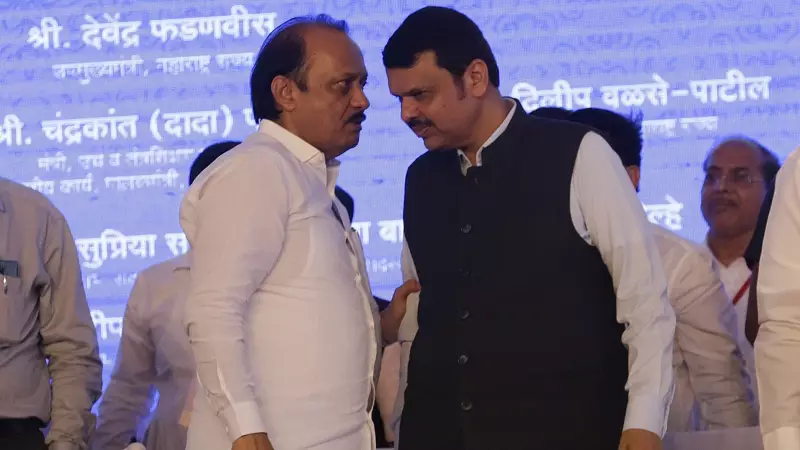
Despite these flaws, Ajit possessed extraordinary survival instincts, serving as deputy chief minister under political adversaries including Congress's Prithviraj Chavan (who investigated the cooperative bank scam implicating Ajit), Uddhav Thackeray, Eknath Shinde, and Devendra Fadnavis. Sources indicate that Fadnavis particularly valued Ajit as a reliable political ally who helped manage the Mahayuti government's dynamics with Shinde.
The 2019 Raj Bhavan Escapade and Party Split
Ajit's power hunger culminated in the controversial 2019 early-morning swearing-in ceremony where he became deputy chief minister alongside Fadnavis as chief minister, hoping to split the NCP. Though initially outmaneuvered by Sharad Pawar, Ajit eventually succeeded in dividing the party and claiming its symbol with support from the BJP-led central government and a compliant judiciary, nearly usurping his uncle's political legacy.

The Tragic Legacy of Unfulfilled Potential
Throughout his career, Ajit Pawar possessed all the qualities needed for successful leadership: excellent administrative skills, tremendous capacity for hard work, comprehensive knowledge across subjects, strong social connections, and problem-solving abilities. He often expressed his desire to become Maharashtra's chief minister, lamenting the opportunity that never materialized.
Girish Kuber concludes that history will remember Ajit Pawar as the able chief minister Maharashtra never had - a politician perpetually in a hurry, even when uncertain of his destination, whose impatience prevented him from achieving the highest office his capabilities warranted.