

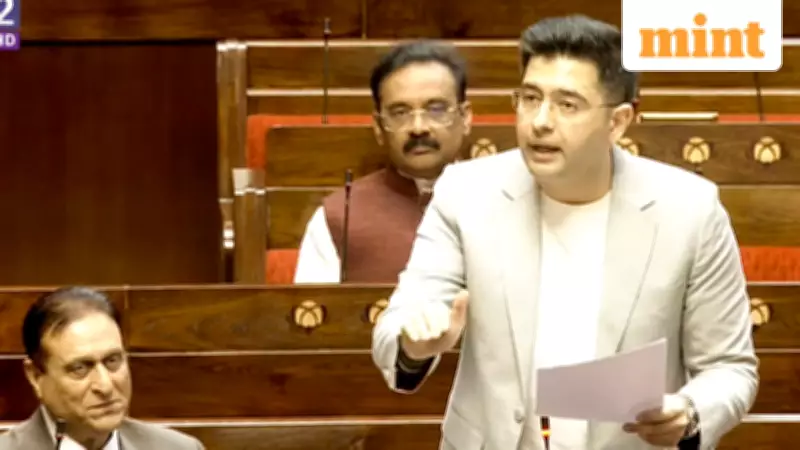
AAP MP Raghav Chadha Calls for Introduction of 'Right to Recall' Mechanism in Parliament
Aam Aadmi Party (AAP) Member of Parliament Raghav Chadha made a significant proposal in the Rajya Sabha on Wednesday, urging the implementation of a 'Right to Recall' mechanism. This system would empower voters to remove elected representatives before their five-year term concludes if they fail to perform their duties adequately.
Addressing Democratic Accountability During Zero Hour
Speaking during the Zero Hour, Chadha highlighted a critical gap in India's democratic framework. He pointed out that while citizens have the constitutional right to elect MPs and MLAs, there is currently no direct provision for voters to de-elect them mid-term due to non-performance or misconduct.
"While Indian citizens have the constitutional right to elect Members of Parliament and Members of Legislative Assemblies, there is currently no direct mechanism for voters to de-elect them mid-term on grounds of non-performance or misconduct," Chadha stated.

Proposed Framework and Global Precedents
Chadha explained that the 'Right to Recall' framework would establish a formal, legally defined procedure allowing constituents to initiate the removal of an elected representative. He noted that India already has mechanisms like impeachment for the President, Vice President, and judges, as well as no-confidence motions against governments. Extending similar accountability principles to individual legislators, he argued, would strengthen democratic oversight.
"Five years is a long tenure for the evaluation of performance of elected representatives," Chadha emphasized, adding that no profession allows underperformance for five years without consequences.
Globally, over 20 democracies, including the United States and Switzerland, have implemented some form of recall or voter-initiated removal mechanisms at various government levels, providing a precedent for such a system.
Understanding the 'Right to Recall' in India
In India, Right to Recall (RTR) laws currently exist only at the local level, enabling voters to remove elected local representatives such as Sarpanches, Corporators, and Mayors before their term expires due to non-performance. These laws are limited to specific local bodies in states like Madhya Pradesh, Chhattisgarh, and Bihar. However, there is no nationwide legislation for MPs or MLAs, though proposals have been discussed historically.
The debate over recalling elected representatives has a long history in Indian democracy, dating back to discussions in the Constituent Assembly. It centered on the belief that the Right to Recall should accompany the Right to Elect, providing voters with a remedy if things go wrong. However, Dr. B.R. Ambedkar did not accept this amendment during the drafting of the Constitution.
Safeguards to Prevent Misuse and Ensure Stability
Chadha acknowledged the need for safeguards to prevent political misuse or instability. He proposed several guardrails:
- Minimum Threshold: A verified petition backed by at least 35-40% of registered voters in a constituency should be required to trigger a recall vote.
- Cooling-off Period: A mandatory lock-in period of at least 18 months after an election before a recall process can be initiated.
- Limited Grounds: Recall should be based on proven misconduct, corruption, fraud, or serious neglect of duty, rather than routine political disagreements.
- Majority Support: Removal should occur only if more than 50% of voters support the recall in a formal vote.
Such a mechanism, Chadha argued, would incentivize political parties to nominate stronger candidates, enhance accountability, and reduce corruption in the political system.
The proposal has sparked discussions on democratic reforms, with Chadha's call aiming to bridge the gap between electoral rights and ongoing accountability in India's vibrant democracy.






