

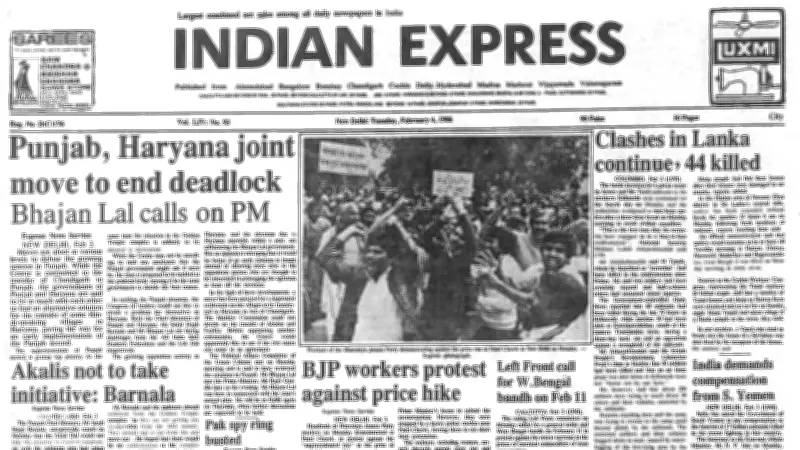
February 4, 1986: A Day of Political Tensions, Protests, and Security Alerts
This article revisits the front page of The Indian Express published on February 4, 1986, capturing a snapshot of India's political and social landscape during a period of significant developments. The edition highlighted multiple critical issues, from interstate disputes to economic protests and national security concerns.
Efforts to Defuse Punjab-Haryana Tensions
Moves were actively underway at various governmental levels to address and defuse the growing tensions between Punjab and Haryana. The central government remained firmly committed to the transfer of Chandigarh to Punjab, as outlined in ongoing agreements. Simultaneously, the state governments of Punjab and Haryana were engaged in discussions to explore alternative solutions. These talks focused on the potential transfer of some Hindi-speaking villages to Haryana, which was seen as a crucial step toward facilitating the early implementation of the Punjab accord. This diplomatic maneuvering aimed to resolve long-standing territorial disputes and promote regional harmony.
BJP Protests Against Price Hikes in Delhi
In a significant display of public dissent, hundreds of Bharatiya Janata Party workers organized a demonstration at Patel Chowk in Delhi. They protested what they termed an "unprecedented rise" in the prices of essential commodities. The protesters, who later courted arrest as part of their agitation, demanded the immediate withdrawal of recent government-announced price hikes on petroleum products, foodgrains, and Delhi Transport Corporation fares. The demonstration included around 2,000 workers, with notable figures such as metropolitan councillor M L Khurana and Delhi Pradesh chief Kedar Nath Sahni participating and subsequently being arrested at the site. This event underscored growing public frustration over economic policies affecting daily life.

Border Security Force Busts Pakistan Spy Ring
The Border Security Force announced a major security breakthrough with the busting of a ring of Pakistani spies in the Anupgarh area of Rajasthan. Three individuals, including a Pakistan national, were arrested in connection with the espionage activities. According to an official BSF release, these spies were reportedly dropped off at the border by Pakistan's field intelligence unit to infiltrate Indian territory. They allegedly entered India disguised as cattle lifters, using this cover to gather intelligence on Indian Army positions. This incident highlighted ongoing security challenges along the border and efforts to counteract foreign espionage threats.
India Demands Compensation from South Yemen
In international diplomatic developments, India formally requested the Government of South Yemen to provide compensation to the families of 17 Indian nationals killed during recent fighting in that country. N P Jain, the Secretary to the External Affairs Minister, called upon South Yemen's ambassador, Ali Aidoor Yahya, to reiterate India's deep concern for the welfare of Indian nationals still residing in South Yemen. This move emphasized India's commitment to protecting its citizens abroad and seeking justice for victims of conflict in foreign lands.
Collectively, these stories from February 4, 1986, reflect a day marked by political negotiations, public protests, security operations, and diplomatic engagements, offering a vivid glimpse into India's historical context during that era.






