January 28, 1986: A Day of Political Turmoil and Global Headlines
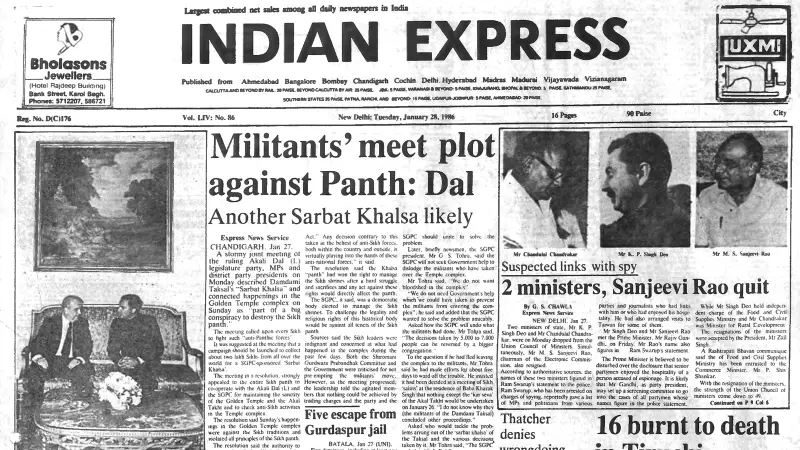
Forty years ago, on January 28, 1986, the front page of The Indian Express captured a moment of intense political drama and significant international events. The newspaper's editorial highlighted key stories that reflected the turbulent times, from domestic Indian politics to global crises and sports upsets.
Akali Dal's Conspiracy Allegations Against Sikh Panth Threats
A stormy joint meeting of the ruling Akali Dal (L) legislature party, Members of Parliament, and district party presidents convened to address what they described as a grave threat to the Sikh community. The gathering pointed to Damdami Taksal's "Sarbat Khalsa" and related activities within the Golden Temple complex, labeling them as "part of a big conspiracy to destroy the Sikh panth." This strong accusation underscored the deep-seated tensions within the Sikh political landscape at the time.
The meeting issued a clarion call to every Sikh to unite and combat what they termed "anti-panthic forces." In a strategic move, it was suggested that a campaign be launched to mobilize approximately 2 lakh Sikhs from across the globe for an SPGC-sponsored "Sarbat Khalsa." This initiative aimed to consolidate Sikh solidarity and counter perceived external threats, highlighting the party's efforts to safeguard community interests amidst growing concerns.

Lok Dal's 'Rasta Roko' Agitation for Farmer Demands in Uttar Pradesh
In another significant political development, the Lok Dal announced a "rasta roko" (road blockade) agitation in Uttar Pradesh. The primary demand was for remunerative sugarcane prices for farmers, a critical issue affecting the agricultural sector. Lok Dal MP Virendra Verma, addressing newsmen in New Delhi, clarified that while roads would be blocked, rail movement would not be disrupted, indicating a targeted approach to the protest.
This agitation followed a weeklong protest that began on January 1, which had been confined to western Uttar Pradesh. The escalation to a broader "rasta roko" stir demonstrated the party's commitment to amplifying farmer voices and pressing for economic justice, reflecting the ongoing struggles in rural India during that period.
Margaret Thatcher's Political Survival Battle Over Westland Crisis
On the international front, British Prime Minister Margaret Thatcher found herself in a fierce fight for political survival amid the Westland crisis. In a parliamentary address, she admitted that her government had mishandled aspects of the affair but vehemently denied any personal wrongdoing. Expressing deep regret, she addressed the leak of a government document central to the crisis surrounding Britain's ailing Westland helicopter firm.
Key questions loomed over her leadership: Was she involved in authorising Mayhew's letter to Heseltine? When did she first learn of her officials' involvement in the leak? Why did she institute an inquiry if she had prior knowledge of the facts? These inquiries highlighted the scrutiny and pressure Thatcher faced, showcasing the challenges of governance during times of scandal.
Australia's Crushing Defeat in One-Day Cricket Against New Zealand
In the world of sports, Australia experienced a humiliating defeat in one-day cricket in Adelaide. They were bowled out by New Zealand for a mere 70 runs, marking their worst performance in the format at that time. New Zealand had earlier set a formidable target, scoring 276 for seven off their 50 overs, leading to a massive victory by 206 runs.
This match not only underscored New Zealand's dominance but also exposed Australia's vulnerabilities, adding a dramatic twist to the cricketing narrative of 1986 and reminding fans of the unpredictable nature of the sport.
Collectively, these stories from January 28, 1986, paint a vivid picture of a day filled with political assertions, social movements, international dilemmas, and sporting surprises, as chronicled by The Indian Express.