Centenarian Former Parliamentarian Pandit Ramkishan Maintains Socialist Zeal for Nation's Progress
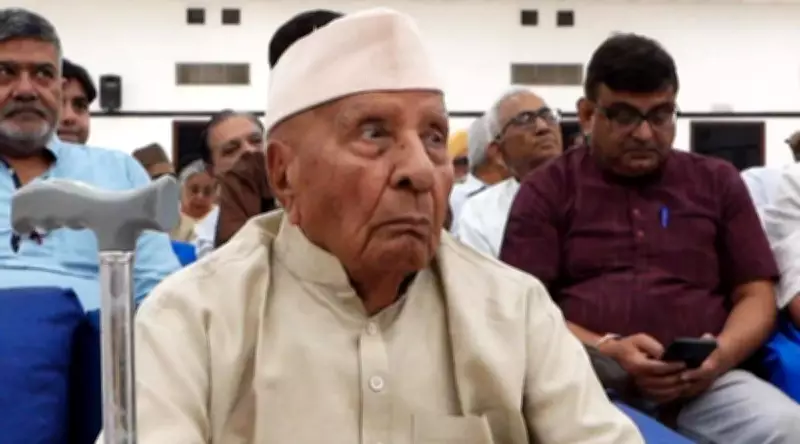
NEW DELHI: Just one month prior, Pandit Ramkishan staged a determined dharna in Rajasthan, passionately advocating for improved water quality in his home district of Bharatpur. As one of India's most senior former Members of Parliament, having served in 1977, he declared to TOI on Friday, the eve of his 100th birthday, that his socialist principles remain unwavering. "That's what I learnt from Ram Manohar Lohia," he affirmed with conviction.
The Unbroken Spirit of Lohia's Oldest Disciple
Residing in his Bharatpur residence, the veteran politician, who proudly identifies as "Lohia's oldest disciple," speaks with the profound authority of someone who has not merely observed historical events but actively molded them. Despite a recent fall that required brief hospitalization, he maintained a rigorous schedule of three weekly meetings until that incident.
What propels his enduring activism is a sense of incomplete mission. "The day I cease contemplating a better India, that's the day I will stop living. I am alive now and my voice will be heard," he asserts firmly. "The core values we championed — equality, integrity, constructive dialogue — face significant pressure today. We must raise our voices." His appropriately titled autobiography, published last year, echoes this sentiment — Main Zinda Hoon (I Am Alive).

From Quit India Movement to Contemporary Challenges
Why persist with physically demanding protests, enduring sun exposure, occasional hunger and thirst, while managing a problematic knee and carrying a century of life experience? "It comes naturally to me," Pandit Ramkishan responds simply. As a participant in the historic Quit India movement of 1942, and profoundly influenced by Ram Manohar Lohia and Jayaprakash Narayan, Panditji — as he is affectionately known — was imprisoned during the Emergency period, emerging from that experience with enhanced wisdom.
Not originating from a political dynasty, he was the son of a farmer for whom Independence symbolized "liberation from fear, from oppressive 'lagaan' taxes and scarcity, and freedom from a system that perpetually kept the common citizen anxious."
He reminisces about seeking Mahatma Gandhi during his youth. As a student in Bharatpur, he once traveled to Delhi with modest funds collected among friends, hoping to hear Gandhi speak. However, Panditji was not particularly impressed. "We had gone searching for revolutionary ideas," he recalls.
Political Evolution: From Ideology to Erosion
Today, he perceives that the very concept of freedom has become unstable. If the initial half of his life was characterized by strong ideological foundations, the latter half, he observes, has witnessed their gradual erosion. He contends that contemporary politics has transitioned from being driven by deep conviction to being guided by mere convenience.
Panditji departed from the Congress party when the socialist faction divided — and he never rejoined. He recollects numerous attempts to persuade him to return, including offers to lead the state government of Rajasthan. He consistently declined. "It was challenging — but essential... opportunity or pressure should never supersede principle," he explains.
Modern Concerns and Political Reflections
What are the pressing issues that occupy his thoughts in the present era? "Quite a few," he acknowledges. "Ranging from challenges confronting farmers and Dalit communities to climate change, unemployment crises, and the implications of artificial intelligence." What particularly disquiets him, however, is "what contemporary politics has forfeited." He illustrates this with a poignant anecdote.
"I was contesting against Union minister Babu Raj Bahadur, who once interrupted his journey to assist me during my campaign when my vehicle malfunctioned. We were electoral rivals, yet there existed no personal animosity." Presently, he notes, political opponents are frequently treated as adversaries rather than as collaborators in governance. "Constructive criticism is intended to fortify democracy — not provoke hostility."

A Blend of Pessimism and Persistent Hope
When questioned about his outlook for the future, Panditji hesitates momentarily. His tone reflects pessimism regarding communal polarization and political opportunism. Yet, there remains an unyielding refusal to surrender. "The resolution will not originate from political parties alone. It is the ordinary citizens who must comprehend what impedes the nation's advancement, and consequently, their own welfare," he concluded thoughtfully.