Varanasi Court Denies Bail to 14 Accused in Ganga Iftar Biryani Case
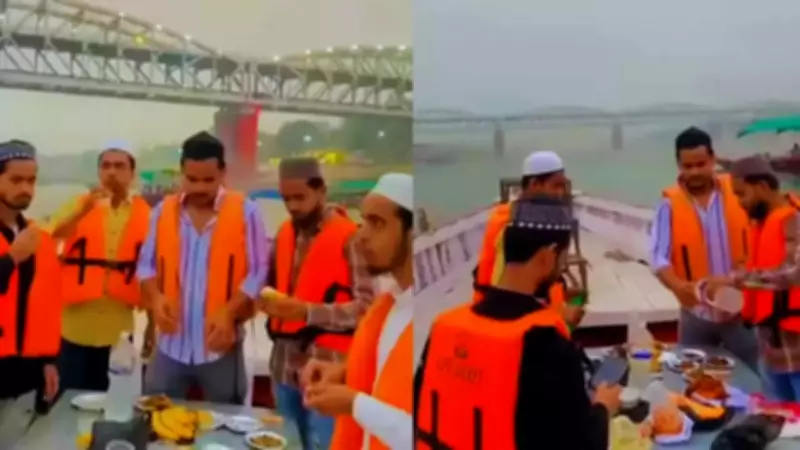
A court in Varanasi on Monday firmly rejected the bail applications of 14 individuals who were arrested over an alleged Iftar gathering on the sacred Ganga River. The accused were reportedly involved in eating chicken biryani on a boat, an act that has sparked significant controversy and legal action.
Grave Charges Lead to Bail Denial
Additional Chief Judicial Magistrate Amit Kumar Yadav observed that the charges against the accused are grave and non-bailable, stating there are no sufficient grounds to grant bail at this juncture. The prosecution strongly opposed the bail pleas, arguing that the alleged offences are serious and carry provisions for severe punishment. They also contended that granting bail could potentially interfere with the ongoing judicial process.
Details of the Incident and Arrests
The 14 individuals were arrested after a video of the incident surfaced online last Monday. Following this, a written complaint was filed the same day by Rajat Jaiswal, the city unit chief of the Bharatiya Janata Yuva Morcha. The court had earlier sent them to judicial custody on Thursday.

According to Shashank Shekhar Tripathi, counsel for complainant Rajat Jaiswal, the accused allegedly threatened a boatman and forcibly took him along before holding the party on his boat in the river. Police submitted a detailed report to the court citing the boatman’s statement and eyewitness accounts. Based on this evidence, a plea was filed to include additional charges, including kidnapping.
Religious Sentiments and Legal Framework
Rajat Jaiswal emphasized the deep and unshakeable faith that followers of Sanatan Dharma hold for the Ganga. He noted that thousands of devotees from across the country and the world visit Kashi every day to perform rituals and offer prayers using Ganga water. In such a context, he alleged that eating biryani on a boat in the middle of the river and throwing its leftovers into the water is completely inappropriate. Jaiswal asserted that this act appears to have been done with the intention of hurting the religious sentiments of Hindus.
The case has been registered under several sections of the Bharatiya Nyaya Sanhita, including those related to injuring or defiling a place of worship, outraging religious feelings, promoting enmity, public nuisance, and fouling water sources. Additionally, provisions of the Water (Prevention and Control of Pollution) Act, 1974, have been invoked.
Broader Implications and Community Response
This incident has highlighted the sensitive nature of religious practices and environmental concerns in India. The Ganga, considered a holy river by millions, is often at the center of debates regarding pollution and respect for cultural traditions. The court's decision to deny bail underscores the seriousness with which such cases are being treated, reflecting a broader legal stance on protecting religious sentiments and maintaining public order.
Local authorities and community leaders have expressed support for the judicial process, hoping it will set a precedent for similar cases in the future. The involvement of political figures, such as the BJP Yuva Morcha chief, adds a layer of political dimension to the case, though the focus remains on the legal and religious aspects.
As the investigation continues, further developments are expected, including potential hearings on the additional charges. The case serves as a reminder of the complex interplay between law, religion, and society in contemporary India.