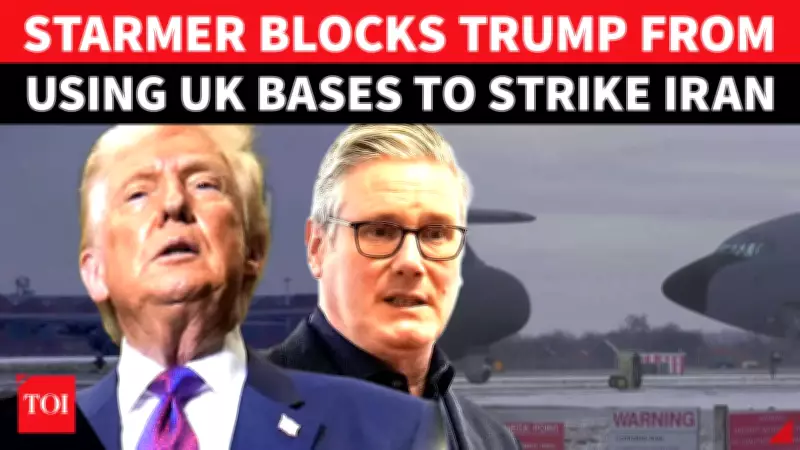
UK Defies US Request to Use RAF Bases for Potential Iran Military Action
In a significant development that has sent shockwaves through international diplomacy, the United Kingdom has formally blocked the United States from utilizing Royal Air Force (bases for any potential military strikes against the Islamic Republic of Iran. This decision, made by UK Prime Minister Keir Starmer, represents a major point of contention with the administration of US President Donald Trump and underscores deep divisions within the Western alliance regarding how to address escalating tensions in the Middle East.
A Diplomatic Showdown Over Military Strategy
The refusal has sparked what observers are calling a substantial diplomatic showdown. President Trump, reportedly angered by the UK's stance, has retaliated by withdrawing American support for the long-negotiated Chagos Islands deal. In strong remarks, Trump labeled Britain's decision a "big mistake" and issued a stern warning against any move to cede control of the strategically vital Diego Garcia atoll, a key US military outpost in the Indian Ocean leased from the UK.
The core of the disagreement lies in differing legal and strategic assessments. The United Kingdom has cited serious legal concerns regarding the authorization of pre-emptive strikes from its sovereign territory. British officials emphasize adherence to international law and the necessity of a clear, imminent threat to justify such military action. Conversely, the United States has been actively bolstering its military posture in the region, deploying strategic bombers, carrier strike groups, and aerial refueling aircraft to signal readiness and deterrence against Iran.
Military Buildup and Alliance Politics
The geopolitical backdrop is one of heightened alert. The US military deployment is a visible demonstration of force, intended to counter perceived threats from Iran. However, the UK's blockade of its bases creates a complex operational and political challenge for American planners. This incident forces both nations to navigate the delicate balance of alliance politics, national security imperatives, and the very real risk of an escalating regional conflict.
Tensions are palpably rising as Washington and London grapple with this rift. The situation highlights the intricate and sometimes fragile nature of transatlantic security cooperation. Key issues at play include:
- Legal Justification: The UK's insistence on a solid legal basis for military action.
- Sovereignty and Alliance: The tension between national decision-making and alliance obligations.
- Regional Stability: The fear that any miscalculation could trigger a wider war in the already volatile Middle East.
- Strategic Assets: The critical importance of bases like Diego Garcia in global power projection.
This standoff is more than a bilateral dispute; it is a test of Western unity in the face of a persistent international security challenge. The outcome will likely influence future cooperation on Iran policy and set a precedent for how allied nations manage disagreements over the use of force. The world watches closely as two of the world's most powerful democracies work to resolve a crisis that pits shared history and values against divergent immediate strategic calculations.