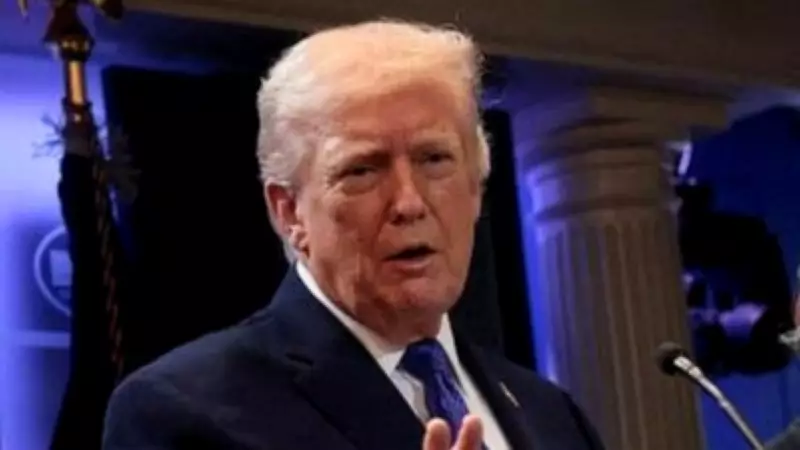
Trump Asserts Tariffs Played Key Role in Ending India-Pakistan Conflict
Former United States President Donald Trump has made a striking claim regarding international diplomacy, stating that he utilized tariffs as a strategic tool to help end the longstanding conflict between India and Pakistan. This assertion comes amid a broader critique from Trump, who also lashed out at a recent verdict by the US Supreme Court, adding a domestic political dimension to his comments.
Trump's Diplomatic Claims and Criticism of Judiciary
In his remarks, Trump highlighted his administration's use of economic measures, specifically tariffs, as a means to influence foreign policy outcomes. He argued that these tariffs were instrumental in de-escalating tensions between the two South Asian nuclear powers, India and Pakistan, suggesting a direct link between trade policies and conflict resolution. Simultaneously, Trump expressed strong disapproval of a Supreme Court decision, though he did not specify the exact case, indicating his ongoing disputes with the judicial branch.
India's Firm Stance Against Third-Party Intervention
In response to Trump's claims, India has maintained its consistent position of denying any third-party involvement in resolving its conflicts with Pakistan. Indian officials have reiterated that bilateral issues are handled directly between the two nations, without external mediation. This stance underscores India's commitment to sovereignty and its preference for direct diplomatic channels over international interference.
Background on India-Pakistan Relations and US Role
The relationship between India and Pakistan has been marked by periodic tensions and conflicts since their independence in 1947. The United States, under various administrations, has occasionally played a role in facilitating dialogues or providing diplomatic support, but India has often resisted overt third-party mediation. Trump's comments revive discussions about the effectiveness and appropriateness of using economic tools like tariffs in geopolitical disputes.
Analysis of Trump's Tariff Strategy and Its Implications
Economic Diplomacy: Trump's claim sheds light on his approach to foreign policy, where economic levers such as tariffs were employed not just for trade purposes but also as instruments of statecraft. This strategy aimed to pressure nations into aligning with US interests, though its success in conflict resolution remains debated among experts.
Global Reactions: International observers have noted that while tariffs can influence economic behavior, their impact on complex geopolitical issues like the India-Pakistan conflict is less clear. Critics argue that such measures might exacerbate tensions rather than resolve them, pointing to the need for nuanced diplomatic efforts.
Supreme Court Verdict and Domestic Political Context
Trump's criticism of the Supreme Court verdict adds a layer of domestic political intrigue to his statements. As a prominent figure in US politics, his views on judicial decisions often reflect broader partisan divides. This aspect of his comments highlights the interconnectedness of domestic and foreign policy narratives in his public discourse.
Key Takeaways from the Developments
- Trump asserts that tariffs were key in ending conflict between India and Pakistan, a claim met with skepticism by some analysts.
- India denies any third-party intervention, reaffirming its stance on bilateral resolution of disputes with Pakistan.
- The comments come alongside Trump's critique of a US Supreme Court ruling, blending international and domestic political issues.
- This episode raises questions about the role of economic tools in diplomacy and the ongoing dynamics in South Asia.
As the situation unfolds, it remains to be seen how these claims will influence future diplomatic engagements and the perception of US foreign policy under potential future administrations.