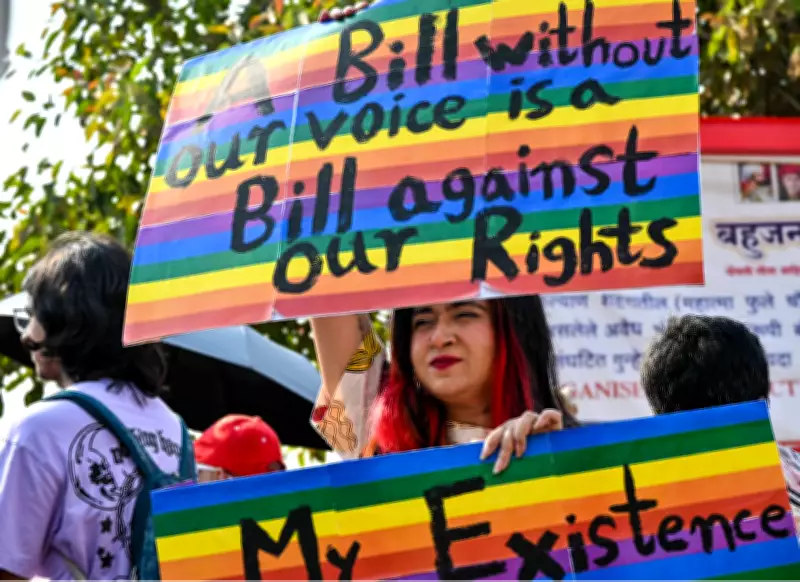
Transgender Rights Amendment Bill 2026: A Constitutional Crisis Unfolds
The Transgender Persons (Protection of Rights) Amendment Bill, 2026, passed by Parliament on March 25, represents far more than a legislative adjustment concerning transgender individuals. This sweeping legislation raises profound questions about constitutional supremacy, the authority of the Supreme Court as the ultimate interpreter of the Constitution, and the fundamental rights of citizens. At its core, the amendment seeks to dismantle over a decade of established legal protections and progressive judicial rulings that had firmly anchored transgender rights within India's constitutional framework.
Overturning a Decade of Progressive Jurisprudence
The law does not merely dilute the rights of transgender people and the broader LGBTQ+ community, which had been guaranteed and protected through both judicial decisions and previous legislation. Instead, it acts as a rogue wave threatening to wash away the entire edifice of constitutional jurisprudence painstakingly built over more than ten years in the arena of transgender rights. The most significant aspect is the manner in which hundreds of pages of progressive judicial thought have been effectively reversed through a fundamental redefinition of ‘transgender persons’.
Previously, the focal point of transgender rights was self-perceived gender identity and the right to self-determination, principles that were authoritatively approved by the Supreme Court in the landmark 2014 NALSA judgment. That judgment officially recognized transgender people as a “third gender” and established a binding precedent that led to the passing of the Transgender Persons (Protection of Rights) Act, 2019. The 2019 Act defined transgender persons expansively, but the new 2026 amendment radically changes this landscape by removing the critical factor of self-determination entirely.

Redefining Identity and Excluding Communities
The 2019 Act defined ‘transgender persons’ as those whose gender does not match the one assigned at birth, including specific categories such as persons with variations in primary sexual characteristics, external genitalia, chromosomes, or hormones from normative male or female standards, as well as persons with sociocultural identities like kinnar, hijra, aravani, and jogta. The new law, however, only lists categories of people to be included while removing the comprehensive definition from the Act. It notably excludes categories such as trans-man or trans-woman, regardless of whether such individuals have undergone sex reassignment surgery, hormone therapy, or other treatments, and it explicitly excludes gender queer persons.
More shockingly, a proviso in the new law's definition states that it will not include nor shall ever have included persons with different sexual orientations and self-perceived sexual identities. This provision effectively nullifies the 2019 Act and undermines foundational judicial blocks, including:
- The 2014 NALSA judgment
- The 2018 Navtej Singh Johar case (which decriminalized consensual homosexual sex among adults)
- The 2025 Jane Kaushik case (which ruled that discrimination based on gender identity is illegal)
In the Jane Kaushik case, the Supreme Court adopted a hortatory approach, expressing clear dissatisfaction with the state's failure to proactively implement the 2019 Act. The new law now presents an affront to citizens who have historically faced discrimination and continue to be treated as secondary, creating what legal scholars term a ‘suspect class’ deserving heightened protection.

Shifting Power to Medical Boards and Attacking Privacy
The amendment does not merely tweak provisions of the 2019 Act but seeks to amend its very object, purpose, and intention, potentially leaving it as an eviscerated piece of legislation. One of the most significant changes is the vesting of power in medical boards, whose recommendation alone will enable district magistrates to issue identity certificates to applicants. This provision, stemming from the changed definition that eliminates self-perceived identity, constitutes a direct attack on individual privacy and dignity—rights long elevated as fundamental.
The law appears oblivious to extensive literature on the struggles of transgender individuals and the LGBTQ+ community, whose identities encompass a wide spectrum. As courts have clarified, gender identity and biological attributes are distinct concepts that may not always converge. This explains why gender queer persons, now excluded from the definition, will face tremendous difficulties in obtaining administrative approval for identity certification.
Constitutional Violations and Judicial Scrutiny
The amendment raises critical questions about its timing and formulation. Why introduce such sweeping retrograde changes after years of struggle, and how was it finalized without consulting stakeholders, despite Supreme Court pronouncements placing self-perceived identity under the protection of Articles 14, 15, 16, 19, and 21 of the Constitution? This violates the “nothing about us, without us” principle, which applies strongly to the transgender community.
Given that the provisions flagrantly violate settled law, the presumption of constitutionality will be at its lowest. Courts will need to subject the amendment to the highest judicial scrutiny, as established in cases like Anuj Garg, where the Supreme Court emphasized that violations of fundamental rights or suspect classifications require demonstration of ‘compelling state interest’ rather than just ‘rational nexus’. The principle of proportionality and adopting the least restrictive choice may not save amendments that undo rights recognized as inherent to fundamental rights.
Tamil Nadu's Progressive Model and Opposition
In contrast to the national amendment, Tamil Nadu stands out as the first state to implement a comprehensive transgender welfare policy, including:
- A dedicated transgender welfare board
- Facilities for ID cards, ration cards, community certificates, and voter ID cards
- Free sex-reassignment surgery for those who wish to undergo it
- Educational scholarships and vocational skill training
- A dedicated app for registering details and grievances of transgender persons
- Sensitive terminology (thirunar, thirunangai, thirunambi) that respects self-perceived identities
- Inclusion under the MBC category for reservation in public employment
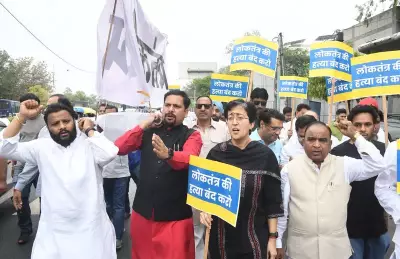
Notably, Tamil Nadu MPs opposed the Amendment Bill 2026 in the Lok Sabha, highlighting the state's commitment to progressive policies. Once again, citizens may look to the Constitution and the courts as the last resort to reinforce and protect their inherent rights to dignity, equality, and life itself.