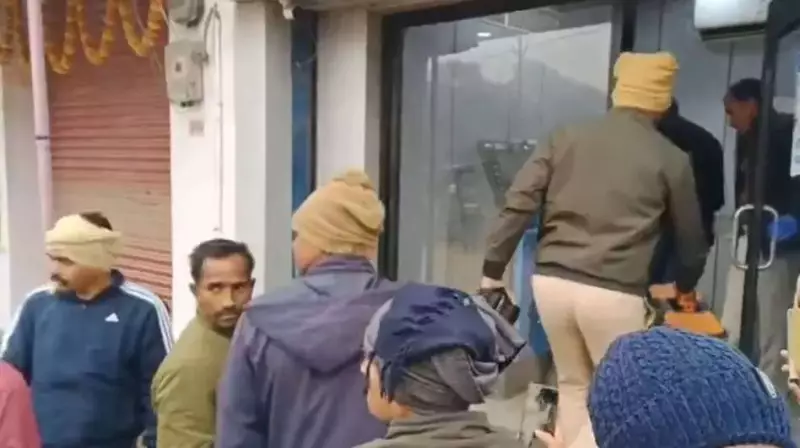
In a brazen overnight operation, a gang of criminals targeted two State Bank of India (SBI) automated teller machines in West Champaran district, making off with a total of ₹23.52 lakh in cash. The twin heists, executed with industrial gas cutters, have raised serious concerns about ATM security in the region.
Modus Operandi: Precision and Preparation
The thieves executed their plan with notable precision in the early hours of Friday. According to officials, the first robbery occurred around 1:00 am in Gahiri village, which falls under the Nautan police station area. The criminals damaged the ATM there and decamped with ₹11 lakh.
Merely thirty minutes later, at approximately 1:30 am, a second ATM was breached in the Nagar police station area, near Alok Bharti School. This machine was looted of ₹12.52 lakh. Bettiah Sub-Divisional Police Officer (SDPO) Vivek Deep confirmed the half-hour gap between the incidents, strongly indicating the work of the same gang.

Security Lapses and Evasive Tactics
Preliminary investigations by the police and forensic teams, who arrived on site Friday morning, revealed critical security failures. Both targeted ATMs were unguarded, making them vulnerable. Furthermore, the criminals took deliberate steps to avoid identification.
They used black paint or spray to cover the CCTV cameras inside the ATM booths. However, external footage from near Alok Bharti School captured crucial evidence. The footage showed the thieves arriving fully prepared in a four-wheeler, suggesting a well-planned operation.
Police Investigation and Next Steps
SDPO Vivek Deep stated that the police are actively analyzing the available CCTV footage to identify the culprits. The police are confident of making arrests soon based on the evidence gathered. The probe is focusing on the gang's route, vehicle details, and possible local connections.
This incident highlights a growing trend of criminals using gas cutters to breach ATM safes, targeting machines in less secure or isolated locations. It prompts a urgent review of security protocols for ATMs, especially during night hours in areas with lower footfall.